Warren Buffett Steps Down as Berkshire Hathaway Chairman After 60 Years
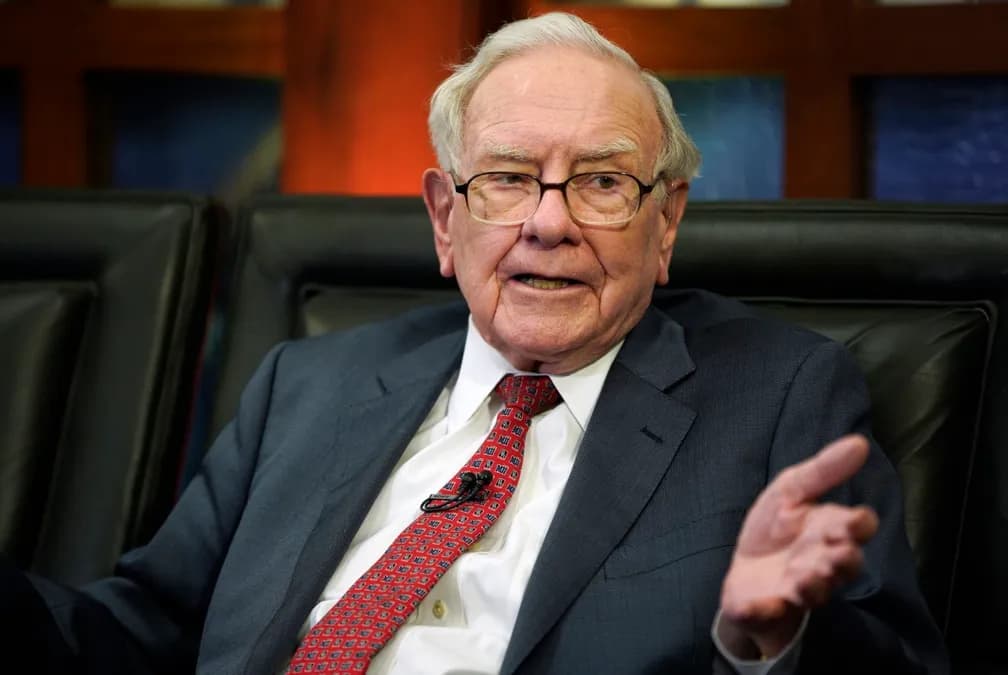
Warren Buffett steps down as Berkshire Hathaway chairman after more than six decades at the helm of one of the world's most closely watched corporations. The transition is measured, deliberate, and entirely consistent with how Buffett has always operated: on his own terms and his own timeline.
Berkshire Hathaway's Class A shares trade above $700,000 apiece, reflecting a market capitalization that has regularly exceeded $1 trillion. That figure represents roughly sixty years of compounding under a single governing philosophy — a philosophy now navigating its most consequential structural change. Buffett will not disappear. He retains a board seat and assumes the title of chairman emeritus, ensuring his presence remains formal and visible. But the governance architecture shifts materially. His son Howard Buffett succeeds him as non-executive chairman, separating for the first time in the company's modern era the chairman and chief executive functions in a way that institutional investors and governance advocates have long considered best practice.
The announcement, reported by The Wall Street Journal, arrives at a moment when Berkshire's equity portfolio exceeds $300 billion and its wholly owned subsidiaries span insurance, energy, railroads, and consumer goods. The stakes of this succession are genuinely high — not because anything is broken, but because so much has been built around one person.
Howard Buffett Takes the Chair: Who Is He?
Howard Buffett is not a Wall Street figure. That distinction matters and was almost certainly deliberate.
Read next Altman: OpenAI IPO 'Ill-Advised' in 2026 | AI ValuationsThe 71-year-old has served on Berkshire's board for decades, providing continuity without operational entanglement. Outside the boardroom, he is known primarily as a farmer, philanthropist, and photographer with a long focus on global food security and conflict resolution. His Howard G. Buffett Foundation has committed hundreds of millions of dollars to agricultural development in sub-Saharan Africa and Central America. He has worked alongside the United Nations World Food Programme and conducted extensive field documentation in active conflict zones.
None of that is a conventional chairman's résumé. But Warren Buffett has been explicit over the years that Howard's role is designed to be custodial rather than managerial — a values guardian rather than a strategic operator. The non-executive chairmanship Howard assumes carries no day-to-day operational authority. His function is to protect the culture, safeguard the CEO's independence, and ensure the board remains anchored to the principles that defined the company under his father.
This is a familiar governance structure at major British and European multinationals, where the split between non-executive chair and CEO has been standard for decades. In American corporate governance, it remains less common, particularly at founder-led conglomerates. Berkshire's adoption of that structure, even at this late stage, reflects a meaningful concession to institutional norms.
The Broader Berkshire Hathaway Leadership Structure Going Forward
Greg Abel, the Canadian-born vice chairman who oversees Berkshire's non-insurance operations, has been publicly designated as the company's next CEO for several years. That succession is already settled. What changes now is the governance layer above him.
With Warren Buffett as chairman emeritus and Howard Buffett as non-executive chairman, Abel will operate with a board structure that explicitly does not overlap the CEO and chair functions. This matters for board independence. When the same individual holds both roles, the board's capacity to evaluate, challenge, or if necessary remove the CEO is structurally compromised. Separation addresses that conflict directly.
The practical challenge is cultural rather than procedural. Berkshire's subsidiary managers have operated for decades under a famously decentralized model — extreme autonomy, minimal corporate overhead, long investment horizons. That culture was shaped overwhelmingly by Warren Buffett's personal authority and credibility. Abel must now sustain it without that backing in the chair's seat.
History offers relevant warnings. When Jack Welch departed General Electric in 2001, GE's market capitalization stood near $400 billion. Within a decade, a combination of strategic drift, financial engineering at GE Capital, and a loss of cultural coherence had eroded much of that value. The GE case is not a prediction about Berkshire, but it illustrates the gap between institutional scale and institutional identity — and how quickly the former can outlast the latter.
What This Means for Berkshire Hathaway Investors
For holders of BRK.A or BRK.B shares, the immediate question is whether this transition alters the investment thesis. The short answer is: not structurally.
Berkshire's balance sheet carries approximately $325 billion in cash and equivalents as of the most recent reporting period — a fortress of liquidity that reflects both Buffett's patience and the company's capacity to act decisively in any market dislocation. That position doesn't change because the chairman's nameplate changes. Neither does the insurance float model, which underpins the entire capital allocation strategy.
Corporate governance analysts at major proxy advisory firms, including Institutional Shareholder Services, have long flagged the combined chair-CEO structure at Berkshire as a governance anomaly relative to S&P 500 peers. The separation of those roles — even with a family member in the chair — moves Berkshire closer to standards those institutions apply when making voting recommendations. That alignment could modestly reduce governance-related discounting among certain institutional allocators.
The more substantive investor concern is capital deployment. Buffett's willingness to write enormous checks — $10 billion into Occidental Petroleum, billions into Japanese trading companies — reflects a decisiveness and authority that Abel will need time to establish. Large-scale acquisition opportunities, particularly in a rising rate environment, may see more deliberate committee processes before deployment.
The Buffett Legacy and Berkshire's Enduring Business Model
Berkshire Hathaway's compounded annual growth rate in book value has averaged approximately 19 percent over five decades, roughly double the S&P 500's total return over the same period. That performance record defines Buffett's legacy more precisely than any honorific.
What made it possible was not stock-picking alone. The insurance float — essentially interest-free capital generated by Geico, General Re, and Berkshire Hathaway Reinsurance — funded acquisitions at a cost that competitors could not replicate. The decentralized management philosophy reduced bureaucratic friction. The long holding horizon eliminated the quarterly earnings pressure that distorts capital allocation at most public companies.
Those structural advantages persist regardless of who sits in the chairman's seat. Geico's competitive position in personal auto insurance, BNSF Railway's infrastructure moat, Berkshire Hathaway Energy's regulated utility portfolio — these are durable assets. The culture of owner-operators running subsidiaries with minimal interference is embedded in how those businesses recruit and retain management.
What cannot be fully institutionalized is judgment — the pattern recognition that allowed Buffett to recognize value in Coca-Cola in 1988, American Express in the 1960s, and Apple in 2016. Greg Abel is a proven operator. Whether he will be an allocator of comparable quality is the one question the transition genuinely leaves open.
Key Questions About Berkshire's Next Chapter
Several governance and strategic questions follow directly from this transition.
Will the board operate with greater independence under a non-executive chair? The structural answer is yes. The practical answer depends on whether Howard Buffett exercises that independence actively or treats the role as largely ceremonial.
How will Abel establish his own capital allocation record? The cash position gives him room to act. The first major acquisition under his watch will be watched closely — not just for the quality of the deal, but for what it signals about his willingness to be bold.
Will Berkshire eventually be broken up? Buffett has repeatedly argued against a conglomerate discount and for the coherence of the whole. That argument carries less weight without his personal authority behind it. Activist pressure, though historically absent from Berkshire's shareholder base, becomes a slightly more credible scenario over a 10-to-15-year horizon.
The transition does not mark an ending. It marks the moment Berkshire Hathaway must prove its model survives the man who built it. That is the only test that has ever mattered.
Source: WSJ.com: Markets