Warren Buffett Steps Down as Berkshire Hathaway Chairman After 60 Years
Roughly six decades after Warren Buffett began transforming a failing New England textile mill into one of the most valuable companies on earth, he has announced he will step down as chairman of Berkshire Hathaway. His son, Howard Buffett, will succeed him in that role. Warren Buffett will remain on the board and assume the title of chairman emeritus — a distinction that carries symbolic weight but transfers formal governance authority to the next generation.
The announcement closes a chapter that reshaped American capitalism. Since Buffett took control of Berkshire in the mid-1960s, the company's Class A shares have compounded at roughly 19.8 percent annually, against approximately 10.2 percent for the S&P 500 over a comparable period — figures Berkshire itself has published in its annual shareholder letters. That gap, sustained across recessions, wars, financial crises, and two dot-com bubbles, represents perhaps the most documented long-run outperformance in the history of public equity markets.
The chairmanship transition arrives in an already reorganized leadership structure. Greg Abel, the former head of Berkshire Hathaway Energy, was publicly designated as CEO successor years ago and has been managing day-to-day operations across Berkshire's sprawling portfolio of wholly owned businesses. What changes now is the separation of board leadership from the Buffett family's operational identity — and questions about what that separation actually means in practice.
Who Is Howard Buffett? The New Chairman Explained
Howard Buffett is Warren's second son and has served on Berkshire Hathaway's board of directors for years, giving him familiarity with the company's culture, governance norms, and reporting structures. Outside of Berkshire, he is best known as the chairman and CEO of the Howard G. Buffett Foundation, a philanthropic organization focused on food security, agricultural productivity in conflict regions, and criminal justice reform. He has written and spoken extensively about smallholder farming in sub-Saharan Africa and Latin America — a profile that is notably different from the financial engineering reputation his father built.
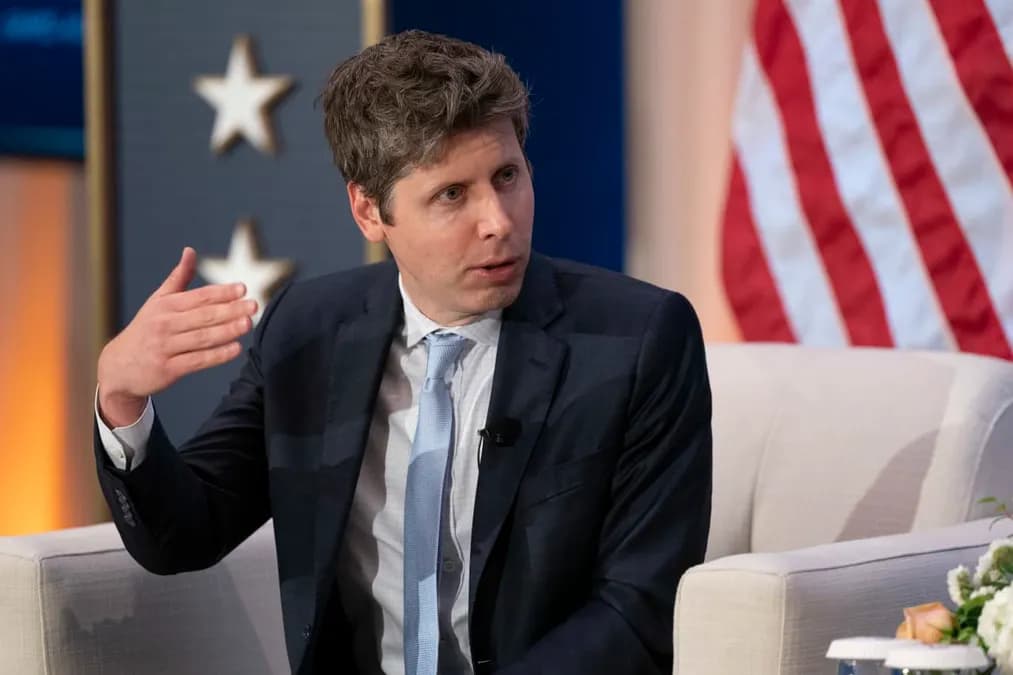
Read next Altman: OpenAI IPO 'Ill-Advised' in 2026 | AI ValuationsThat contrast is precisely the point. Corporate governance researchers who study family-succession board structures at major U.S. conglomerates consistently find that founding families tend to install non-executive family members as chairmen not to direct strategy, but to safeguard culture and protect the founder's legacy against activist pressure or short-termism. The model has precedent: Walmart's board has featured Walton family members in chairman-adjacent roles for decades while professional management ran operations. The structure is designed to signal continuity to employees, counterparties, and long-term shareholders without concentrating operational power in an individual who may lack relevant experience.
Howard Buffett's specific mandate at Berkshire has not been detailed in public announcements beyond his succession to the chairmanship, but the structure suggests his primary function will be institutional stewardship — maintaining the decentralized, low-interference management culture that Warren Buffett built — rather than capital allocation decisions. Those remain squarely Greg Abel's domain.
Warren Buffett's Role Going Forward as Chairman Emeritus

Chairman emeritus is a title that sounds grand and means different things at different companies. At Berkshire, where Warren Buffett's name remains synonymous with every investment decision of the past six decades, the role carries unusual weight. He will stay on the board, which means he retains a vote, a voice, and — critically — a presence that management teams throughout the Berkshire portfolio have spent careers trying to anticipate and satisfy.
Governance analysts have noted that chairman-emeritus roles at major conglomerates frequently create a parallel power center, even when the founding figure explicitly disclaims operational authority. The mere awareness that a revered founder is in the room — or could attend the next board meeting — shapes behavior in ways that organizational charts cannot fully capture. At Berkshire, where subsidiary CEOs have operated with extraordinary autonomy precisely because they trusted Buffett's judgment as the ultimate backstop, the psychological weight of his continued presence may be the most consequential variable in the transition.
Institutional investors will be watching whether Buffett uses the emeritus position actively or ceremonially. A founder who attends every board meeting and offers pointed observations about capital allocation is functionally different from one who appears at the annual meeting, signs off on the shareholder letter, and defers entirely to Abel. Which version Buffett becomes — and at age 95, how long he remains engaged — will define whether the transition reads as clean or ambiguous over the next several years.
What Investors Should Expect from Berkshire Hathaway Now
Berkshire's Class A shares trade above $700,000 each, a price that reflects not just the underlying businesses — GEICO, BNSF Railway, Berkshire Hathaway Energy, a $300-billion-plus equity portfolio anchored by Apple — but also a persistent "Buffett premium" embedded by decades of trust in a single decision-maker. That premium has already been partially re-priced since Abel's operational succession was confirmed; the chairmanship change is the next data point in a multi-year reassessment.
The dual-class share structure Berkshire employs gives Class A shareholders meaningful economic weight but does not create the kind of supervoting arrangements seen at tech companies like Alphabet or Meta, where founders retain control through preferential voting rights. At Berkshire, the board governs through relatively conventional structures, which means the chairman role carries genuine authority over board composition, committee assignments, and the agenda that shapes what management teams are accountable for.
Expect Berkshire's capital allocation pace under Abel to receive renewed scrutiny. Berkshire held approximately $189 billion in cash and Treasury bills as of its most recent filings — a sum large enough to acquire most S&P 500 companies outright. Buffett's reticence to deploy that capital reflected both his demanding return hurdles and a structural belief that opportunities would eventually emerge. Whether Abel shares that patience or faces pressure from the board to return more capital to shareholders through buybacks and dividends is among the more consequential strategic questions the transition raises.
The Broader Significance of Buffett's Six-Decade Tenure
Fifty-nine annual letters to shareholders. Thousands of hours of questions answered at the Omaha meeting. A vocabulary — "circle of competence," "moat," "Mr. Market," "margin of safety" — absorbed so thoroughly by the investment community that most practitioners no longer remember the terms were popularized by one man. Warren Buffett's tenure at Berkshire Hathaway was not simply a long run of strong returns. It was the most consequential sustained demonstration in the post-war era that disciplined value investing, married to patient long-term ownership, could compound wealth at a rate that systematically outpaced markets.
The stewardship lesson embedded in how Berkshire was built — buy wonderful businesses at fair prices, leave capable managers alone, avoid debt, never take a risk that could threaten the whole — will outlast any single individual. The question is whether those lessons survive institutionalization. Every financial institution that has tried to codify a founder's philosophy has discovered, eventually, that culture is harder to transfer than process.
Key Takeaways for Shareholders and Market Watchers
The transition at Berkshire Hathaway is orderly by design. Howard Buffett succeeds as non-executive chairman; Greg Abel continues as CEO and operational steward; Warren Buffett remains on the board as chairman emeritus, preserving continuity without freezing authority in the past.
For long-term shareholders, the structure represents a deliberate attempt to separate governance succession from cultural disruption. For market watchers, the more pressing question is whether the Berkshire model — patient capital, decentralized management, disciplined abstention from deals that don't meet high bars — remains intact under a leadership pair that has never operated without the founder in the background.
The six-decade record Buffett built is beyond replication. What comes next does not need to replicate it. It needs only to preserve the institutional integrity that allowed it to happen — and avoid the acquisitive overreach that has undone most large conglomerates in their second generation. That is Howard Buffett's mandate, and it is simpler to state than to execute.
Source: WSJ.com: Markets