Warren Buffett Steps Down as Berkshire Hathaway Chairman After 60 Years
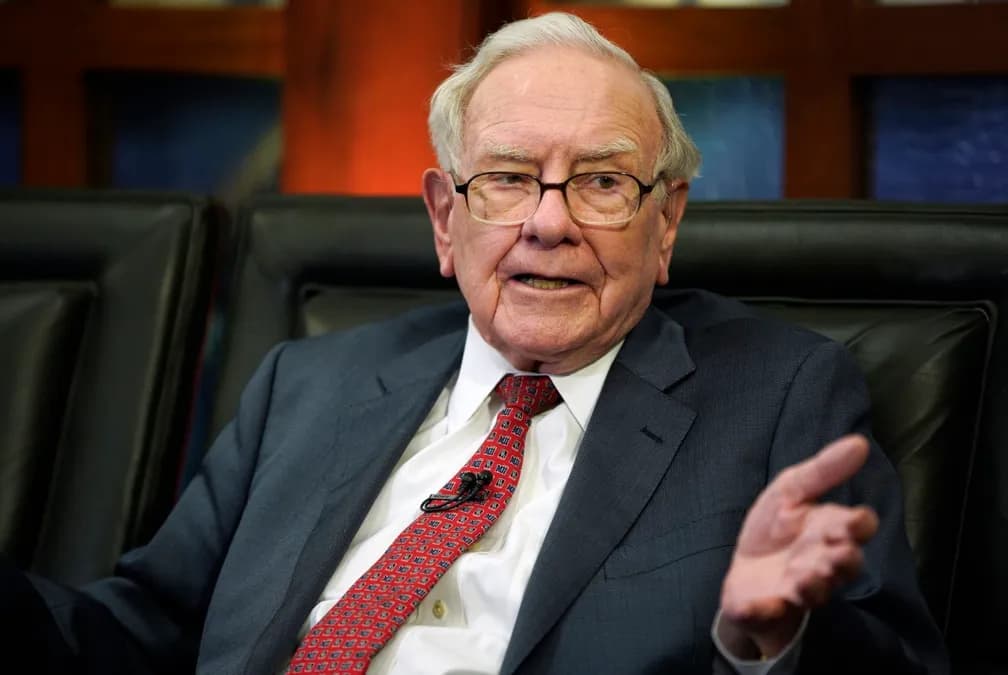
For roughly six decades, one name has been synonymous with Berkshire Hathaway: Warren Buffett. That era formally ended when Buffett announced his departure from the chairman's seat he has occupied since the 1960s, with his son Howard Buffett stepping in to assume the role. Buffett will remain on the board of directors and carry the title of chairman emeritus — a designation that keeps him connected to the institution he built without placing him in formal command of it.
The announcement lands at a moment when Berkshire Hathaway stands as one of the largest publicly traded companies in the world by market capitalization, with Class A shares — ticker BRK.A — long holding the distinction of the highest per-share price on any major American exchange. Over the past three decades, BRK.A has compounded at a rate that has left the S&P 500 in its wake across multiple market cycles, a track record that makes the governance question surrounding Buffett's transition all the more consequential for institutional and retail shareholders alike.
This is not a surprise exit. Berkshire watchers have long anticipated a formal succession event following the earlier designation of Greg Abel as the company's chief executive. But the chairman's seat carries its own symbolic and structural weight — and handing it to a family member rather than a professional director is a deliberate choice with significant implications.
Howard Buffett Takes the Chair: Who Is Berkshire's New Chairman?
Howard Buffett, Warren Buffett's son, is not a Wall Street figure. He has served on Berkshire's board of directors for years, but his public profile has been shaped far more by philanthropic and agricultural work than by capital allocation or corporate strategy. His foundation focuses heavily on food security and sustainable farming, and he has written extensively on those subjects. He does not appear to be positioned as an operational force inside Berkshire's business.
Read next Altman: OpenAI IPO 'Ill-Advised' in 2026 | AI ValuationsThat distinction matters. In most large public companies, the board chairman sets the governance agenda, oversees management, and acts as the primary accountability check on the CEO. Howard's background suggests his role will be custodial rather than directive — protecting the cultural ethos his father built rather than reshaping strategy or second-guessing Abel's operational decisions.
Governance researchers have noted that family successors to founding-era board chairs tend to serve stabilizing functions. A 2018 analysis from Harvard Business Review examining founder succession at large conglomerates found that family-member board chairs were most effective when paired with strong, independent professional management — precisely the structure Berkshire appears to be constructing. The risk, the same research noted, is that family chairs can create ambiguity about where real authority resides, particularly if the founder remains visibly engaged.
Berkshire Hathaway's Leadership Structure After the Handover

Berkshire now operates with a cleaner separation between its board and its management than at any prior point in its modern history. Greg Abel, who has run Berkshire Hathaway Energy and took on broader operational responsibilities as vice chairman before his elevation to CEO, now holds formal executive authority. Howard Buffett chairs the board. Warren Buffett occupies the chairman emeritus seat — present but formally subordinate to both.
This three-layer structure echoes arrangements seen at other long-tenured founder-led organizations. When Bill Gates transitioned from day-to-day Microsoft management, he remained a significant presence on the board for years before moving to a more purely philanthropic role. At Berkshire, the calculus is different because the company's culture — its decentralized operating model, its aversion to unnecessary overhead, its long-term ownership philosophy — is inseparable from Warren Buffett's persona and public reputation.
The chairman emeritus title is not window dressing. At institutions where it has been deployed — from JPMorgan Chase predecessors to major insurance conglomerates — the emeritus designation typically signals ongoing access and informal influence without fiduciary command. Founders who carry it remain sounding boards, often consulted on major capital decisions, but they do not chair board meetings or set formal agendas. Whether that boundary holds at Berkshire will depend largely on Warren Buffett himself.
What Comes Next for the Berkshire Conglomerate?
Berkshire's sprawling portfolio — encompassing insurance operations through GEICO and the reinsurance divisions, the BNSF railroad, Berkshire Hathaway Energy, and scores of wholly owned industrial and consumer businesses alongside a massive public equities portfolio — does not require a chairman to run. It requires disciplined capital allocation, operational autonomy at the subsidiary level, and a coherent investment philosophy at the top.
Abel has signaled continuity on most of those fronts. The harder question is what Berkshire does with its cash. The company has at times held well over $100 billion in Treasury bills and short-term instruments — a war chest that reflects Buffett's discipline about not overpaying for acquisitions. Whether Abel applies the same threshold, or whether the transition period creates pressure to deploy capital more aggressively to satisfy shareholders accustomed to growth, is the central strategic question facing the conglomerate over the next two to three years.
McKinsey's research on post-founder conglomerates suggests that the first 18 months following a governance transition are the period of highest strategic drift risk — not because the incoming management is incompetent, but because implicit cultural norms that were never codified suddenly need to be. Berkshire has attempted to preempt this by cultivating a well-documented ownership philosophy through Buffett's annual shareholder letters, which function as something close to a constitutional document for the enterprise.
Buffett's Six-Decade Legacy: By the Numbers
The arithmetic of Warren Buffett's tenure at Berkshire Hathaway is nearly impossible to replicate. When he took control of the company in 1965, it was a struggling New England textile mill with modest prospects. Over the following six decades, he transformed it into a diversified holding company whose Class A shares have appreciated by more than 4,000,000 percent on a cumulative basis, according to Berkshire's own annual reports — a figure the company itself has cited in shareholder communications.
That performance dwarfs the S&P 500's cumulative return over the same period by a multiple that no other public company manager has matched across a comparable time span. Berkshire has grown from a regional manufacturer to a company whose equity portfolio alone — stakes in Apple, American Express, Bank of America, Coca-Cola, and others — represents hundreds of billions in market value.
Buffett turned 95 in August 2025. His decision to step back from the chairmanship while remaining on the board reflects both the practical reality of age and a recognition that orderly transitions serve shareholders better than abrupt ones.
Key Takeaways for Investors and Stakeholders
Several things are now clear for Berkshire shareholders and the broader market.
First, this is an orderly governance event, not a crisis. Buffett's continued presence on the board as chairman emeritus provides continuity and signals that the transition has been planned, not forced.
Second, Howard Buffett's appointment as chairman is an explicit choice to maintain cultural continuity over governance professionalization. Some institutional governance advisors — including proxy advisory firms like ISS and Glass Lewis, which evaluate board composition for institutional clients — may raise questions about the independence implications of a family succession at the chair level. Shareholders should watch for any formal guidance these firms issue ahead of the next annual meeting.
Third, Greg Abel's authority as CEO is now unambiguous. He does not share executive responsibility with a founding figure who holds a competing title. That clarity is valuable.
Fourth, the chairman emeritus designation does not mean Warren Buffett disappears. His continued board membership means he retains a formal seat at the table. Major acquisitions, capital allocation decisions, and portfolio changes will almost certainly benefit from his informal input even if they do not require his approval.
For long-term Berkshire holders — many of whom have owned Class A or Class B shares for decades specifically because of the Buffett governance premium — the most prudent posture is watchful patience. The institution Buffett built has always been designed to outlast him. The question the market is now beginning to answer in real time is whether it will.
Source: WSJ.com: Markets