The End of an Era: Buffett Steps Down as Berkshire's Chairman
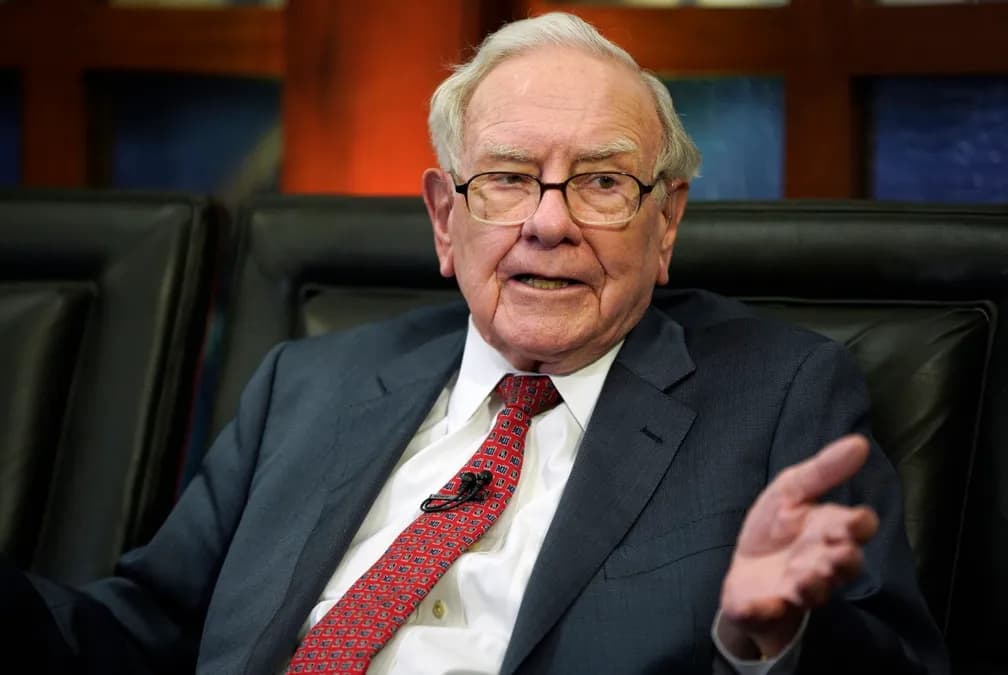
For roughly 60 years, Warren Buffett's name and Berkshire Hathaway's corporate identity have been functionally inseparable. That changes now. Buffett has announced he will step down as chairman of the Berkshire Hathaway board, with his son Howard Buffett assuming the chairmanship. Warren Buffett will remain on the board and carry the title of chairman emeritus — present, but no longer presiding.
This is not an operational departure. Buffett ceased day-to-day management responsibilities gradually over years, and Greg Abel has been publicly designated as chief executive successor for some time. What shifts with this announcement is something more symbolic and structurally significant: the formal separation of Buffett's personal authority from the board's governance apparatus. For shareholders who have long treated Berkshire as a proxy for one man's judgment, that distinction matters far more than it might appear on the surface.
The timing, arriving well into Buffett's tenth decade, should surprise no one. What investors and analysts are now asking is not whether the transition was inevitable, but whether the structures put in place are sufficient to sustain what Berkshire has become — one of the largest and most complex conglomerates in American corporate history.
Howard Buffett: The Man Inheriting the Chair
Howard Buffett, Warren's middle son, is not a Wall Street figure. He has spent much of his adult life focused on farming and philanthropy, running a commercial farm in Illinois and leading the Howard G. Buffett Foundation, which concentrates on global food security and conflict resolution. His professional biography reads as a deliberate counterpoint to financial celebrity.
Read next Altman: OpenAI IPO 'Ill-Advised' in 2026 | AI ValuationsThat background is not a disqualification — it is arguably the point. A non-executive chairman in a large U.S. public company is not expected to manage operations or direct capital. According to governance frameworks published by the National Association of Corporate Directors, the non-executive chair's primary responsibilities are to lead the board, facilitate communication between independent directors and management, and serve as a counterweight to executive authority when needed. Howard Buffett fits that description. He brings a long familiarity with Berkshire's culture and his father's philosophy without the conflict that would arise from an operationally active successor trying to govern the same CEO he works alongside.
Warren Buffett has spoken publicly over the years about Howard's role in terms of cultural preservation — a guardian of the values he built the company around rather than an architect of its next phase of growth. Whether that framing translates into effective board leadership under pressure is a question that will only be answered across years, not months.
Six Decades of Stewardship: Berkshire Under Warren Buffett
Buffett took control of Berkshire Hathaway in 1965, inheriting a struggling New England textile manufacturer. What followed is documented extensively in Berkshire's public filings and annual reports: a compounding record that, by nearly any measure, stands without peer in public markets. According to Berkshire's annual shareholder letters, the company's per-share market value grew at a compounded annual rate of roughly 19 to 20 percent from 1965 through recent years, compared to approximately 10 percent for the S&P 500 with dividends reinvested. That gap, sustained across six decades, produced outcomes that transformed a struggling mill into one of the ten largest publicly traded companies in the United States by market capitalization.
The conglomerate Buffett leaves behind spans insurance through Geico and General Re, railroads through BNSF, utilities through Berkshire Hathaway Energy, and an enormous equity portfolio anchored by long-standing positions in businesses like Apple, American Express, Coca-Cola, and Bank of America. Berkshire also holds a massive stockpile of cash and short-term Treasuries — a reserve Buffett maintained through periods when valuations offered insufficient margin of safety. That discipline has been central to the culture.
The chairman role Buffett held was always unusual by conventional standards. At most large corporations, the chairman and chief executive are separate people, with the chairman leading the board and the CEO running the company. Buffett held both functions for decades and only formally separated them in practice as Abel's succession became more defined. The announcement of Warren Buffett steps down Berkshire Hathaway chairman is, in governance terms, the last formal step in an elongated succession process rather than a sudden break.
What Changes — and What Doesn't — for Berkshire Investors
For most Berkshire shareholders, the operational picture is unchanged. Abel remains in command of day-to-day management. The company's wholly owned subsidiaries operate with the same decentralized autonomy that Buffett institutionalized. Berkshire's investment portfolio is managed by Ted Weschler and Todd Combs, who have handled a growing share of the equity book for years. None of that shifts because of a board chairmanship change.
What does change is the nature of board oversight. With Buffett as chairman, the board functioned within a framework where his moral authority was effectively self-enforcing. No independent director was likely to challenge the man whose decisions produced the return record described above. Howard Buffett's chairmanship represents a conventional governance structure — a non-executive chair who must build consensus, manage disagreements among directors, and provide genuine oversight of management rather than deference to a singular personality.
Institutional investors and governance-focused analysts have generally viewed the dominance of a founder-chairman as a two-sided proposition. The upside is decisive, value-driven leadership unconstrained by quarterly thinking. The downside is concentrated authority with limited countervailing board power. The transition to Howard Buffett represents a rebalancing toward standard governance norms — which may reassure pension funds and large institutional holders who have governance mandates to consider.
The Road Ahead: Governance, Culture, and Capital Allocation
Analysts covering Berkshire have long drawn a distinction between the company's operational businesses — durable, largely self-managing, and structurally sound — and the harder-to-replicate elements of its culture: the patience around capital deployment, the reluctance to overpay for acquisitions, and the resistance to financial engineering. The concern in succession discussions has never been whether Abel can manage the operating businesses. It is whether the board will support the same temperament when deploying the cash reserve Berkshire accumulates.
Berkshire's cash and Treasury holdings have at times exceeded $100 billion, reflecting Buffett's consistent view that overpaying destroys value regardless of how attractive the strategic rationale sounds. That discipline requires a board willing to accept public criticism during prolonged periods of inactivity. Howard Buffett's chairmanship will be tested most acutely not during periods of smooth operation but during the next major market dislocation — when pressure builds to deploy capital and the board must either back management's patience or push for action.
From a governance research standpoint, the separation of chair and CEO functions at a company of Berkshire's complexity is a constructive development. Studies from the NACD and institutional governance research bodies have consistently found that independent or non-executive chairmanships provide more effective oversight in companies with concentrated operational authority, particularly in succession transitions.
Warren Buffett's retention as chairman emeritus and board member is itself significant. His continued presence provides continuity and institutional memory while the new governance structure establishes itself. It also means the board retains access to his perspective without placing formal authority in his hands.
Key Takeaways for Long-Term Shareholders
Several points merit attention for investors holding Berkshire for the long term.
The governance structure is now more conventional, which reduces single-point-of-failure risk. A board with a distinct, non-executive chair and a CEO with a defined mandate is a more legible structure for institutional holders evaluating corporate governance criteria.
The cultural transmission question remains open. Berkshire's investment philosophy was never codified in a rulebook — it was embodied in Buffett. Howard Buffett's role as a cultural custodian is meaningful only if the board as a whole internalizes the same patience and discipline. That will take time to verify.
Operationally, nothing changes immediately. The subsidiaries run themselves. The investment managers are in place. Abel has been preparing for this role for years.
Finally, Warren Buffett's continued presence on the board as chairman emeritus provides an unusual form of continuity. He is not gone — he has stepped back. For shareholders who have invested partly on the basis of his judgment and temperament, that distinction is worth keeping in mind as the next chapter of Berkshire's history begins.
Source: WSJ.com: Markets