Warren Buffett Steps Down as Berkshire Hathaway Chairman After 60 Years
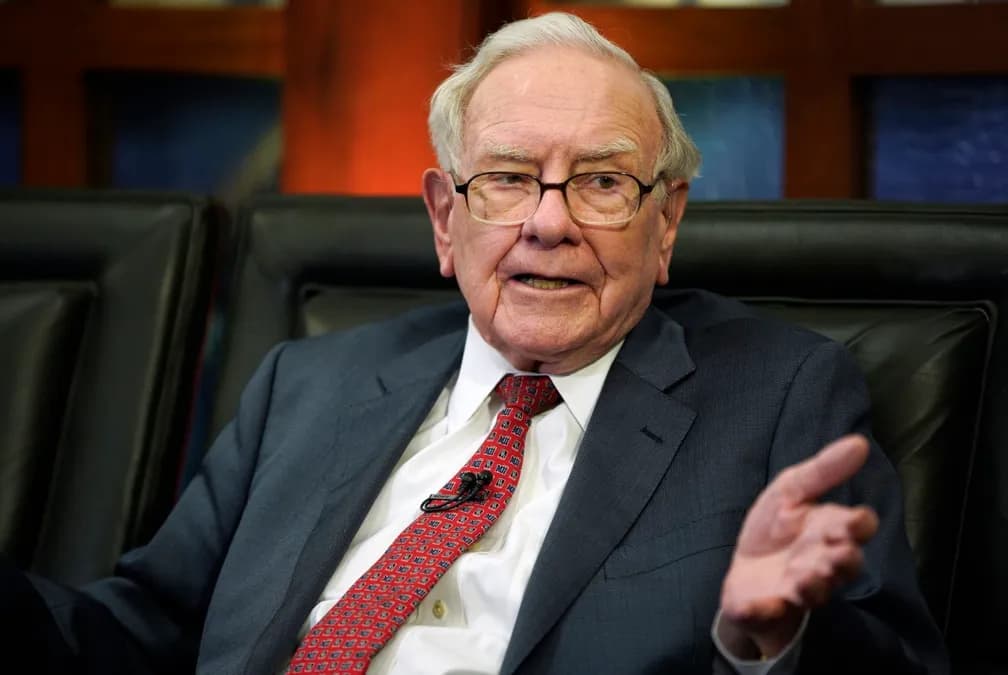
Warren Buffett steps down as Berkshire Hathaway chairman after more than six decades atop one of the most closely watched corporate structures in financial history. The announcement, confirmed in September 2026, closes the formal chapter of Buffett's governance command over a conglomerate whose market capitalization has grown from roughly $19 million when he took control of the struggling New England textile firm in 1965 to well over $1 trillion at recent highs — a transformation without parallel in modern corporate history.
Buffett will not disappear entirely. He remains on Berkshire's board and carries the title of chairman emeritus, a designation that preserves his symbolic presence while transferring formal governance authority. His son Howard Buffett assumes the chairmanship. The structure signals deliberate continuity rather than a clean break — and that distinction matters enormously to institutional shareholders who have spent years pricing in succession risk.
Howard Buffett Takes the Chair: Who Is Berkshire's New Chairman?
Howard Buffett, 71, is a farmer, philanthropist, and humanitarian, best known for running the Howard G. Buffett Foundation, which funds food security and conflict prevention initiatives globally. He is not, by training or public reputation, a capital allocator in his father's mold. That distinction is intentional.
Read next Altman: OpenAI IPO 'Ill-Advised' in 2026 | AI ValuationsWarren Buffett long described the non-executive chairman's role at Berkshire as fundamentally about culture, not operations — a steward of shareholder interests and a check on management, not a shadow operator second-guessing the team. Howard's appointment is consistent with that philosophy. The board selected someone who embodies Berkshire's values without positioning him as an operational authority.
For institutional holders of Berkshire's Class A shares — which traded above $700,000 per share in recent years — the identity of the non-executive chairman matters less than the stability it conveys. A smooth handoff at the chair level, with Warren remaining as emeritus, substantially reduces the binary risk investors feared most: an abrupt, disorderly departure.
Six Decades of Warren Buffett: Building the World's Most Watched Conglomerate
Berkshire Hathaway in 1965 was a money-losing textile business. What followed ranks among the most sustained wealth-creation episodes in the history of public markets.
According to data tracked through Berkshire's own annual letters and financial databases, the company's book value per share compounded at roughly 20 percent annually for decades, consistently outpacing the S&P 500. By the early 2020s, Berkshire's equity portfolio alone — anchored by major positions in Apple, Bank of America, and Coca-Cola — exceeded $300 billion. The conglomerate's wholly owned subsidiaries span insurance (GEICO, Berkshire Hathaway Reinsurance), railroads (BNSF), utilities (Berkshire Hathaway Energy), and consumer brands ranging from See's Candies to Dairy Queen to Fruit of the Loom.
This breadth is precisely what makes succession so complex. Buffett did not build a single-product company with a replicable playbook. He assembled a decentralized empire governed by a lean Omaha headquarters and an unusually deep culture of managerial autonomy. The glue holding it together has always been, to a significant degree, his personal credibility and the trust he commands in capital markets.
What Comes Next for Berkshire Hathaway's Operations and Strategy
The chairmanship change does not alter Berkshire's day-to-day operating model — the CEO oversees the subsidiaries, and those units run largely as independent entities. The more consequential question is capital allocation: what happens to Berkshire's formidable cash reserves.
Analysts and financial media have reported Berkshire's cash position exceeding $160 billion in recent quarters, a figure reflecting both caution about market valuations and the sheer scale of the enterprise. The new chairman's role is oversight, not deal-making, so deployment decisions formally rest with management. But Buffett's continued board presence as chairman emeritus means his influence over large capital decisions — particularly transformational acquisitions — is unlikely to evaporate quickly.
Corporate governance research consistently finds that emeritus structures stabilize companies in the short term but create ambiguity over longer horizons. A founder who retains board presence while formally ceding authority establishes an implicit dual-power dynamic that successor management must navigate carefully. How Berkshire resolves that tension will be one of the defining management stories of the next decade.
Lessons From History: How Other Blue-Chip Conglomerates Navigated Founder Transitions
General Electric's post-Jack Welch era remains the most-cited cautionary tale in succession literature. Welch handed a company at peak valuation to Jeffrey Immelt in 2001; within two decades, GE had shed more than 80 percent of its market capitalization and was ultimately forced to dismantle the conglomerate structure Welch built. The lesson drawn by researchers at institutions like Harvard Business School: the diversified conglomerate model is extraordinarily dependent on the capital-allocation judgment of the person at the top, and that skill does not transfer automatically through title changes.
JPMorgan's approach to succession planning under Jamie Dimon offers a more deliberate contrast. Dimon retained both CEO and chairman titles through multiple succession cycles while the board developed internal candidates — a prolonged but managed transition that institutional shareholders broadly accepted, in part because the governance structure was discussed transparently and continuously. The result: minimal disruption to share price or strategic direction during the long handoff period.
Academic research on founder-to-successor transitions — including studies published through platforms like the Harvard Business Review — consistently finds that companies where the founder retains a formal role during the transition tend to experience less near-term volatility in both share price and management stability. The Berkshire structure, with Warren as emeritus and board member, maps squarely onto that pattern. The countervailing risk: emeritus status can generate organizational confusion if the symbolic leader and the operating team diverge on strategic direction. At Berkshire, that risk is mitigated by the culture Buffett spent sixty years embedding — one that prizes managerial autonomy and distrusts headquarters-driven interference.
Key Takeaways for Investors Watching the Berkshire Succession
For long-term Berkshire shareholders — spanning both institutional holders of Class A shares and the millions of retail investors holding Class B — the transition warrants measured assessment, not alarm.
Warren Buffett steps down as Berkshire Hathaway chairman in a structured, clearly planned sequence. His son assumes the role; Buffett stays engaged as emeritus. This is not a sudden departure. It reflects the kind of deliberate, conservative governance that Buffett himself always demanded from the companies he invested in.
Three things deserve investor attention going forward. First, cash deployment: how the management team puts Berkshire's substantial reserves to work will define the next decade of returns. Second, the insurance float — historically the engine of Berkshire's compounding machine — remains one of the most competitively advantaged positions in global finance, and nothing about a chairman change alters that structural advantage. Third, Howard Buffett's role as cultural steward rather than operational authority is a feature, not a defect. It mirrors the governance model Warren articulated publicly for years.
Sixty years is an extraordinary run. The institution Buffett built — its subsidiaries, its float, its culture of autonomy — was designed to outlast any single individual. The evidence leans toward durability. But no succession is without risk, and the margin of safety Buffett always demanded in investments applies equally to this transition.
Source: WSJ.com: Markets