Warren Buffett Steps Down as Berkshire Hathaway Chairman After 60 Years
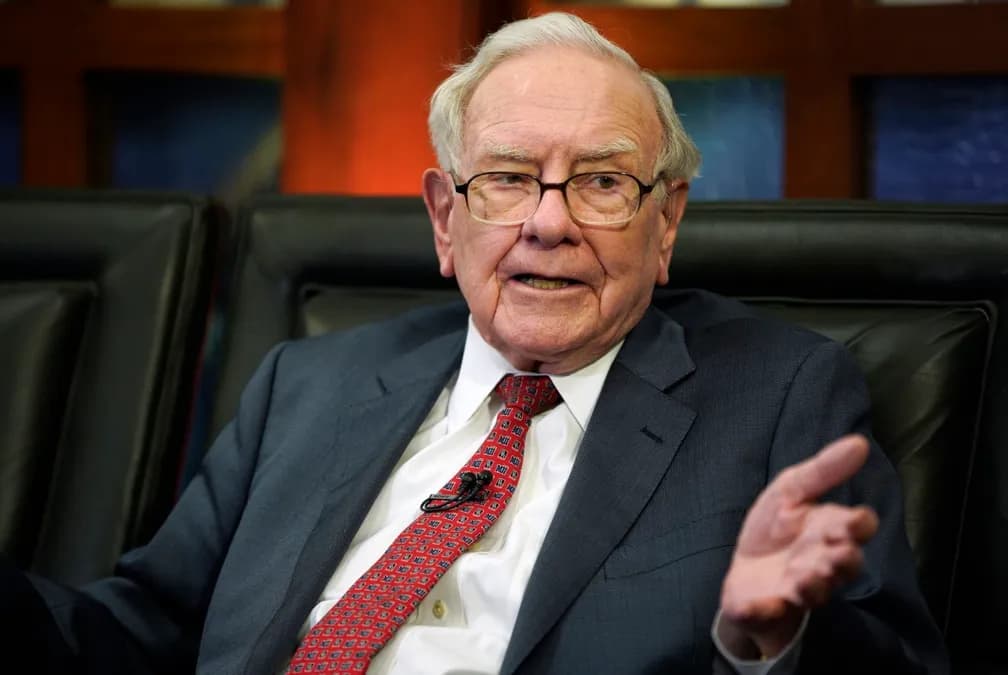
Roughly six decades after taking control of a struggling New England textile mill and transforming it into one of the most valuable companies on Earth, Warren Buffett has stepped down as chairman of Berkshire Hathaway. His son Howard G. Buffett will assume the chairmanship, while the elder Buffett transitions to the role of chairman emeritus and retains a seat on the board.
The transition caps a tenure of extraordinary duration. Buffett assumed effective control of Berkshire in 1965, when the company's shares traded for around fifteen dollars apiece. Berkshire's Class A shares have since appreciated to well over six hundred thousand dollars each — a compounding machine that has beaten the S&P 500 by a wide margin across multiple market cycles, recessions, and financial crises. Today, Berkshire Hathaway's market capitalization sits in the vicinity of one trillion dollars, making it one of a small handful of American companies to have crossed that threshold. The weight of what Buffett is handing over cannot be overstated.
This is not a sudden or emergency departure. Berkshire has been preparing investors, employees, and the broader financial community for a post-Buffett governance structure for years. Greg Abel was formally designated as the operational successor — the chief executive in waiting — in 2021. The chairman transition, with Howard Buffett stepping into the role, completes the two-track succession plan the company has been signaling. Orderly or not, the moment still carries enormous symbolic and practical weight.
Howard Buffett Takes the Chair: Who Is He and What Will He Do?
Howard Buffett is not a Wall Street figure. Warren Buffett's middle son has built his adult life around agriculture, conservation photography, and international humanitarian work. He has served on several corporate boards, including those of Berkshire subsidiaries, and his father has long positioned him as the ideal non-executive custodian of the company's culture rather than its day-to-day strategy.
Read next Altman: OpenAI IPO 'Ill-Advised' in 2026 | AI ValuationsThat framing matters. In American corporate governance, the chairman and CEO roles carry distinct responsibilities. The chairman oversees the board, provides strategic counsel, and — critically at Berkshire — serves as a check on the values the company projects to shareholders and employees alike. Howard Buffett is not expected to direct capital allocation or negotiate acquisitions. His mandate, as Warren Buffett has outlined publicly in past shareholder letters, is to preserve the culture and protect the long-term orientation that Berkshire has made its identity.
Whether a non-executive chairman whose background is in farming and philanthropy rather than insurance float and equity investing can carry that cultural weight is an open question. Skeptics will note that culture is easier to protect when the person who built it is still in the room. Supporters will argue that is precisely the point — Howard Buffett takes direction from his father's documented philosophy, and Warren Buffett remains on the board to provide continuity.
Warren Buffett's Enduring Role as Chairman Emeritus and Board Member

Becoming chairman emeritus is not retirement in any conventional sense. Buffett will remain a Berkshire board member, which means he retains formal governance standing, can attend meetings, weigh in on major decisions, and — perhaps most consequentially — continue to serve as the company's moral and reputational authority.
The emeritus designation is familiar in American institutional life. Universities, foundations, and large corporations have used it to keep founders engaged without concentrating formal power in aging leadership. At Berkshire, the practical effect may be that Buffett functions as a senior counselor to both the board and to Greg Abel, available for the kind of judgment calls — major acquisitions, unusual market dislocations, reputational crises — where his experience remains uniquely valuable.
What the title does not provide is a formal veto or executive authority. Buffett will be an influential presence, not a decision-maker. For investors who have long treated his annual letter and his occasional market commentary as investment guidance second to none, the shift in formal standing will require recalibration. The next annual letter to shareholders — if Buffett continues to write it — will be closely parsed for how explicitly he signals deference to Abel and the new board structure.
Berkshire Hathaway's Operational Future Under Greg Abel
Greg Abel, the Canadian-born executive who runs Berkshire Hathaway Energy and oversees the company's non-insurance operations, is the figure with the most operational authority in the post-transition structure. The question of how he will handle capital allocation — the central skill that defined Buffett's tenure — is the one institutional investors are asking most urgently.
Berkshire's balance sheet carries a cash position that has at times exceeded two hundred billion dollars, reflecting Buffett's insistence on maintaining fortress-level liquidity and his reluctance to overpay for acquisitions. Abel has given limited public signals about whether he shares that patience precisely, or whether he will feel pressure to deploy capital more aggressively to satisfy shareholders who have grown accustomed to watching Berkshire's cash pile grow without a clear deployment catalyst.
The company's portfolio — spanning GEICO, BNSF Railway, Berkshire Hathaway Energy, See's Candies, and massive equity stakes in Apple and Coca-Cola, among others — is vast enough that short-term operational performance is unlikely to shift dramatically. The harder test comes when Abel faces a genuinely large capital decision: a transformative acquisition, a major portfolio exit, or a significant market dislocation that demands either bold action or disciplined restraint. Those moments will define his tenure as they defined his predecessor's.
Investor Sentiment and Market Implications of the Leadership Shift
Markets have been anticipating this transition for long enough that the announcement itself may not produce a dramatic repricing of Berkshire's shares. But financial analysts who cover the stock have consistently noted what is sometimes called the "Buffett premium" — a valuation component tied not to Berkshire's assets or earnings alone, but to investor confidence that Buffett's presence ensures disciplined, long-term capital stewardship.
Historical precedents from other founder-to-family chairman successions offer mixed signals. At Walmart, the transition from Sam Walton's hands-on leadership to a family chairmanship combined with professional management maintained investor confidence over the long run, though the early years of succession involved considerable scrutiny of whether the culture would hold. Ford Motor Company's history of family chairmanship alongside professional CEOs offers another data point — one where governance friction occasionally surfaced publicly.
Institutional investors, who collectively hold substantial Berkshire positions through index funds, pension funds, and actively managed portfolios, tend to evaluate succession events through the lens of earnings stability and capital return predictability rather than sentiment alone. On those metrics, Berkshire's underlying businesses are durable enough that short-term volatility, if it materializes, is likely to be contained. The more persistent question is whether BRK.A and BRK.B will continue to attract the long-term, value-oriented shareholder base that Buffett cultivated — investors who buy based on philosophy as much as fundamentals.
What Comes Next: Berkshire's Long-Term Strategy Post-Buffett Era
The Berkshire of the next decade will not look identical to the Berkshire of the last. That is not a criticism — it is the nature of institutional evolution. Abel brings a different background, a different public profile, and presumably a different set of relationships with potential acquisition targets and capital markets counterparties. Whether those differences produce better or worse outcomes for shareholders will take years to determine.
What Berkshire retains, at least structurally, is the governance architecture Buffett designed: a board with long tenure, a chairman whose mandate is cultural stewardship, a CEO whose mandate is operational and capital discipline, and a cash-rich balance sheet that provides optionality in any market environment.
Buffett himself, as chairman emeritus and board member, remains a presence — quieter in formal authority, but impossible to ignore. His 60-year tenure as chairman did not end with a stumble or a scandal. It ended with a planned handoff to his son and a designated operational successor already in place. For a company of Berkshire's scale and complexity, that kind of preparation is rare, and it deserves recognition.
The transition era begins now. Investors will watch closely to see whether the institutions Buffett built are strong enough to thrive without him at the helm.
Source: WSJ.com: Markets