Warren Buffett Steps Down as Berkshire Hathaway Chairman After 60 Years
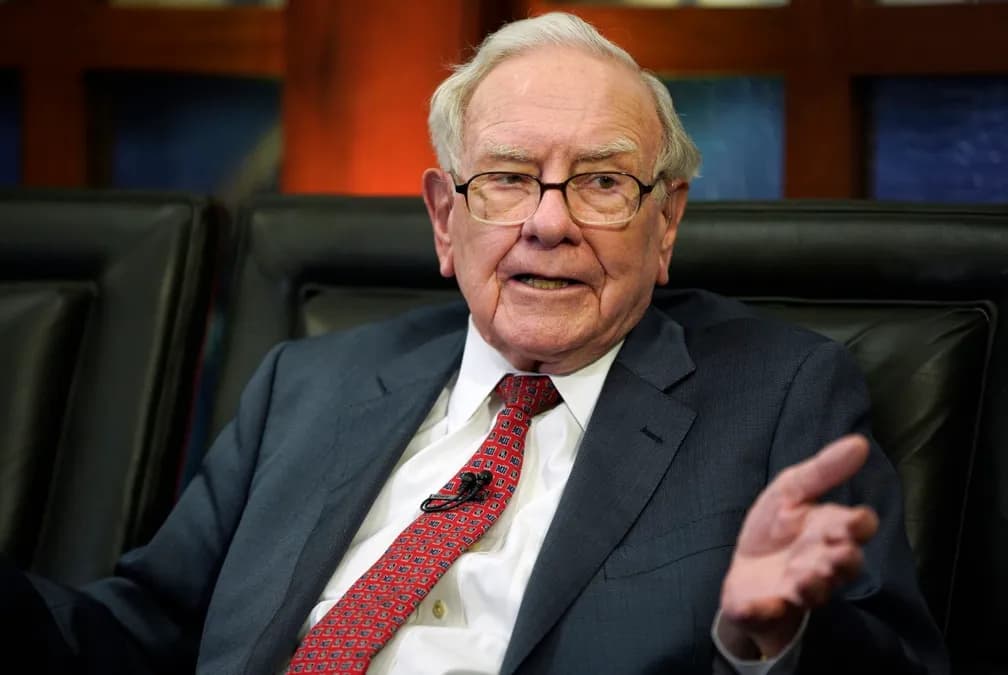
Warren Buffett steps down as Berkshire Hathaway chairman after approximately six decades — a tenure that transformed a distressed New England textile mill into one of the world's largest and most studied conglomerates. The announcement, dated September 18, 2026, separates the board chairmanship from the operational management structure at a moment when Berkshire's ownership footprint spans insurance, rail, energy, retail, and a multi-hundred-billion-dollar equity portfolio.
The scale of what Buffett built is difficult to compress into a single number, but the compound annual growth rate of Berkshire's book value — documented across decades of annual shareholder letters filed with the SEC — stands as the most durable evidence of his capital allocation discipline. From the mid-1960s through the early 2020s, Berkshire's per-share book value compounded at roughly 20 percent annually, a rate that vastly outpaced the S&P 500 over the same horizon. That track record now passes into institutional memory as Howard Buffett assumes the chairmanship his father shaped.
The transition is not an operational handover. Greg Abel, designated Berkshire's chief executive, holds the management reins. Warren Buffett steps down from the chairman seat specifically, retaining a board seat and the title of chairman emeritus — a distinction that preserves his formal connection to the institution without concentrating governance authority in a single individual past the point of succession.
Howard Buffett Takes the Chair: Who Is He?
Howard Graham Buffett, 71, brings a profile that diverges sharply from the archetype of a Wall Street succession candidate. His professional identity is grounded in agriculture, conservation, and food security philanthropy through the Howard G. Buffett Foundation, which has committed more than a billion dollars to conflict stabilization and smallholder farming programs across sub-Saharan Africa and Central America.
Read next Altman: OpenAI IPO 'Ill-Advised' in 2026 | AI ValuationsHe has served on Berkshire's board for years, providing exposure to the conglomerate's governance structure, but he has not been a portfolio manager, an insurance underwriter, or a capital allocator in the Berkshire tradition. That profile is precisely the point. His role is explicitly non-executive — a steward of culture and board integrity rather than an investment decision-maker. Governance research on large, diversified conglomerates consistently distinguishes the non-executive chairman's function from executive leadership: the chair sets board agendas, manages director independence, and serves as a counterweight to management entrenchment.
In that framing, Howard Buffett's background becomes less of a disqualification and more of a deliberate signal. Berkshire's ownership structure — with a dual-class share arrangement that concentrates voting power — has long reflected a preference for patient, values-driven stewardship. Installing a family-linked chairman institutionally committed to long-term thinking, rather than quarterly optimization, aligns with that philosophy.
Warren Buffett's Continued Role as Chairman Emeritus
The chairman emeritus designation is not ceremonial in a strictly passive sense. Warren Buffett remains on Berkshire's board, which means he retains a vote, a seat during deliberations, and a formal channel through which his perspective on capital allocation can be heard — even if that perspective no longer carries the institutional weight of the chairmanship.
The move echoes patterns seen at other large institutions where founders step back without stepping away entirely. The distinction matters to institutional shareholders: a chairman emeritus who remains a board director is not absent. For a company of Berkshire's complexity — dozens of wholly owned subsidiaries, a float-backed insurance operation in GEICO and General Re, a railroad in BNSF, and equity stakes ranging from Apple to Coca-Cola — continuity of institutional memory has tangible value.
Analysts at Morningstar and Bloomberg Intelligence have long tracked Berkshire's succession risk as a discrete variable in their valuation models. The consistent thesis: the company's decentralized management structure — subsidiary CEOs operating with considerable autonomy, headquarters staff deliberately lean — insulates Berkshire from the concentrated key-person risk typical of founder-led organizations. Warren Buffett steps down as Berkshire Hathaway chairman within that insulated architecture, which analysts argue reduces the governance shock the transition might otherwise carry.
What Comes Next for Berkshire Hathaway as a Conglomerate
Greg Abel's operational mandate is now unambiguous. The CEO function at Berkshire has, under its long-established model, emphasized discipline over dealmaking velocity — a preference for not overpaying, holding cash through expensive markets, and deploying capital only when the margin of safety is clear. Whether Abel applies that same patience or tilts toward faster capital deployment is the central strategic question for Berkshire's next chapter.
The conglomerate carries approximately $150 billion or more in cash and equivalents on its balance sheet. That reserve generates criticism from activists who favor buybacks or special dividends, and praise from value investors who see it as dry powder for a market dislocation. Abel inherited a Berkshire built for patient opportunity capture. His test comes when macro conditions produce a genuine buying moment — a financial crisis, a sector dislocation, a forced seller at scale.
The subsidiary portfolio requires ongoing capital stewardship as well. BNSF operates in a railroad industry facing competitive pressure from trucking and intermodal logistics. Berkshire Hathaway Energy navigates a transition that involves both regulated utility assets and renewable investment. These are not passive holdings. They demand active governance attention from a CEO who, unlike his predecessor, does not carry 60 years of accumulated industry relationships as an operating advantage.
Investor and Market Implications of the Leadership Change
For institutional shareholders, the formal separation of chairman and CEO roles at Berkshire is standard governance hygiene — the kind of structural clarity that proxy advisory firms like ISS and Glass Lewis have recommended for large conglomerates for years. The fact that it arrives now, paired with Warren Buffett's transition to emeritus status, removes a longstanding governance anomaly while introducing a known quantity in Howard Buffett.
Retail shareholders face a different adjustment. The intellectual spectacle of Buffett at the Omaha microphone — parsing capital markets, deflecting trend-chasing, anchoring long-term thinking in plain language — has been a distinctive institutional asset. That asset does not vanish immediately, but its form is now explicitly transitional.
Bloomberg Intelligence analysis of comparable governance transitions at founder-led conglomerates points to short-term price volatility followed by mean reversion. The underlying cash flow generation across Berkshire's operating subsidiaries — not the chairman's title — drives intrinsic value. Shareholders focused on that variable have the most stable footing heading into 2027.
Six Decades of Buffett: The End of an Era in American Finance
When Warren Buffett steps down as Berkshire Hathaway chairman, the formal record closes on one of the most studied capital allocation careers in financial history. The Berkshire model — buy durable businesses at fair prices, hold them indefinitely, give subsidiary managers genuine autonomy, resist the short cycle — was not invented by Buffett, but he demonstrated it at a scale and consistency that made it a reference architecture for institutional investors globally.
The chairman emeritus title is an honest designation. Buffett is not gone. He remains present, but in a different register — a voice that informs without governing, a reputation that anchors without directing. For Berkshire, that may be the most durable structure available: a successor chairman committed to culture, a CEO committed to capital discipline, and a founder committed to neither overstaying nor disappearing entirely.
Sixty years of compounding leaves a particular kind of institution. The task now is to preserve it.
Source: WSJ.com: Markets