Warren Buffett Steps Down as Berkshire Hathaway Chairman After 60 Years
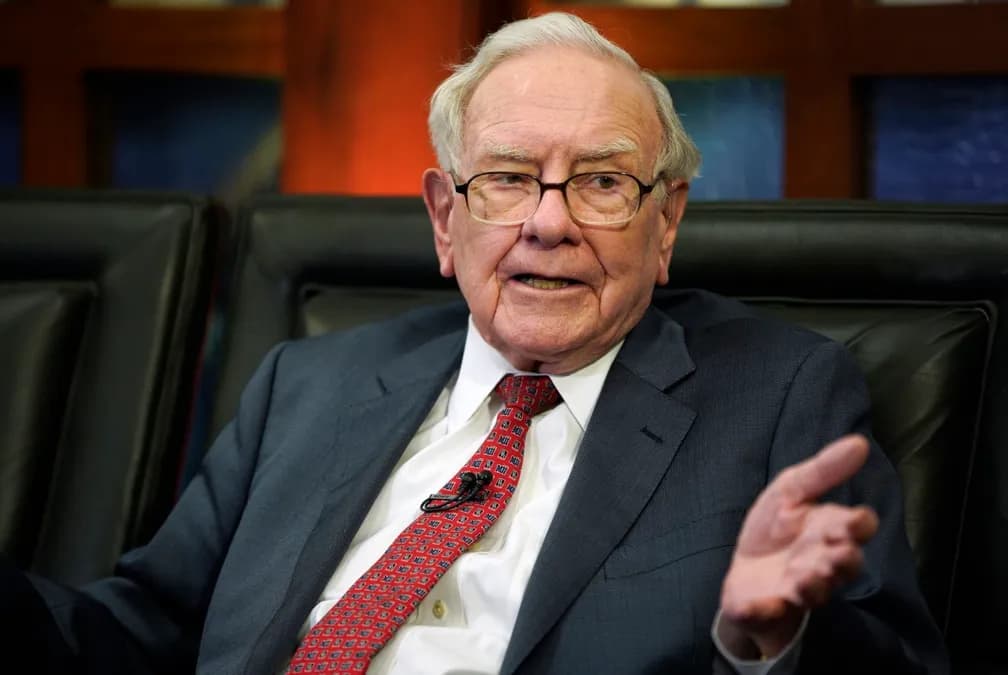
Warren Buffett steps down as Berkshire Hathaway chairman after roughly six decades at the helm of one of the world's most scrutinized conglomerates — a transition that marks the formal end of an unparalleled era in corporate governance. The legendary investor will not disappear from Berkshire entirely. He will remain on the board of directors and assume the title of chairman emeritus, preserving an advisory presence while passing the gavel to his son, Howard Buffett.
The handoff is orderly by design. Succession planning at Berkshire has occupied shareholder meetings, annual letters, and financial press coverage for well over a decade. Greg Abel was designated chief executive successor in 2021. The chairmanship transition to Howard Buffett completes the governance picture without introducing structural rupture.
For investors holding Berkshire Class A or Class B shares, the framing matters. Buffett retaining a board seat and an emeritus title signals continuity. This is a managed transition, not an abrupt departure, and it reads as such.
Howard Buffett Takes the Chair: Who Is He and What Can Investors Expect

Howard Buffett is not an unknown quantity inside Berkshire's boardroom. His multi-year tenure as a board member gave him direct exposure to the conglomerate's governance culture, capital allocation philosophy, and the subsidiary relationships that define Berkshire's operating model.
Read next Altman: OpenAI IPO 'Ill-Advised' in 2026 | AI ValuationsOutside the boardroom, Howard Buffett is publicly identified with agricultural and humanitarian work. The Howard G. Buffett Foundation has channeled hundreds of millions of dollars toward food security, conflict resolution, and sustainable farming across dozens of countries — a profile that diverges considerably from the financial biography of his father. That divergence is largely beside the point. The chairman role at Berkshire is a governance position, not an operational one. Day-to-day management of dozens of wholly owned subsidiaries flows through CEO Greg Abel.
The separation of chair and CEO roles is itself a governance signal worth noting. Proxy advisory firms and institutional shareholders have long advocated for precisely this structure as a check on management concentration. Howard Buffett chairing while Abel operates reflects an arrangement that governance reformers broadly endorse.
What investors should monitor is Howard Buffett's disposition toward capital allocation — specifically, whether the board maintains Berkshire's historically disciplined patience in deploying cash rather than pressing acquisitions at inflated valuations.
Six Decades of Warren Buffett's Stewardship: A Legacy by the Numbers

Numbers carry the weight of this legacy most efficiently. From 1965 through 2023, Berkshire Hathaway's per-share market value compounded at roughly 19.8% annually, against the S&P 500's total return of approximately 10.2% over the same span, according to figures published in the company's annual shareholder letters — primary source documents Berkshire releases publicly each year. Sustained over nearly six decades, that gap represents one of the most durable compounding records in modern financial history.
Berkshire's market capitalization crossed $1 trillion in 2023, placing it among a small cohort of American companies at that threshold. The portfolio spans major equity stakes in Apple, American Express, Coca-Cola, and Bank of America, alongside wholly owned operations in insurance, railroads, energy, and manufacturing.
The insurance float model — deploying premiums collected ahead of claims as an investment pool — has been a structural engine Buffett identified and built systematically over decades. That engine does not exit with the chairman. It is embedded in Berkshire's operating architecture and will function regardless of who chairs the board.
Berkshire's Omaha headquarters has historically run with a famously lean corporate staff relative to its enterprise scale, pushing authority to subsidiary managers. That decentralized structure is institutional, not personal.
What Changes — and What Stays the Same — at Berkshire Hathaway
The honest answer for most shareholders: less changes than the headlines suggest.
What remains intact is substantial. The capital allocation framework, the preference for businesses with durable competitive advantages and trustworthy management, the aversion to financial engineering — these principles are embedded in investor communications and a culture shaped over six decades. Greg Abel was developed within this ecosystem.
What changes is subtler but real. Warren Buffett was not merely a chairman; he was Berkshire's most powerful brand signal. His annual letter attracted readers who held no Berkshire shares. His presence at the Omaha shareholder meeting drew tens of thousands of attendees annually. That gravitational pull — the capacity to shift market sentiment by speaking — vacates the chairman's office even if the man stays on the board.
The cash deployment question deserves close attention. Berkshire's cash and Treasury holdings reached record levels in recent quarters. Deploying capital at scale requires acquisitions at prices consistent with Berkshire's return thresholds — a discipline that has occasionally meant sitting still for years. How aggressively the new governance configuration pursues large acquisitions will be among the most closely watched strategic indicators going forward.
Market Reaction and Investor Sentiment Around the Leadership Shift
Succession announcements at major holding companies tend to produce bounded near-term volatility, and the size of that volatility correlates with how well-prepared the market believes the transition to be. Berkshire's announcement is as well-telegraphed as such transitions come.
Analyst research on holding company succession risk has historically centered on key-man concentration risk — the degree to which a firm's investment philosophy and deal sourcing depend on a single individual's judgment and relationships. Morningstar equity analysts, in published research on Berkshire succession scenarios over prior years, have characterized the central question as whether a successor can credibly sustain the capital allocation discipline that produced the long-run record. That framing is representative of the broader sell-side view.
The emeritus structure partially addresses the concern. Buffett accessible to the board as emeritus preserves a consultative resource without creating authority ambiguity. The chain of command is clear.
Long-term Berkshire shareholders — many holding shares for decades, aligned with the patient-capital philosophy — are unlikely to treat a well-structured chairmanship transition as a selling signal. The shareholder base self-selects for investors who prioritize fundamentals over narrative.
The Road Ahead: Long-Term Outlook for Berkshire Hathaway Post-Buffett
Berkshire enters its post-Buffett chairmanship chapter as a fundamentally different entity than the struggling textile operation he gained control of in 1965. It is now a diversified financial and industrial conglomerate with durable cash generation, a float-backed investment engine, and a decentralized subsidiary architecture built to function independently of any single figure.
The governance structure taking shape — Buffett as emeritus, Howard Buffett as chairman, Greg Abel as CEO — distributes responsibility across roles in a way that reduces key-man concentration rather than simply shifting it.
The strategic questions ahead are concrete: deploying a large cash position at scale, managing energy assets through an evolving regulatory environment, and preserving the operational autonomy that keeps Berkshire's subsidiary model functional. These are the challenges any large conglomerate faces in 2026.
For the long-term investor, the underlying thesis — compounding capital at above-market rates through disciplined acquisition and decentralized subsidiary management — remains structurally intact. The steward changes. The structure does not.
Source: WSJ.com: Markets