The End of an Era: Buffett Steps Down as Berkshire Chairman
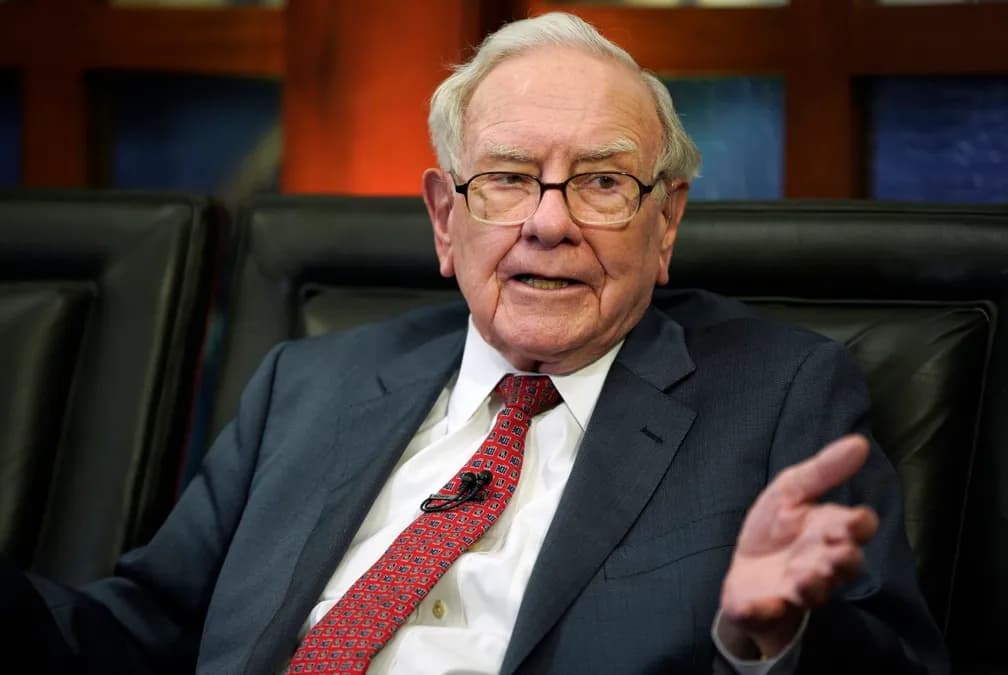
When Warren Buffett first took operational control of Berkshire Hathaway in 1965, the company was a struggling New England textile manufacturer with a market capitalization in the tens of millions of dollars. Six decades later, Berkshire stands as one of the largest enterprises on earth — at various points trading above $1 trillion in total equity market value. Now, Warren Buffett steps down as Berkshire Hathaway chairman, ending a governance tenure as long as most careers in finance.
The announcement, reported September 18, 2026, marks a formal milestone that investors and analysts had anticipated for years. Buffett, now 96, is ceding the chairmanship to his son Howard Buffett while retaining a seat on the board and assuming the title of chairman emeritus. The separation of the chairman role from day-to-day operations signals that Berkshire's long-planned succession framework is moving into its final phase.
This is not a sudden departure or a crisis-driven handover. It is a deliberate, sequenced governance transition from one of the most methodical capital allocators in modern financial history.
Howard Buffett Takes the Chair: What We Know
Howard Buffett, 71, is a farmer, photographer, and longtime Berkshire board member known more for his humanitarian work — particularly food security initiatives in sub-Saharan Africa — than for corporate finance credentials. That profile has drawn scrutiny in some quarters, though it is consistent with Berkshire's longstanding view that the chairman's role is primarily one of governance and culture, not operational management.
Read next Altman: OpenAI IPO 'Ill-Advised' in 2026 | AI ValuationsThe appointment is non-executive by design. Howard will not run Berkshire's businesses, oversee capital allocation decisions, or direct subsidiary management. Those responsibilities remain with Greg Abel, who was designated chief executive officer in succession to Buffett's operational role — a transition that itself preceded this chairmanship change.
Governance scholars have long drawn a distinction between the symbolic and functional weight of the chairman's seat at conglomerates where a dominant founder held both positions simultaneously. At Berkshire, chairman authority has historically been inseparable from Buffett himself. Howard's appointment separates those two dimensions explicitly for the first time.
Warren Buffett's Continuing Role as Chairman Emeritus
The chairman emeritus designation is meaningful precisely because of who holds it. Buffett will remain on Berkshire's board, giving him continued formal standing within the governance structure — not as a figurehead, but as an active director with the influence that comes from majority voting control over Berkshire's Class A shares.
In practice, chairman emeritus roles vary widely across corporate America. At some companies, they are largely ceremonial. At others, the emeritus holds substantive advisory authority and attends board meetings as a full participant. Given Buffett's continued board seat, his role appears closer to the latter.
For the investor community, the optics matter as much as the mechanics. Buffett's continued board presence provides continuity that a full departure would not. It also preserves direct institutional knowledge during a period when Berkshire's sprawling portfolio — spanning insurance, railroads, utilities, manufacturing, and a large equity investment book — requires navigating an unusually complex operating environment.
What the Transition Means for Berkshire Hathaway's Strategy
From a strategic standpoint, this governance change alters form without altering substance in the near term. Greg Abel has led Berkshire Hathaway Energy and served as vice chairman of non-insurance operations for years. The transfer of the chairmanship to Howard Buffett does not expand or restrict Abel's authority.
Berkshire's investment philosophy — concentrating in businesses with durable competitive advantages, maintaining substantial cash reserves, avoiding excessive debt — is codified in shareholder letters, annual meeting transcripts, and decades of operational precedent. That framework does not reside in any single governance title.
What does change is the symbolic center of gravity. Buffett's chairmanship was itself a form of institutional credibility, a shorthand for values that attracted long-term shareholders across generations. Howard Buffett will need to establish his own version of that credibility — not by replicating his father's investment acumen, but by demonstrating that the board can govern a $1 trillion enterprise with the same discipline the culture demands.
Capital allocation remains the central strategic challenge regardless of who chairs the board. Berkshire held approximately $325 billion in cash and Treasury bills as of mid-2025. Deploying that capital at scale, amid elevated asset valuations, is the question Abel and the investment team will face with or without the governance transition.
Lessons from Other Founder-Led Conglomerate Successions
Research on founder succession at large, diversified enterprises offers a sobering baseline. A McKinsey & Company analysis of long-tenured founder-CEOs found that transitions at companies where the founder held both chairman and CEO roles simultaneously tend to generate higher share-price volatility in the 12 to 24 months following the change, even when succession plans are well-articulated.
Harvard Business Review studies on succession planning have consistently highlighted one risk factor that Berkshire's structure is deliberately designed to avoid: placing a family member in an operational leadership role without commensurate business experience. Howard Buffett is not being asked to run Berkshire's businesses. He is being asked to chair the board — a governance function suited to his profile as a long-standing director with deep institutional knowledge of the culture.
Comparisons to other conglomerate transitions are instructive. When General Electric separated its chairman and CEO roles following Jack Welch's retirement, the transition was complicated by strategic drift and a governance board that struggled to challenge management rigorously. Berkshire's model explicitly separates operational from governance authority, which mitigates that risk — provided the board exercises genuine oversight rather than deferential consensus.
The Warren Buffett steps down Berkshire Hathaway chairman moment lands differently from most founder exits because Berkshire's identity has never rested on a single product line or technology cycle. It rests on a culture of decentralized management and conservative capital allocation that Abel and subsidiary managers have internalized over years.
Looking Ahead: Berkshire's Next Chapter
The transition from Warren Buffett to Howard Buffett in the chairman's seat is best understood as a cultural handoff, not an operational one. Berkshire's insurance float — historically above $160 billion, funding the company's investment engine — remains intact. Its operating subsidiaries, from BNSF Railway to Geico to Berkshire Hathaway Energy, are run by experienced operators who predated this governance change.
What investors will watch closely over the next two to three years is the board's appetite for large capital deployment and the pace of any portfolio evolution under Abel. Berkshire has historically been slow to exit positions even when valuations appear stretched — a discipline that has served long-term shareholders well but occasionally frustrated those seeking more active management.
Howard Buffett's effectiveness as chairman will ultimately be judged not on his public profile or family name, but on whether the board he leads can hold management accountable, attract capable leadership at the subsidiary level, and preserve the governance culture built across six decades. Those are quiet, unglamorous functions. At Berkshire Hathaway, quiet and unglamorous has always been the point.
Source: WSJ.com: Markets