Warren Buffett Steps Down as Berkshire Hathaway Chairman After 60 Years
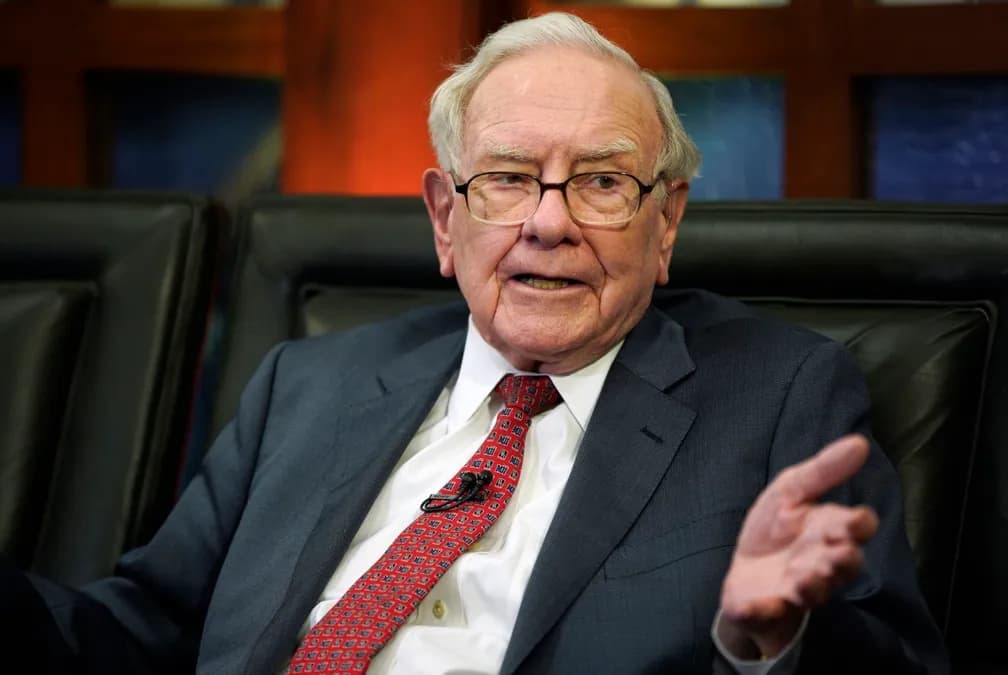
Warren Buffett steps down as Berkshire Hathaway chairman after more than six decades at the helm of America's most closely watched conglomerate — a transition that reshapes one of the longest-running corporate dynasties in modern financial history. His son Howard will assume the chairmanship, while Warren remains on the board as chairman emeritus, a title that keeps him present without formal governing authority.
The announcement completes a handover years in the making. Since Greg Abel was designated Buffett's successor as chief executive, the structural separation of the chairman and CEO roles has grown increasingly significant. The chairmanship is a stewardship position — it oversees board governance and corporate culture rather than daily operations. Passing it to a family member signals continuity of ethos even as operational authority migrates to professional management.
Few corporate transitions in American history carry this weight. Buffett acquired a controlling stake in what was then a struggling New England textile company in 1965, when a single Class A share traded near $18. By 2025, that same share commanded more than $700,000 on the New York Stock Exchange. Annual reports filed with the Securities and Exchange Commission document a compounded annual growth rate in book value exceeding 19 percent over five decades — against roughly 10 percent for the S&P 500 over comparable periods.
Howard Buffett: The New Chairman of Berkshire Hathaway
Howard Buffett is not unfamiliar to Berkshire's governance structure. He has served as a board director for years and brings a profile deliberately distinct from his father's: a farmer and philanthropist whose public work concentrates on food security through the Howard G. Buffett Foundation.
Read next Altman: OpenAI IPO 'Ill-Advised' in 2026 | AI ValuationsHis chairmanship is non-executive. He will preside over the board and protect cultural continuity — not manage the insurance float or direct capital deployment. That responsibility remains with Greg Abel, the Canadian executive publicly named Buffett's operational heir in 2021.
This distinction matters for institutional investors. A 2022 CFA Institute paper on founder-led transitions found that conglomerates retaining strong cultural continuity through a non-executive steward experienced lower post-succession volatility in earnings multiples than those that underwent abrupt governance breaks. Howard's mandate, in that framework, is not to run Berkshire — it is to guard what six decades of disciplined ownership created.
Six Decades of Warren Buffett: Building the Berkshire Empire
The scale of Buffett's achievement is difficult to overstate. From a textile mill trading below $20 per share, Berkshire grew into a conglomerate whose market capitalization briefly crossed $1 trillion in 2024. The company now encompasses BNSF, one of the nation's largest private rail networks; GEICO, a top-tier auto insurer; Berkshire Hathaway Energy; and dozens of manufacturing, retail, and service businesses. Its publicly traded equity portfolio has historically been valued above $300 billion, anchored by Apple, Coca-Cola, American Express, and Bank of America.
The engine behind this compounding was Buffett's use of insurance float — premiums collected before claims are paid — as a near-costless funding source for long-term equity investments. A widely cited 2013 paper in the Financial Analysts Journal by Frazzini, Kabiller, and Pedersen attributed a meaningful portion of Berkshire's excess returns to this low-cost leverage, combined with a persistent tilt toward quality, low-volatility businesses. It is an architecture that no competitor has successfully replicated at scale.
What Comes Next for Berkshire Hathaway as a Conglomerate
Greg Abel inherits a company generating tens of billions in annual operating earnings, a cash reserve that swelled to record levels in recent years, and a board now chaired by a man whose role is cultural stewardship. The structural advantages — insurance float, durable subsidiaries, minimal holding-company debt — remain intact.
Harvard Business Review research on founder succession in diversified industrials consistently identifies two failure modes: cultural drift and capital misallocation. The first erodes a company's competitive edge quietly. The second deploys abundant cash into diminishing returns. Abel has worked inside Berkshire long enough to internalize its principles. His public statements have mirrored Buffett's emphasis on long-term ownership over short-term optionality.
What does not transfer easily is the informal network. Buffett's ability to close acquisitions on a handshake — sourced through decades of personal relationships with CEOs and founders — was a genuine edge. Replicating that deal-sourcing channel through institutional process is the real, unsexy challenge Abel faces. Berkshire will remain a preferred buyer for private businesses seeking permanence, but the phone calls that generated some of the best deals will be harder to replicate.
Investor and Market Reaction to Berkshire's Leadership Change
Berkshire's dual-class share structure provides meaningful insulation from activist pressure. Class A shares carry disproportionate voting weight relative to the more widely held Class B shares, meaning that even large institutional positions cannot force governance changes from outside. The board controls the company's direction — a structural feature Buffett has defended explicitly as essential to long-term thinking.
Historically, announcements touching on Buffett's future have moved markets more through symbolism than fundamentals. When Berkshire disclosed in 2011 that Buffett had been treated for early-stage prostate cancer, Class A shares dipped modestly before recovering within days. When Abel's succession was confirmed in 2021, the stock absorbed the news without dramatic movement — evidence that sophisticated investors had long been pricing in the eventual transition.
That pattern is consistent with broader succession research. A 2019 paper in the Strategic Management Journal found that conglomerates with explicit succession plans in place for at least two years before execution experienced significantly smaller negative abnormal returns than those that underwent unplanned leadership changes. Berkshire has been signaling this transition publicly for years, which argues against a sharp market dislocation.
Key Takeaways: Berkshire Hathaway's Path Forward
The moment Warren Buffett steps down as Berkshire Hathaway chairman after six decades marks the formal conclusion of the most consequential individual tenure in American corporate history. The transition has been engineered to minimize disruption: Howard takes the chairmanship in a non-executive capacity, Greg Abel retains operational control, and Warren stays on the board as chairman emeritus.
The structural foundations Buffett built — the float-funded investment engine, the decentralized subsidiary culture, the dual-class voting shield — are all intact. The real test will emerge over the next decade. Can Abel deploy Berkshire's enormous cash reserves at comparable returns? Will the conglomerate premium hold without its founder as its public symbol?
Those questions will take years to answer. What the transition confirms today is the durability of institutional design over individual genius. Berkshire was built to outlast its builder — and now, finally, that thesis is being tested.
Source: WSJ.com: Markets