Warren Buffett Steps Down as Berkshire Hathaway Chairman After 60 Years
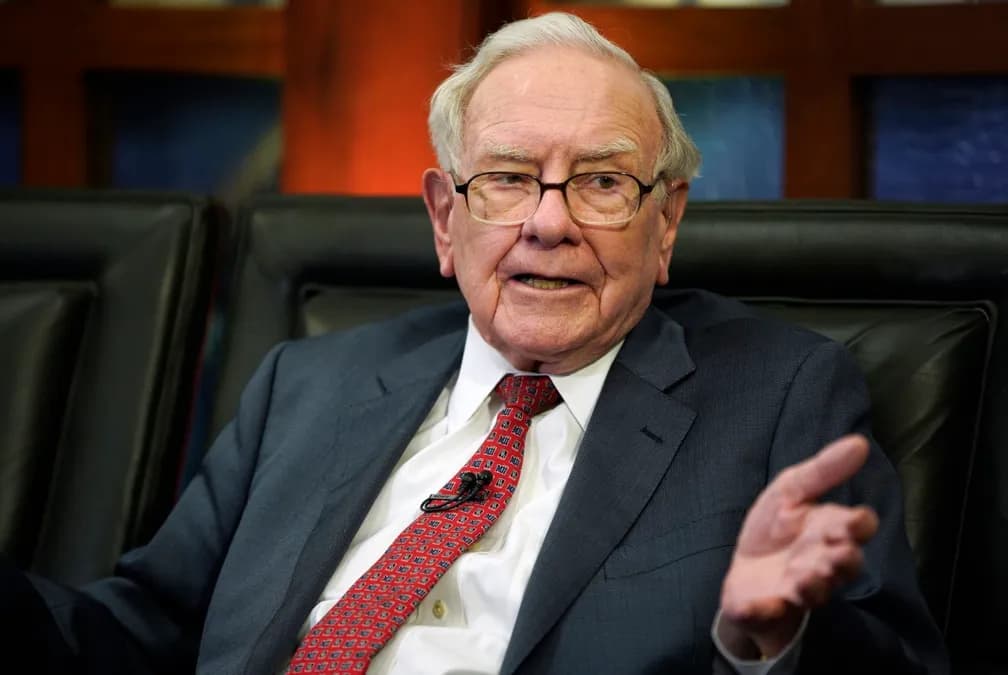
Warren Buffett steps down as Berkshire Hathaway chairman after more than six decades at the helm of one of the world's most closely watched corporations. The announcement, which arrived in September 2026, confirmed a transition that Berkshire observers had long anticipated yet never quite expected to witness in real time. Buffett will remain on the board of directors and assume the title of chairman emeritus — a designation that keeps him symbolically close to the institution he transformed from a struggling New England textile mill into a sprawling financial and industrial empire.
The timing is deliberate. Berkshire had already navigated CEO succession, with Greg Abel assuming operational leadership. The chairmanship question was always a separate and, in many respects, more philosophically charged matter. Buffett did not merely run Berkshire; he embodied its investment ethos, its shareholder culture, and its public identity. His departure from the chair represents a genuine transfer of stewardship — not just a management reshuffle. Short, methodical, and years in the making. That is how Berkshire does most things.
Howard Buffett: The New Face at the Top of Berkshire
Howard Buffett, Warren's son, will assume the chairmanship. The appointment is unusual by conventional S&P 500 standards, yet it reflects a specific philosophy about what the chairman role at Berkshire should accomplish.
Read next Altman: OpenAI IPO 'Ill-Advised' in 2026 | AI ValuationsAcademic research on family-member non-executive chairmanships at large-cap American companies consistently identifies two outcomes: strong cultural continuity, or entrenched friction with professional management. At Berkshire, the design is transparently in service of the former. Howard is not stepping in as an operational executive. The intent is preservation — of capital allocation culture, of the decentralized subsidiary model, and of the trust that managers across Berkshire's eighty-plus operating businesses have placed in Omaha's judgment.
Howard Buffett has served on Berkshire's board and brings his own record in agriculture and philanthropy. Corporate governance specialists who study non-executive chairmanships frequently note that the role's effectiveness depends less on industry credentials than on the ability to act as a credible cultural anchor — particularly in the years immediately following a founder's operational exit. That is precisely the function Howard is being asked to perform.
Six Decades of Warren Buffett's Chairmanship: A Legacy in Numbers
Numbers tell the story with appropriate economy. When Buffett took control of Berkshire Hathaway in 1965, the company was worth roughly $22 million. By the mid-2020s, its market capitalization had grown to exceed $900 billion, according to data widely cited by Bloomberg and FactSet — one of the most sustained value-creation records in the history of American enterprise.
Berkshire's Class A share price, which traded below $20 in 1965, surpassed $600,000 in recent years. The company never split that share class. That was a deliberate choice designed to filter for long-term, sophisticated investors and reinforce the culture Buffett built.
The conglomerate now holds majority or full ownership in more than ninety businesses, including GEICO, BNSF Railway, Berkshire Hathaway Energy, and a substantial public equity portfolio encompassing long-standing positions in American Express, Coca-Cola, and Bank of America. This empire was assembled through patient acquisition and permanent ownership — not hostile takeovers or financial engineering. The compound annual return on Berkshire's book value averaged approximately 19.8 percent per year from 1965 through the mid-2020s, against roughly 10.2 percent for the S&P 500 over the same horizon. That gap, sustained across six decades, is the empirical foundation of Buffett's standing.
How Berkshire Hathaway's Conglomerate Structure Shapes the Succession
Berkshire's architecture was designed, explicitly and intentionally, to outlast any single leader. That architecture is now being tested in public view.
The company operates as a permanent holding company rather than an active acquirer. Subsidiary managers run their businesses with minimal interference from Omaha. Capital allocation — determining where excess cash flows — is the central function corporate headquarters performs, and that responsibility has transitioned to Abel. The chairman role is principally about governance, tone, and accountability to shareholders.
Conglomerate succession research by academic finance scholars identifies one consistent risk following founding-generation exits: the gradual erosion of the capital discipline that made the original model work. At Berkshire, that discipline was never bureaucratic. It was personal — embedded in Buffett's own willingness to hold cash rather than overpay for acquisitions. How well that discipline survives institutionalization is the defining long-term question.
Veteran Berkshire analysts have long argued that the company's most durable structural asset is its insurance float — the billions in premium income held before claims are paid, which Berkshire deploys as essentially free investment capital. That float is mechanical. It does not require Warren Buffett to function. That distinction meaningfully separates Berkshire's succession risk profile from most other conglomerates, where the founder's judgment was embedded in less replicable places.
Investor Reaction and Market Implications of the Leadership Shift
Markets had years to price in a post-Buffett Berkshire. The formal chairmanship announcement will nonetheless prompt reassessment, particularly among retail shareholders who have held Berkshire as a proxy for Buffett's personal judgment rather than as a pure conglomerate investment.
Institutional shareholders tracking governance will focus on whether the board retains sufficient independence with Howard Buffett as a family-member chairman. The non-executive chairman role, when well-structured, provides a counterweight to management and protects minority shareholders. When it becomes ceremonial, oversight quality degrades. Berkshire's board composition and the formal scope of Howard's authority will receive close scrutiny from governance-focused fund managers.
For long-term shareholders, the fundamental investment thesis — a diversified collection of durable businesses generating strong free cash flow, managed with conservative financial principles — has not changed. What changes is the question of who enforces that thesis when capital allocation temptation arises. Short-term price volatility around succession announcements at founder-led companies is historically common. Long-term performance deviations depend overwhelmingly on whether the underlying business model remains intact.
What Comes Next: Berkshire Hathaway's Strategic Outlook Post-Buffett
Berkshire enters this new era with a cash position that, by 2025, had grown to record levels exceeding $300 billion — a reserve that simultaneously represents enormous optionality and a signal that Buffett found few acquisitions meeting his price discipline in a competitive market.
How Abel and the new governance structure deploy that capital will define Berkshire's next chapter. Large acquisitions remain possible. Increased share repurchases are likely if valuations justify them. A shift toward regular dividend payments — long resisted by Buffett as capital misallocation — is a structural question this era will eventually need to answer directly.
Warren Buffett remains on the board. That presence, even in an emeritus capacity rather than as chair, provides continuity and institutional memory that no governance document can fully replicate. Markets and managers will still take cues from his views. The transition is orderly. It is the product of decades of deliberate planning by someone who built Berkshire precisely to endure beyond himself. Whether Berkshire fulfills that design without its principal architect will be one of corporate America's most consequential succession stories of the coming decade.
Source: WSJ.com: Markets