Warren Buffett Steps Down as Berkshire Hathaway Chairman After 60 Years
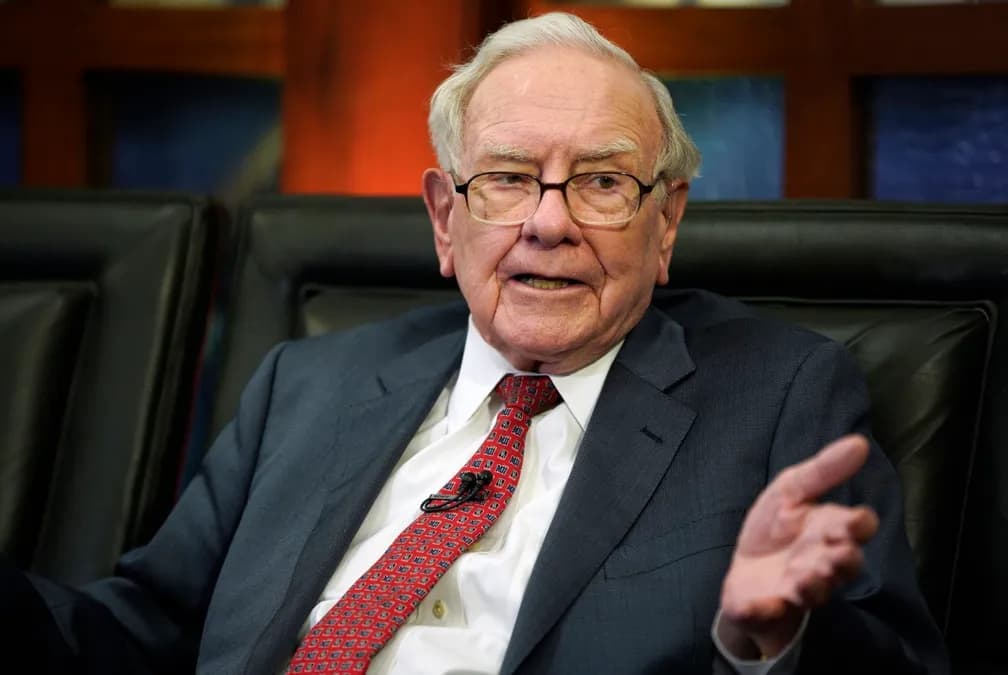
Warren Buffett steps down as Berkshire Hathaway chairman, closing a chapter that began when most of today's institutional portfolio managers were not yet born. The announcement, reported by The Wall Street Journal on September 18, 2026, confirmed that Buffett's son Howard will succeed him in the chairmanship role, while Warren himself will remain on the board and assume the title of chairman emeritus. For a company that has compounded book value at roughly 19 percent annually over the course of Buffett's stewardship — a track record documented repeatedly in Berkshire's annual shareholder letters and cross-referenced against S&P 500 returns — the transition carries weight far beyond a single executive title.
This is not a sudden exit. The architecture of Berkshire's succession has been assembled deliberately over years, reflecting a governance philosophy that prioritizes institutional continuity over any one individual. Greg Abel, Berkshire's vice chairman of non-insurance operations, was publicly identified as the CEO heir apparent in 2021. The chairmanship transfer to Howard Buffett represents the final structural piece of a planned handover — measured, methodical, and characteristically unhurried.
Howard Buffett Takes the Chair: Who Is He and What Will He Do?
Howard Buffett has spent years on Berkshire's board of directors, but he is perhaps best known publicly for his work outside of finance. He has devoted considerable energy to agricultural research and humanitarian causes through the Howard G. Buffett Foundation, which focuses on food security and conflict stabilization. That biography positions him as a non-executive chairman in the truest sense — a steward of governance and culture rather than a hands-on operator of the conglomerate's moving parts.
Read next Altman: OpenAI IPO 'Ill-Advised' in 2026 | AI ValuationsThe non-executive chairman structure is well-established in large, complex organizations. In this model, the chairman presides over the board, ensures director independence, and acts as a counterbalance to executive management — functions that differ fundamentally from the active operational oversight Buffett exercised when he held both the CEO and chairman roles simultaneously for decades. Governance researchers at institutions such as the Harvard Law School Forum on Corporate Governance have documented how separating these roles can improve board accountability and reduce CEO entrenchment risk, particularly at founder-led companies where power has historically concentrated in one person.
Howard's specific mandate will not be to pick stocks or direct capital allocation. Berkshire's operating philosophy — decentralized management, long-duration capital, managerial autonomy at subsidiaries — is embedded deeply enough in the organization's culture that the chairman's primary job is preservation rather than transformation.
Six Decades of Warren Buffett's Leadership at Berkshire Hathaway
When Buffett began accumulating shares in what was then a struggling Massachusetts textile company in 1962, Berkshire Hathaway had no insurance float, no railroad, no energy subsidiary. Today, the conglomerate spans GEICO, BNSF Railway, Berkshire Hathaway Energy, a sprawling portfolio of wholly owned manufacturers and retailers, and a publicly traded equity portfolio that has at times exceeded $300 billion. Its Class A shares, which crossed $700,000 apiece in recent years, have become the most expensive single share price of any listed U.S. company — a deliberate choice by Buffett to discourage short-term speculation.
The scale of what is being handed over is genuinely extraordinary. Berkshire's total market capitalization entered the $1 trillion tier, making it one of a small cohort of U.S. companies to achieve that threshold. When Buffett took operating control in 1965, the enterprise was worth a few million dollars. The arithmetic of that compounding is not anecdote — it is documented in audited financials filed with the Securities and Exchange Commission and analyzed extensively by financial historians and practitioners.
Buffett's intellectual legacy extends beyond returns. His annual letters to shareholders have been studied as primary texts on capital allocation, corporate governance, and investment philosophy at business schools from Wharton to Oxford's Saïd Business School. The language he introduced — "circle of competence," "economic moat," "Mr. Market" — has migrated into the standard vocabulary of professional investors globally.
What Comes Next: Berkshire's Strategic Outlook Post-Buffett
The central question for analysts is not whether Berkshire can survive without Warren Buffett. The company's operating businesses generate substantial and largely autonomous cash flows that do not depend on his daily involvement. The harder question is whether Berkshire can continue to deploy capital at scale with the same discipline and confidence that defined the Buffett era.
Research on post-founder transitions at major corporations offers mixed signals. S&P Global studies on founder-led versus successor-led companies have found that founder-led firms often outperform in the early stages of maturity but can face structural challenges when succession is poorly managed. Berkshire's situation differs because the succession has been managed with unusual transparency. Greg Abel's role has been defined, the capital allocation philosophy has been articulated publicly for decades, and the board composition reflects a culture of long-tenured, deeply familiar directors.
The cash deployment challenge is real. Berkshire has historically held significant cash reserves — a discipline that frustrated some shareholders during bull markets but insulated the company during downturns. Abel will need to demonstrate his own version of that patience while also proving he can execute large acquisitions in a market where attractive targets have become harder to find at sensible prices. The $100 billion-plus cash balances Berkshire periodically accumulates demand enormous deals to move the needle, and those deals have grown scarcer in a world of higher valuations.
Investor Reaction and Market Implications of the Leadership Change
Markets had priced in much of Berkshire's succession risk years before this announcement. Since Abel's identification as CEO successor in 2021, institutional investors have had time to update their thesis. The chairman transition to Howard Buffett had been widely anticipated by governance analysts, which likely dampened any sharp market reaction.
Still, the title change carries symbolic weight. For retail investors who bought Berkshire shares precisely because of their faith in Warren Buffett as an individual — a group that is not small — the chairman emeritus designation may require a reframing of the investment case. Chairman emeritus is an honorific that typically confers no formal authority over management or board decisions. It signals respect and continuity of association without creating a parallel power structure that could complicate Abel's authority.
Institutional investors, particularly long-only equity funds with large Berkshire positions, will be watching the composition of the board under Howard's oversight. Independence standards, committee structures, and the pace of director renewal will all serve as leading indicators of whether the governance culture translates across generations.
Key Takeaways for Long-Term Berkshire Hathaway Shareholders
Long-term Berkshire shareholders have always been asked to buy a culture as much as a company. Buffett said repeatedly — in public letters, at annual meetings, and in interviews — that the goal was to build an institution that would endure beyond any individual.
Several things have not changed. Berkshire's wholly owned subsidiaries continue to operate independently. GEICO still writes auto insurance. BNSF still moves freight across North America. Berkshire Hathaway Energy still operates regulated utilities. The economic engines that generate the cash flows underpinning the company's value are not affected by a chairman transition.
What shareholders should monitor is capital allocation over the next three to five years. Abel's acquisition track record and his willingness to hold cash through overvalued markets will be the clearest evidence of whether the Buffett approach has genuinely been institutionalized. The chairman emeritus role means Warren Buffett remains available as counsel — a resource few successor CEOs have ever had. That proximity to the company's founding intelligence is not nothing.
The transition that has been announced is, at its core, the logical completion of a succession plan built over many years. After six decades, Warren Buffett is stepping back from a formal governance title. The institution he built is meant to stand without him. Now comes the proof.
Source: WSJ.com: Markets