Warren Buffett Steps Down as Berkshire Hathaway Chairman After 60 Years
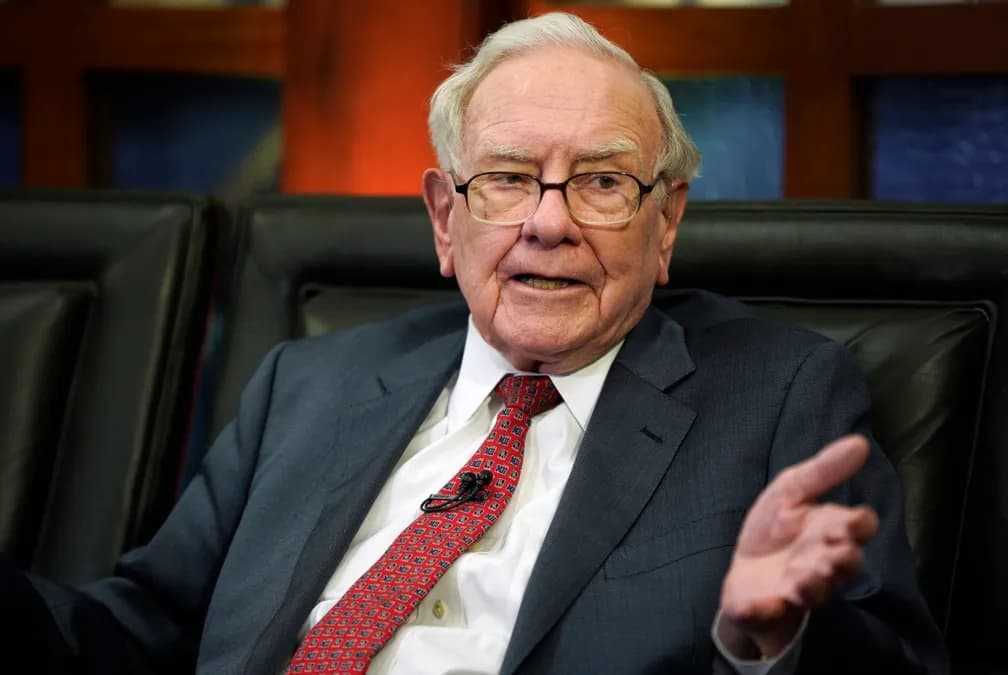
Warren Buffett steps down as Berkshire Hathaway chairman after more than six decades atop one of the most closely watched corporate structures in American business. The departure, announced in September 2026, marks the formal end of an era that began when Buffett first took control of a struggling New England textile company in 1965 and transformed it into a diversified conglomerate with a market capitalization that has at times exceeded $1 trillion.
The transition follows a carefully structured succession plan. Buffett will remain on Berkshire's board of directors and assume the role of chairman emeritus — retaining an advisory presence without the formal governance authority the chairmanship carries. His son Howard Buffett will take the chair, providing a measure of continuity with the Buffett name while power shifts meaningfully toward professional management.
This is not an abrupt exit. It reflects the deliberate, methodical handover that Berkshire's largest institutional shareholders have long anticipated. For years, analysts at firms such as Morningstar flagged succession as the single largest risk factor embedded in Berkshire's valuation premium — a premium the market assigned in part to Buffett's personal reputation and judgment. The announcement resolves that structural uncertainty, at least in its formal dimension.
Who Is Howard Buffett? The New Chairman of Berkshire Hathaway

Howard Buffett is not a Wall Street figure. The 71-year-old son of Warren Buffett built his public profile primarily through philanthropic and agricultural work, including extensive humanitarian operations in sub-Saharan Africa through the Howard G. Buffett Foundation. He has served on Berkshire's board for years and is a familiar presence within the company's governance framework — known to management, trusted by the family, and comfortable with the institution's culture.
Read next Altman: OpenAI IPO 'Ill-Advised' in 2026 | AI ValuationsHis ascent to the chairmanship is by design. Warren Buffett stated publicly on multiple occasions that he envisioned a non-executive chairman role focused on corporate culture and protecting shareholder interests, not on operational strategy or capital allocation. Howard fits that profile precisely. He is not expected to involve himself in portfolio decisions or the day-to-day management of Berkshire's sprawling subsidiaries.
That distinction matters. The chairman role at Berkshire has always carried symbolic weight alongside formal governance duties. A non-executive Howard Buffett signals that the company's defining characteristics — frugal, decentralized, long-term oriented — will be preserved at the board level, even as professional executives handle execution below it.
Berkshire Hathaway's Leadership Structure Going Forward
Berkshire's operational future rests primarily with Greg Abel, who was formally identified as CEO successor in 2021. Abel oversees the company's non-insurance operations and has deep experience managing regulated utilities and infrastructure assets through Berkshire Hathaway Energy. His appointment as CEO designate had been telegraphed through board disclosures and annual meeting commentary over several years — nothing about it was improvised.
The new structure places three distinct roles in three distinct hands. Buffett becomes chairman emeritus, an advisory figure with board presence but no formal control. Howard Buffett assumes the chairmanship as cultural steward and governance anchor. Abel leads the operating enterprise as CEO. Whether this three-tier arrangement functions cleanly will depend on the alignment between Abel's strategic instincts and the board's institutional patience.
Berkshire's decentralized model — subsidiaries operate with substantial autonomy, capital allocation flows upward to the center — suits a management team that respects the existing architecture. Abel has given every indication that he does. The central question is not whether Berkshire will be badly managed after this transition, but whether it will be managed with the same distinctive restraint that produced the company's long record of above-market compounding.
What Investors Should Expect From Berkshire Post-Buffett
Research on founder-led conglomerate transitions offers a deliberately mixed picture. When Jack Welch stepped down at General Electric in 2001 after 20 years, GE's stock initially held, then suffered a prolonged decline as the financial engineering embedded in GE Capital unraveled under his successor. At Walmart, the Walton family retained meaningful board influence after Sam Walton's death in 1992, providing cultural continuity that helped the retailer navigate significant disruption over subsequent decades without losing its operational identity.
Berkshire is structurally closer to the Walmart model. Family board presence is retained. The company carries no structural pressure to generate short-term earnings growth. Its insurance float, railroad operations, and diversified holdings produce durable, predictable cash flows. Bloomberg Intelligence analysts have observed that conglomerates with stable cash generation and diversified asset bases tend to experience less post-founder valuation volatility than those that depend on a single visionary for growth thesis articulation.
Berkshire's Class A shares compounded at approximately 19.8% annually between 1965 and the time of this transition, compared with roughly 10.2% for the S&P 500 over the same period, according to the company's own annual reports. Replicating that gap is not the expectation — it never was. For institutional investors, the operative question is whether Berkshire can sustain its capital allocation discipline and maintain the trust of subsidiary managers who have historically chosen to operate under the Berkshire umbrella rather than pursue independent financing.
Near-term volatility around the announcement is plausible. Markets typically reprice leadership uncertainty when it resolves, and direction depends on whether investors perceive Abel as credible and whether Buffett's chairman emeritus role reads as genuine stewardship or symbolic continuity.
The Legacy Warren Buffett Leaves Behind
Few business careers in modern American history are comparable in duration and consistent impact. Buffett took over a failing textile mill and built one of the largest companies by market capitalization on the planet. The Berkshire model — buy quality businesses at fair prices, leave management in place, resist the urge to sell — became a template studied in business schools and imperfectly replicated by dozens of imitators over half a century.
Beyond returns, Buffett shaped norms of shareholder communication. His annual letters, written in plain language and designed to educate rather than impress, established a standard for transparency that corporate governance advocates still cite. His public stance against excessive executive compensation and financial complexity gave credibility to positions many fund managers privately held but rarely articulated.
The 2006 pledge to give away the bulk of his fortune — made alongside Bill Gates as part of what became the Giving Pledge — removed any ambiguity about the ultimate destination of his Berkshire holdings. Paired with decades of restrained personal spending, it made Buffett a figure who transcended the usual category of billionaire investor.
Key Takeaways for Shareholders and the Market
For shareholders, the transition is best read as an orderly resolution of a succession risk that analysts cited for at least a decade. Buffett remains connected to Berkshire as a board member and chairman emeritus, limiting the risk of a sharp cultural break. Howard Buffett's non-executive chairmanship is designed to preserve governance stability without inserting a competing operational voice. Greg Abel's mandate is clear and pre-established.
The conglomerate discount that has periodically applied to diversified holding companies like Berkshire could narrow if Abel demonstrates consistent capital allocation discipline over the coming years. It could widen if the absence of Buffett's personal brand erodes the implicit premium attached to his judgment.
What the announcement confirms, taken plainly, is that Warren Buffett steps down as Berkshire Hathaway chairman having structured the most consequential management transition in the company's history entirely on his own terms. The architecture is in place. Whether the next generation builds on it is the story investors will monitor for years to come.
Source: WSJ.com: Markets