What Is Carbon and Why It Matters for Climate
Carbon is one of the basic building blocks of life. It is in human bodies, trees, soils, oceans, rocks, coal, oil, gas and the atmosphere. On its own, carbon is not a pollutant. The problem begins when human activity moves large amounts of carbon from underground storage into the air faster than natural systems can absorb it.
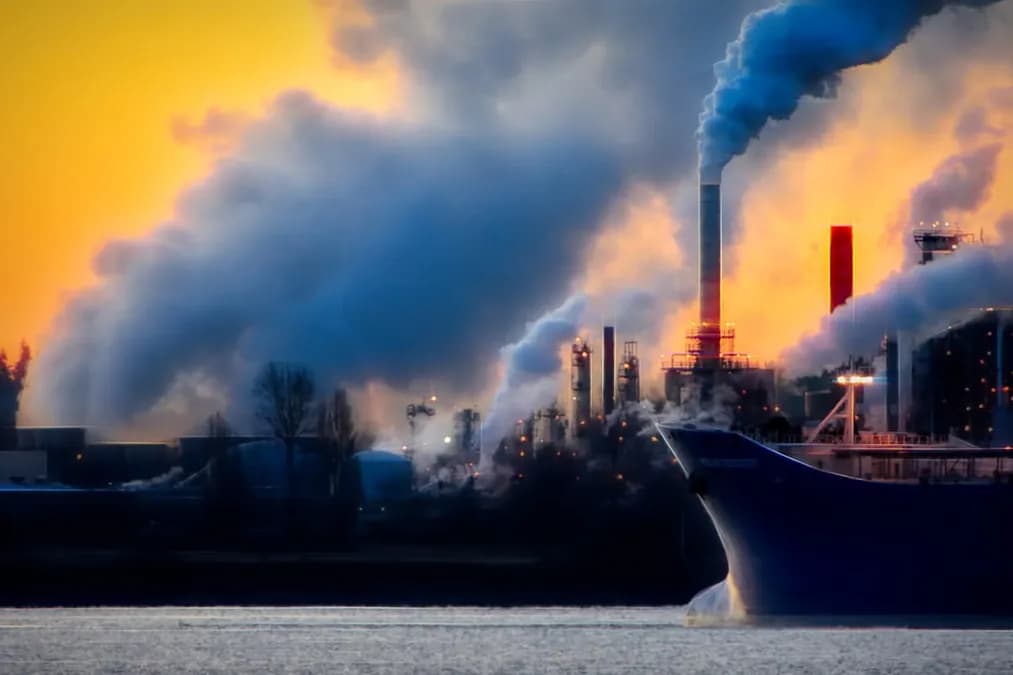
That movement happens mainly through burning fossil fuels. Coal, oil and natural gas are ancient carbon-rich materials formed over millions of years. When they are burned to generate electricity, power vehicles, heat buildings or make industrial products, their carbon combines with oxygen and forms carbon dioxide, or CO2.
Carbon also moves through the climate system naturally. Plants absorb CO2 during photosynthesis. Oceans take up carbon from the air. Soils store carbon in organic matter. Volcanoes release some carbon, and animals exhale CO2 as part of respiration. This natural carbon cycle kept Earth’s climate relatively stable for thousands of years.
Human activity has disrupted that balance. The Global Carbon Project estimated that fossil CO2 emissions reached about 37.8 billion metric tons in 2024 and were projected to rise again in 2025. When land-use change such as deforestation is included, total global CO2 emissions are around 42 billion metric tons a year, according to the 2025 Global Carbon Budget.
The issue is not simply that carbon exists. It is that carbon emissions from modern economies are accumulating in the atmosphere, changing the planet’s energy balance and raising global temperatures.
Carbon Dioxide and Global Warming
Carbon dioxide is the most important long-lived greenhouse gas produced by human activity. Greenhouse gases trap some of the heat that Earth radiates back toward space. Without them, the planet would be too cold for most life. With too much of them, the atmosphere holds more heat, pushing temperatures higher.
Read next How Climate Change Works: A Clear ExplainerThe Intergovernmental Panel on Climate Change, the world’s leading climate science assessment body, has concluded that human activities have “unequivocally” caused global warming. In its Sixth Assessment Report, the IPCC found that global surface temperature was about 1.1 degrees Celsius higher in 2011-2020 than in 1850-1900.
CO2 matters because it persists. Some carbon dioxide is absorbed quickly by oceans and land ecosystems, but a significant fraction remains in the atmosphere for centuries. That means today’s emissions add to yesterday’s emissions. Climate change is driven by the cumulative stock of greenhouse gases, not just one year’s output.
The effects are already measurable. Warmer air increases the likelihood of extreme heat. A warmer atmosphere can hold more water vapor, intensifying heavy rainfall in many regions. Ocean warming contributes to coral bleaching and stronger marine heat waves. Melting land ice and thermal expansion of seawater raise sea levels, increasing coastal flood risk.
Carbon emissions also alter the oceans directly. As seawater absorbs CO2, it becomes more acidic. Ocean acidification makes it harder for some shell-forming organisms, including corals and oysters, to build and maintain their calcium carbonate structures.
Different greenhouse gases have different strengths and lifetimes. Methane, for example, traps more heat per molecule than CO2 over the short term but remains in the atmosphere for a much shorter time. Carbon dioxide is central because of its scale, persistence and close link to energy, transport, industry and land use.
Measuring Your Carbon Footprint
A carbon footprint is an estimate of the greenhouse gases caused by a person, household, business, product or activity. It is usually expressed as carbon dioxide equivalent, or CO2e, which converts methane, nitrous oxide and other gases into a common warming-impact measure.
For individuals, the biggest sources often include home energy, transportation, food and purchases. A household that drives gasoline-powered vehicles, flies frequently, eats a meat-heavy diet and lives in a poorly insulated home will generally have a higher footprint than one using public transit, efficient appliances and low-carbon electricity.
At the national level, carbon footprints vary widely. High-income countries tend to have higher per-person emissions because of larger homes, higher consumption, more vehicle travel and energy-intensive industries. But production-based emissions, which count pollution where goods are made, can differ from consumption-based emissions, which count pollution where goods are ultimately used.
A smartphone assembled in one country and bought in another carries embedded emissions from mining, manufacturing, shipping and electricity use across the supply chain. That is why corporate and national carbon accounting often separates emissions into three categories: direct emissions from owned operations, indirect emissions from purchased energy and broader value-chain emissions.
Measuring a footprint is not perfect. Carbon calculators rely on assumptions about electricity grids, vehicle efficiency, diet, travel distance and product life cycles. Still, they can identify the biggest drivers of pollution. For most people, the practical value is not precision to the last kilogram. It is learning which choices carry the largest climate impact.
For businesses and governments, measurement is more formal. Emissions inventories help set targets, price carbon, track progress and identify sectors that need investment. Reliable accounting is also essential for avoiding greenwashing, especially when companies claim to be “net zero” while continuing to emit heavily.
Carbon Capture and Storage Technologies
Carbon capture and storage, often called CCS, refers to technologies that capture CO2 before it reaches the atmosphere and store it underground for long periods. The process usually has three stages: capture, transport and storage.
Capture can occur at industrial facilities such as cement plants, steel mills, fertilizer plants, ethanol refineries or power stations. CO2 is separated from other gases, compressed and moved by pipeline, ship or truck. It is then injected deep underground into geological formations such as saline aquifers or depleted oil and gas reservoirs.
The appeal is clear. Some sectors are hard to decarbonize through electrification alone. Cement production releases CO2 not only from fuel combustion but also from the chemical process of turning limestone into clinker. Certain chemical and industrial processes may need carbon capture as part of a realistic transition plan.
There is also direct air capture, which removes CO2 from ambient air rather than from a smokestack. This is technically possible but currently expensive and energy-intensive because CO2 is dilute in the atmosphere. It may become useful for removing residual emissions, but it is not a substitute for cutting fossil fuel use.
The scale remains limited. The International Energy Agency reported that global CO2 capture and storage capacity is just over 50 million metric tons per year. That is small compared with annual global CO2 emissions measured in tens of billions of tons. Announced projects could expand capacity substantially, but permitting, pipelines, financing and public acceptance remain barriers.
Carbon capture is not a climate cure-all. If attached to fossil fuel facilities without strong methane controls and strict storage rules, it can prolong pollution. If captured CO2 is used to extract more oil, the climate benefit may be reduced or erased. The technology is most defensible where emissions are genuinely difficult to eliminate and where captured carbon is permanently stored with transparent monitoring.
Pathways to Carbon Neutrality
Carbon neutrality means balancing the amount of greenhouse gases emitted with an equivalent amount removed or offset. Net zero is a stricter and more commonly used climate goal: emissions are reduced as much as possible, and only the remaining hard-to-abate emissions are balanced by durable removals.
The first pathway is cleaner electricity. Wind, solar, hydropower, geothermal and nuclear power can produce electricity with low operational emissions. As grids become cleaner, electrifying cars, heating systems and industrial processes cuts carbon pollution across multiple sectors.
The second pathway is efficiency. Better insulation, efficient heat pumps, LED lighting, modern industrial motors and smarter building design reduce energy demand. Efficiency is often cheaper and faster than building new energy supply, especially in older buildings and industrial facilities.
The third pathway is transport reform. Electric vehicles reduce tailpipe emissions, especially when charged on low-carbon grids. But cleaner cars are only part of the answer. Public transit, safer walking and cycling networks, rail freight and more compact land use can reduce the total number of vehicle miles traveled.
The fourth pathway is industrial transformation. Steel, cement, chemicals and shipping require targeted solutions: green hydrogen, alternative binders, recycled materials, electrified heat, carbon capture and new production methods. These sectors are slower to change because plants are expensive and long-lived.
The fifth pathway is land stewardship. Forests, wetlands, grasslands and soils store carbon. Protecting existing ecosystems usually delivers greater climate value than planting new trees that may take decades to mature. Reforestation and improved farming practices can help, but land-based carbon storage is vulnerable to fire, drought, disease and future land clearing.
Carbon neutrality cannot rest mainly on offsets. A company or country that keeps emitting while buying cheap credits is not solving the underlying problem. Credible pathways prioritize direct emissions cuts, use high-quality removals only for residual pollution and report progress transparently.
What You Can Do to Reduce Carbon Pollution
Individual choices alone cannot solve climate change, but they do matter, especially when they reduce demand for high-carbon systems and signal support for broader change.
Start with energy at home. If available, choose renewable electricity through your utility or a verified community solar program. Improve insulation, seal air leaks and replace aging equipment with efficient electric heat pumps when practical. Small changes such as smart thermostats and efficient appliances can lower both emissions and bills.
Transportation is often a major source of personal carbon emissions. Driving less, combining trips, using public transit, biking or walking all reduce fuel use. When replacing a car, consider an electric or highly efficient vehicle. For longer distances, flying less can make a large difference because aviation is carbon-intensive and hard to decarbonize quickly.
Food choices also count. Beef and lamb generally have much higher emissions than poultry, fish or plant-based proteins because of methane from digestion, feed production and land use. Reducing food waste is another high-impact step; discarded food wastes the energy, water and land used to produce it.
Consumption deserves attention. Every product carries embedded emissions from raw materials, manufacturing and shipping. Buying fewer disposable goods, repairing items, choosing durable products and sharing rarely used tools can lower a household footprint without requiring a lower quality of life.
Civic action may be the highest-leverage step. Vote for leaders who treat climate policy as infrastructure, health and economic policy. Support clean-energy permitting, modern transmission lines, public transit, building efficiency standards and industrial innovation. Local decisions on zoning, transit, housing and utilities shape emissions for decades.
The carbon problem is large because carbon is woven through the modern economy. The solution is not a single invention or sacrifice. It is a coordinated shift: cleaner power, electrified transport, efficient buildings, lower-carbon industry, protected ecosystems and honest accounting. The science is clear that every ton of avoided carbon emissions reduces future warming.
Related coverage