What Is Climate Change and Why It Matters
The Intergovernmental Panel on Climate Change’s Sixth Assessment Report found that global surface temperature reached about 1.1°C above the 1850-1900 average in 2011-2020, with land warming faster than oceans. That number sounds small until it is translated into lived reality: stronger heat waves, heavier rainfall, rising seas, shifting growing seasons, and higher risks to food, water, health, and infrastructure.
Climate change refers to long-term shifts in Earth’s climate system, including temperature, precipitation, winds, ocean conditions, ice cover, and the frequency or intensity of extremes. Climate has always varied naturally over geological time. What makes the current period different is speed, cause, and scale. The warming observed since the Industrial Revolution is being driven primarily by human activities, especially the burning of coal, oil, and gas.
The core mechanism is straightforward. Greenhouse gases trap heat in the atmosphere. Carbon dioxide, methane, nitrous oxide, and fluorinated gases allow much incoming sunlight to pass through but absorb some of the heat Earth emits back toward space. Without this natural greenhouse effect, Earth would be far colder. With excess greenhouse gases, the planet retains more energy.
The numbers are stark. NOAA’s Global Monitoring Laboratory reported that global average atmospheric carbon dioxide reached 422.8 parts per million in 2024, a record in the modern instrumental record and far above the pre-industrial level of about 280 ppm. Monthly readings have since exceeded 420 ppm consistently. Ice core records show that today’s CO2 concentration is higher than at any time in at least hundreds of thousands of years.
Climate change matters because the modern economy, public health systems, food production, insurance markets, cities, and coastlines were built around the climate of the recent past. A hotter planet changes those baselines. Roads buckle under heat. Reservoirs lose reliability. Crops face new stress. Coastal floods reach farther inland. Wildfire seasons lengthen. Diseases carried by mosquitoes and ticks shift into new regions.
The issue is not only environmental. It is economic and social. The World Bank has warned that climate impacts can deepen poverty, particularly where households rely on farming, fishing, or informal work. The International Labour Organization has linked heat stress to losses in work capacity. The World Health Organization estimates that climate change will cause approximately 250,000 additional deaths per year between 2030 and 2050 from undernutrition, malaria, diarrhea, and heat stress alone.
Climate change is also uneven. Countries and communities that contributed least to historical greenhouse gas emissions often face some of the greatest exposure. Low-lying island states confront sea-level rise. Informal urban settlements face extreme heat and flooding. Smallholder farmers face rainfall volatility. Elderly people, children, outdoor workers, and people with chronic illnesses are more vulnerable to heat, smoke, and disease.
That imbalance is why climate policy increasingly centers on both mitigation and adaptation. Mitigation means reducing emissions and strengthening carbon sinks. Adaptation means preparing for impacts already underway. The first limits future damage. The second reduces harm now. Both are necessary.
The Science Behind Global Warming
In 2023, NASA and NOAA both reported that Earth had experienced one of the warmest years ever measured; 2024 then surpassed previous records in several global datasets, reflecting the combined influence of long-term greenhouse gas accumulation and natural variability such as El Nino. Year-to-year rankings can shift, but the direction is clear: the last decade has been the warmest in the modern record.
Read next How Climate Change Works: A Clear ExplainerThe physics of global warming has been understood for more than a century. In the 1850s, Eunice Foote demonstrated that carbon dioxide absorbs heat. In the 1890s, Svante Arrhenius calculated that changing atmospheric CO2 could affect global temperature. Modern climate science has since confirmed the mechanism using satellites, weather stations, ocean measurements, paleoclimate evidence, and computer models.
The energy imbalance is central. Earth receives energy from the sun and emits infrared radiation back to space. Greenhouse gases reduce the rate at which heat escapes. NASA has documented that the planet is now absorbing more energy than it emits, with most of the excess heat going into the oceans. More than 90% of the extra heat trapped by greenhouse gases has been absorbed by the ocean, according to IPCC assessments and ocean heat content studies.
Carbon dioxide is the most important long-lived human-caused greenhouse gas because of its abundance and persistence. It comes mainly from fossil fuel combustion, cement production, and land-use change. Methane is shorter-lived but more powerful molecule for molecule over a 20-year period; major sources include oil and gas systems, coal mining, livestock, rice cultivation, and waste. Nitrous oxide comes largely from agriculture, especially fertilizer use.
The IPCC AR6 Synthesis Report states that human activities have “unequivocally” caused global warming. That conclusion rests on multiple lines of evidence. The lower atmosphere is warming while the stratosphere cools, a fingerprint consistent with greenhouse gas forcing rather than a brighter sun. Nights are warming faster than days in many regions. Oceans are gaining heat. Glaciers are retreating. Sea level is rising. Spring snow cover is declining.
Climate models are not crystal balls. They are mathematical representations of the atmosphere, oceans, land surface, ice, chemistry, and energy flows. Scientists test them against past climate patterns, volcanic eruptions, El Nino events, and observed warming trends. While models differ in regional details, they consistently show that observed modern warming cannot be explained without human greenhouse gas emissions.
Natural factors still matter. Volcanic eruptions can temporarily cool the planet by injecting reflective particles into the stratosphere. Solar cycles slightly alter incoming energy. El Nino and La Nina redistribute heat between the ocean and atmosphere, influencing annual temperatures and rainfall. But these factors ride on top of a human-driven warming trend.
A useful analogy is loading dice. Climate change does not cause every weather event by itself. Weather has always varied. But warming changes the odds. Heat waves become more likely and more intense. Air that is warmer can hold more water vapor, increasing the potential for heavier downpours. Dry regions can dry out faster when heat increases evaporation.
Attribution science has advanced rapidly. Research groups such as World Weather Attribution now analyze extreme events within days or weeks, estimating how much climate change altered their likelihood or intensity. Peer-reviewed studies have found strong climate signals in many recent heat waves, including the 2021 Pacific Northwest heat event, which shattered temperature records in Canada and the United States. Scientists concluded that such an event would have been virtually impossible in that region without human-caused warming.
How Climate Change Affects Weather Patterns
During the 2021 Pacific Northwest heat wave, Lytton, British Columbia reached 49.6°C, or 121.3°F, before a wildfire destroyed much of the village. The event showed how a warming climate can turn rare weather patterns into record-breaking disasters when atmospheric conditions align.
Climate change affects weather by adding heat and moisture to the climate system. Warmer air holds about 7% more water vapor per 1°C of warming, according to the Clausius-Clapeyron relationship. That does not mean every place becomes wetter. It means storms have more moisture available when conditions favor rainfall. The result is heavier precipitation in many regions, even where average rainfall changes only modestly.
The IPCC AR6 report found that the frequency and intensity of heavy precipitation events have increased over most land areas with sufficient observational data. This has practical consequences. Drainage systems designed for historical rainfall can be overwhelmed. Floodplains expand beyond old maps. Sewage systems overflow. Roads, bridges, and rail lines fail under water loads they were not built to handle.
Heat waves show the clearest signal. Across much of the world, hot extremes have become more frequent and more intense, while cold extremes have become less frequent and less severe. This pattern is visible in daily temperature records: record highs increasingly outnumber record lows in many countries.
Drought is more complex because it depends on rainfall, evaporation, soil moisture, snowpack, vegetation, and water withdrawals. Still, warming increases atmospheric thirst. In the western United States, peer-reviewed research has found that human-caused climate change has intensified aridification and contributed to the severity of the 21st-century megadrought. In the Mediterranean, southern Africa, and parts of South America, rising temperatures are compounding water stress.
Tropical cyclones are also changing. Scientists do not expect climate change to increase the total number of storms in every basin, but the strongest storms are projected to become more intense, and rainfall rates are increasing. Warmer ocean surfaces provide more energy, while warmer air holds more moisture. Hurricanes Harvey, Maria, Ian, and other recent storms illustrated the destructive combination of heavy rainfall, storm surge, and coastal exposure.
Sea-level rise worsens coastal storms even when storm behavior itself is unchanged. A storm surge riding on a higher baseline sea level reaches farther inland. NOAA has documented accelerating high-tide flooding along many U.S. coasts. What used to be called nuisance flooding now disrupts roads, businesses, and local services.
Climate change can also affect atmospheric circulation. The jet stream, monsoons, and blocking patterns are active areas of research. Some studies suggest that Arctic warming may influence mid-latitude weather persistence, though the strength and mechanisms remain debated. A cautious reading is best: scientists have high confidence in warming, heat extremes, heavy rainfall intensification, sea-level rise, and ocean heat accumulation; confidence varies more for some regional circulation changes.
Agricultural weather is shifting too. Earlier springs, hotter nights, and rainfall swings affect planting windows, pests, pollination, and yields. In South Asia, heat waves before the monsoon can threaten wheat harvests. In East Africa, failed rainy seasons have amplified food insecurity. In Europe, the 2022 heat and drought damaged crops, stressed rivers, reduced hydropower, and constrained shipping.
The pattern is not uniform. Some cold-region growing seasons may lengthen, and some high-latitude crops may benefit temporarily. But benefits are limited by pests, soil constraints, water availability, extreme events, and continued warming. Beyond certain thresholds, heat reduces labor productivity, crop fertility, livestock health, and ecosystem stability.
Environmental Consequences of Rising Temperatures
The Great Barrier Reef has experienced repeated mass coral bleaching events since 2016, driven largely by marine heat waves. Corals can survive brief stress, but prolonged high ocean temperatures cause them to expel the algae that provide much of their food. If heat persists, reefs die.
Ecosystems respond to climate change through movement, stress, disruption, and loss. Species shift poleward, upslope, or into deeper water when possible. Those that cannot move fast enough, or that depend on disappearing habitats, face decline. Alpine species can run out of mountain. Arctic species lose sea ice. Coral reefs face heat stress and ocean acidification at the same time.
Ocean acidification is caused by the ocean absorbing carbon dioxide from the atmosphere. CO2 reacts with seawater, reducing pH and altering carbonate chemistry. That makes it harder for shell-building organisms such as corals, oysters, clams, and some plankton to form calcium carbonate structures. Since the Industrial Revolution, surface ocean pH has fallen by about 0.1 units, representing roughly a 30% increase in acidity.
Ice is one of the clearest indicators of climate change. Glaciers are retreating across most mountain regions, from the Alps to the Andes to the Himalayas. The Greenland and Antarctic ice sheets are losing mass. Arctic sea ice extent has declined sharply since satellite monitoring began in 1979, with late-summer ice showing especially strong losses.
Sea level rises for two main reasons: warming water expands, and land ice melts into the ocean. The IPCC reports that global mean sea level rose faster during the 20th century than in any prior century over at least the last three millennia, with acceleration in recent decades. Even modest sea-level rise increases coastal erosion, saltwater intrusion, flood risk, and wetland loss.
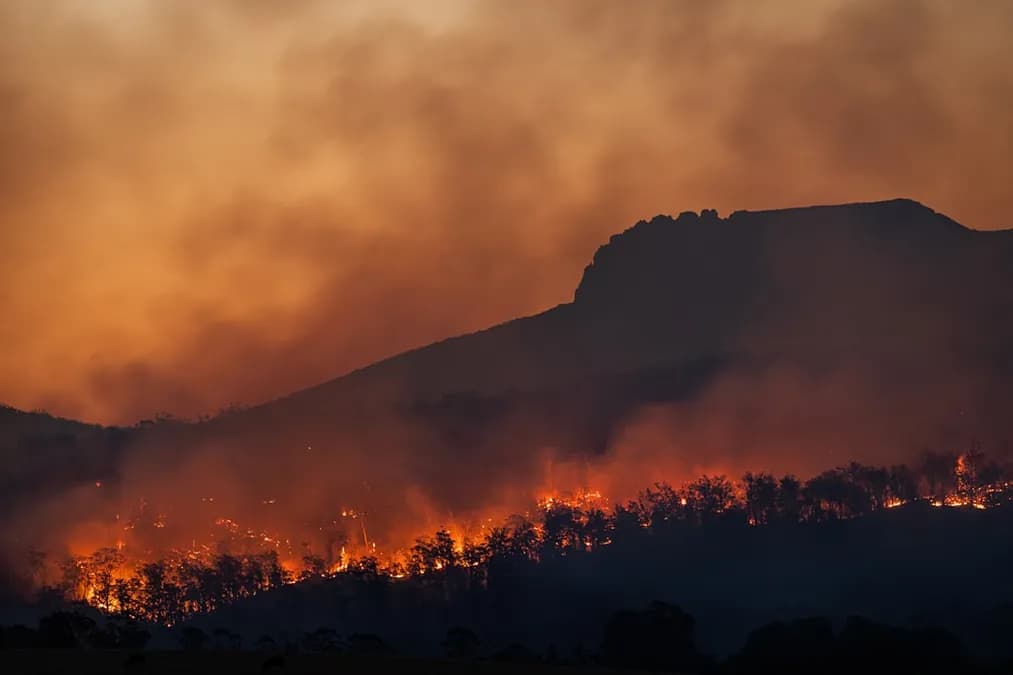
Forests face a different suite of pressures. Heat and drought can weaken trees, making them more vulnerable to insects, disease, and fire. In western North America, bark beetle outbreaks have been linked to warmer winters and stressed forests. In boreal regions, fires are burning larger areas in some years, releasing carbon and darkening snow and ice surfaces when soot is deposited.
The Amazon rainforest is a major case study. It stores vast amounts of carbon and helps generate regional rainfall through evapotranspiration. Deforestation, fire, drought, and warming threaten that system. Scientists have warned that parts of the Amazon could shift toward more degraded, savanna-like conditions if forest loss and climate stress cross critical thresholds. That would harm biodiversity, regional rainfall, and global carbon storage.
Permafrost thaw adds another risk. Permafrost contains large stores of frozen organic carbon. As it thaws, microbes break down organic matter and release carbon dioxide and methane. This feedback is not expected to produce sudden runaway warming on its own, but it can add emissions that make climate targets harder to meet.
Biodiversity loss and climate change reinforce each other. Healthy ecosystems store carbon, buffer floods, cool cities, protect coasts, and support food systems. Damaged ecosystems lose resilience. Mangrove forests, for example, protect coastlines from storm surge while storing carbon-rich soils. Restoring them can reduce risk and support fisheries. Destroying them does the opposite.
Environmental consequences also include freshwater stress. Snowpack acts as a natural reservoir in many regions. When warming shifts snowfall to rainfall or melts snow earlier, water arrives before farms and cities need it most. The Colorado River Basin, the Andes, the Himalayas, and parts of Europe all face difficult water-management choices as snow and glacier patterns change.
Climate Change Impact on Human Health and Society
During Europe’s 2022 summer heat waves, tens of thousands of excess deaths were estimated across the continent, with older adults among the hardest hit. Heat is often called a silent killer because it does not always leave visible destruction, yet it can overwhelm the heart, kidneys, and respiratory system within hours.
The health burden of climate change is broad. The World Health Organization estimates approximately 250,000 additional deaths per year between 2030 and 2050 from undernutrition, malaria, diarrhea, and heat stress alone. That estimate is conservative because it excludes many pathways, including extreme weather injuries, wildfire smoke, mental health impacts, migration stress, and some infectious diseases.
Heat affects the body directly. When temperatures and humidity are high, sweating becomes less effective. Heat exhaustion and heat stroke can follow. People with cardiovascular disease, kidney disease, respiratory illness, diabetes, or limited access to cooling face higher risk. Outdoor workers, athletes, unhoused people, and people in poorly insulated housing are especially exposed.
Air quality worsens in several ways. Heat accelerates the formation of ground-level ozone, a pollutant that irritates lungs and worsens asthma. Wildfires release fine particulate matter, known as PM2.5, which can penetrate deep into the lungs and bloodstream. Smoke from Canadian wildfires in 2023 spread across major U.S. cities, turning skies orange and pushing air quality to hazardous levels far from the flames.
Food security is another major pathway. Heat can reduce yields of staple crops such as wheat, maize, rice, and soybeans, especially when high temperatures strike during flowering or grain filling. Droughts, floods, and pests add stress. The IPCC has reported that climate change has already slowed agricultural productivity growth in some regions. For households that spend a large share of income on food, even small price increases can mean hunger.
Water security is equally exposed. Flooding can contaminate drinking water with sewage, chemicals, and pathogens. Drought concentrates pollutants and reduces supply. Warmer conditions can favor harmful algal blooms in lakes and reservoirs. In coastal aquifers, sea-level rise can push saltwater into freshwater supplies.
Infectious disease patterns are shifting. Mosquitoes that carry malaria, dengue, chikungunya, and Zika are sensitive to temperature, rainfall, and humidity. Climate change does not determine disease outcomes alone; public health systems, housing, sanitation, mosquito control, and medical access matter enormously. But warming can expand the seasonal or geographic window for transmission in some places.
Mental health harms are increasingly documented. Survivors of floods, fires, and storms can face trauma, anxiety, depression, and long recovery periods. Farmers enduring repeated crop losses report severe stress. Young people express climate anxiety, especially when they perceive political and institutional responses as inadequate.
Economic impacts are already visible. Insurers are raising premiums or withdrawing coverage in high-risk wildfire and coastal zones. Municipalities are spending more on flood defenses, cooling centers, drainage upgrades, and emergency response. Supply chains are disrupted by floods, droughts, low river levels, and port damage. Climate risk is now a financial risk.
Social inequality shapes exposure and recovery. Wealthier households can buy air conditioning, insurance, generators, and relocation options. Poorer households may live in hotter neighborhoods with less tree cover, weaker housing, or higher flood exposure. In many cities, historically marginalized communities are more likely to suffer urban heat island effects because of asphalt, industrial land use, and limited green space.
Climate Adaptation Strategies Around the World
After deadly floods in the Netherlands in 1953, the country built one of the world’s most sophisticated flood-management systems; today, Dutch adaptation policy has shifted from simply holding water back to making room for rivers, dunes, wetlands, and controlled flooding. That evolution captures the central lesson of adaptation: resilience is not only concrete walls. It is planning, nature, engineering, finance, and governance.
Adaptation means reducing vulnerability to climate impacts that are already happening or locked in. Even aggressive emissions cuts will not instantly stop sea-level rise, heat waves, or extreme rainfall. The atmosphere and oceans respond over decades. Communities need protection while mitigation catches up.
Heat adaptation is one of the fastest-growing priorities. Cities are planting trees, installing cool roofs, opening cooling centers, redesigning streets, and developing heat-health warning systems. Ahmedabad, India launched a heat action plan after a deadly 2010 heat wave. The plan includes early warnings, public messaging, training for health workers, and outreach to vulnerable residents. Studies have associated such measures with reduced heat mortality.
Urban design can reduce temperature exposure. Trees provide shade and evaporative cooling. Reflective roofs lower indoor heat. Parks and water features can reduce local heat islands. Building codes can require passive cooling, insulation, ventilation, and safer indoor temperatures. These measures matter because air conditioning alone can increase electricity demand and emissions if powered by fossil fuels.
Flood adaptation includes levees, seawalls, restored wetlands, permeable pavement, upgraded drainage, floodplain buyouts, and zoning reform. New York City’s coastal resilience plans after Hurricane Sandy included flood barriers, elevated infrastructure, and neighborhood-scale protection. Bangladesh has reduced cyclone mortality through early warning systems, cyclone shelters, evacuation planning, and community preparedness, even though exposure remains high.
Agricultural adaptation includes drought-tolerant crops, altered planting dates, improved irrigation, soil moisture conservation, agroforestry, crop diversification, and better climate information for farmers. In parts of Africa, farmer-managed natural regeneration has restored tree cover on agricultural land, improving soil, shade, and resilience. In Australia and California, water markets and irrigation reforms are being tested under increasingly stressed conditions, though equity concerns remain.
Coastal adaptation is especially difficult because sea-level rise is continuous. Some places can defend with barriers. Others can accommodate periodic flooding by elevating buildings and infrastructure. In the highest-risk zones, managed retreat may be necessary. That phrase is politically charged because it involves homes, identity, property values, and cultural heritage. Yet repeated rebuilding after predictable disasters can be more costly and dangerous than planned relocation.
Nature-based solutions are gaining attention. Mangroves, coral reefs, dunes, wetlands, forests, and floodplains reduce climate risks while supporting biodiversity. A restored wetland can absorb floodwater, filter pollution, store carbon, and provide habitat. These benefits are hard to replicate with single-purpose infrastructure. But nature-based solutions need land, maintenance, and protection from development pressure.
Adaptation has limits. Coral reefs cannot adapt indefinitely to repeated marine heat waves. Outdoor labor becomes dangerous beyond certain heat and humidity thresholds. Some low-lying islands face existential risks from rising seas and saltwater intrusion. The IPCC distinguishes between soft limits, where adaptation is possible but constrained by finance or institutions, and hard limits, where physical thresholds are crossed.
Finance remains a major gap. Developing countries often face high exposure and limited resources. The United Nations Environment Programme has reported that adaptation finance needs in developing countries are far higher than current international flows. Without funding, adaptation becomes reactive: emergency relief after disaster rather than risk reduction before disaster.
Good adaptation is local, but it depends on national and global support. A heat plan must know which neighborhoods lack cooling. A flood map must reflect updated rainfall and sea-level projections. A farmer needs seasonal forecasts that are understandable and useful. A hospital needs backup power, flood protection, and surge capacity. Adaptation works best when climate data meets practical decision-making.
Climate Mitigation and the Renewable Energy Transition
In 2023, the International Energy Agency reported that renewable power capacity additions grew at record speed, with solar photovoltaics leading the expansion; at the same time, global fossil fuel emissions remained near record highs. The transition is underway, but it is not yet fast enough to meet the Paris Agreement’s temperature goals.
Mitigation means cutting greenhouse gas emissions and increasing carbon removal. The largest source is energy: electricity, heat, transport, buildings, and industry. Fossil fuels still supply most global energy, which is why decarbonization requires changes across power systems, vehicles, factories, homes, land use, and finance.
The electricity sector is the backbone of mitigation because clean power can replace fossil fuels in other sectors. Wind, solar, hydropower, geothermal, and nuclear power produce electricity with low operational emissions. Solar and wind costs have fallen sharply over the past decade, making them among the cheapest new sources of electricity in many regions. Batteries, transmission lines, demand response, and grid management help balance variable generation.
Electrification is the next step. Electric vehicles are more efficient than internal combustion engines. Heat pumps can heat and cool buildings using less energy than fossil fuel furnaces. Electric arc furnaces can produce steel from scrap with lower emissions when powered by clean electricity. Industrial heat, shipping, aviation, and cement remain harder to decarbonize, but progress is accelerating through hydrogen, synthetic fuels, carbon capture, alternative chemistries, and efficiency.
Energy efficiency is often the cheapest mitigation option. Better insulation, efficient appliances, LED lighting, industrial motors, public transit, building design, and compact urban planning reduce energy demand. The cleanest unit of energy is often the one not needed.
Methane reductions can slow near-term warming. Because methane is powerful and relatively short-lived, cutting leaks from oil and gas systems, improving waste management, changing livestock practices, and reducing coal mine emissions can produce climate benefits within decades. The Global Methane Pledge, launched by the United States and European Union with many partners, aims to reduce global methane emissions by at least 30% from 2020 levels by 2030.
Land use matters. Forest protection, reforestation, peatland restoration, improved soil management, and reduced food waste can lower emissions and store carbon. But land-based mitigation is not a substitute for fossil fuel cuts. Trees can burn, die, or be cleared. Carbon stored underground in fossil fuels is not equivalent to carbon temporarily stored in forests.
Carbon capture and removal are part of many climate scenarios, but they should be understood carefully. Carbon capture and storage can reduce emissions from some industrial facilities and power plants if capture rates are high and storage is secure. Carbon dioxide removal, including direct air capture, enhanced weathering, biochar, and reforestation, may be needed to balance residual emissions. Yet current engineered removal capacity is tiny relative to global emissions, and costs remain high.
Policy drives deployment. Carbon pricing, clean electricity standards, vehicle standards, methane rules, building codes, public procurement, tax credits, research funding, and transmission permitting all shape the pace of change. The U.S. Inflation Reduction Act, the European Green Deal, China’s renewable energy buildout, and India’s solar expansion show how industrial policy and climate policy are increasingly linked.
A just transition is essential. Fossil fuel workers and regions cannot be treated as afterthoughts. Coal communities need investment, retraining, pension protection, cleanup jobs, and new industries. Energy access also matters. Hundreds of millions of people still lack reliable electricity. Climate policy must expand clean energy access while cutting emissions.
The scale is large but not mysterious. The IPCC has found that limiting warming to 1.5°C with no or limited overshoot requires deep, rapid, and sustained greenhouse gas reductions, with global CO2 emissions falling sharply this decade and reaching net zero around mid-century. Every tenth of a degree avoided reduces risk.
The Future of Our Climate: Projections and Scenarios
The IPCC projects that global warming is likely to reach or exceed 1.5°C in the near term under many scenarios, but long-term outcomes still depend heavily on emissions choices made now. The future is not a single forecast. It is a range of pathways.
Climate scenarios are built around emissions, land use, technology, policy, population, and economic development. High-emissions pathways produce more warming, higher seas, stronger extremes, greater ecosystem loss, and higher adaptation costs. Low-emissions pathways require rapid transformation but avoid the worst projected outcomes.
At 1.5°C of warming, heat extremes intensify, coral reefs decline sharply, Arctic sea ice-free summers become more likely, and many regions face higher flood and drought risks. At 2°C, those risks grow substantially. The IPCC has assessed that extreme heat events become more frequent and severe with each increment of warming, and that some impacts are significantly worse at 2°C than at 1.5°C.
Sea level will keep rising for centuries because oceans and ice sheets respond slowly. Near-term sea-level rise through 2050 is relatively locked in compared with later outcomes. By 2100, differences between low- and high-emissions pathways become much larger. Beyond 2100, ice sheet instability could drive further rise, especially if warming remains high.
Tipping points are a major concern, though timing and thresholds are uncertain. Potential tipping elements include parts of the Greenland and West Antarctic ice sheets, coral reef systems, permafrost carbon, and major forest systems. These are not switches that flip neatly at one temperature, but risks increase as warming rises. Uncertainty is not comfort. It is a reason to limit exposure.
The best available science also shows that action works. If humanity cuts emissions rapidly, the rate of warming slows. If CO2 emissions reach net zero, human-caused warming from CO2 largely stops increasing, although some impacts such as sea-level rise continue. Methane cuts can reduce near-term warming pressure. Cleaner air produces immediate health benefits.
Real-world progress is visible. Renewable electricity is expanding quickly. Electric vehicle sales have risen sharply in China, Europe, and the United States. Battery costs have fallen. Many countries have net-zero targets. Companies are under growing pressure to disclose climate risk. Cities are adopting heat plans and flood strategies.
Yet the gap between pledges and implementation remains large. Current policies do not yet align with the Paris Agreement goal of holding warming well below 2°C and pursuing efforts to limit it to 1.5°C. Fossil fuel infrastructure, political resistance, supply chain constraints, permitting delays, and finance gaps slow the transition.
The future climate will be shaped by cumulative emissions. Carbon dioxide accumulates, so delay matters. A ton emitted now adds to atmospheric concentration and warming. A ton avoided limits future damage. That arithmetic is unforgiving, but it also means every policy, technology, and behavioral shift has measurable value.
The most credible path combines rapid fossil fuel reduction, clean electricity, electrification, efficiency, methane cuts, ecosystem protection, adaptation finance, and resilient infrastructure. No single solution carries the full burden. The climate system responds to totals.
Climate change is already here, but the scale of future harm remains open. A world that warms by 1.5°C or 2°C is not the same as one that warms by 3°C or more. The difference is measured in lives, coastlines, crops, ecosystems, and economic stability. Science has defined the risk with unusual clarity. The remaining question is how quickly societies act on what is already known.
Related coverage