What Is Drought? Definition and Key Concepts
A region can receive rain in January and still be in drought by June if reservoirs remain low, soils stay dry, and groundwater fails to recover. That is why scientists define drought not as a single dry day or a failed storm, but as a sustained shortage of water relative to what is normal for a specific place and season.
Drought is a creeping hazard. Unlike hurricanes or floods, it often begins quietly: a weak rainy season, a thin snowpack, a run of hot afternoons, a second month of below-average streamflow. By the time the damage is visible in withered crops, empty stock ponds, wildfire restrictions, or municipal water limits, the underlying water deficit may have been building for months or years.
The primary keyword is simple, but the phenomenon is not. A drought can mean deficient rainfall, depleted soil moisture, shrinking rivers, stressed forests, or a water shortage that disrupts farming, hydropower, shipping, and public health. The World Meteorological Organization and national climate agencies generally treat drought as a relative condition: what counts as severe in humid Louisiana may be routine in Nevada, while a short dry spell during a crop’s flowering stage can be more damaging than a longer dry spell after harvest.
Three concepts help explain why drought risk varies so sharply.
First, drought depends on baseline climate. A desert is not necessarily in drought because it is dry; drought occurs when conditions fall below the expected range for that place. Second, timing matters. A rainfall deficit during planting, pollination, or reservoir refill season can carry outsized consequences. Third, demand matters. The same rainfall deficit can be manageable in a sparsely populated watershed and dangerous in a fast-growing region with irrigated agriculture, thirsty cities, and overdrawn aquifers.
Temperature now plays a larger role than many older definitions captured. Warmer air increases evaporative demand, pulling more moisture from soils, plants, lakes, and snowpack. A year with near-normal precipitation can still produce drought impacts if heat accelerates drying. This is one reason climate scientists increasingly analyze “hot drought,” in which rainfall deficits and extreme temperatures reinforce each other.
Drought is also cumulative. A single dry season can reduce crop yields; a multi-year drought can lower groundwater, kill mature trees, alter wildfire regimes, and force permanent changes in land use. In the American West, for example, the early-21st-century megadrought has been described in peer-reviewed research as one of the region’s most severe dry periods in at least 1,200 years, with human-caused warming intensifying the moisture deficit.
Types of Drought: Meteorological, Agricultural, Hydrological, and Socioeconomic
A farm can be in agricultural drought while a nearby city’s taps still run normally, because crops respond to soil moisture faster than reservoirs respond to rainfall. This gap is why drought is usually divided into four overlapping types: meteorological, agricultural, hydrological, and socioeconomic.
Read next How Climate Change Works: A Clear ExplainerMeteorological drought is the starting point in many cases. It occurs when precipitation falls below normal over a defined period. Meteorologists may measure it using rainfall percentiles, the Standardized Precipitation Index, or departures from 30-year climate averages. A region that receives only 60% of its normal seasonal rainfall may enter meteorological drought even before rivers or wells show major changes.
Agricultural drought appears when soil moisture is too low to meet crop or pasture needs. It can develop quickly during heat waves, especially in shallow soils or rainfed farming regions. A two-week dry spell during corn pollination can reduce yields even if annual rainfall looks acceptable on paper. For livestock producers, agricultural drought shows up as poor pasture growth, rising feed costs, and the need to haul water.
Hydrological drought affects rivers, lakes, reservoirs, snowpack, and groundwater. It usually lags behind meteorological drought because large water systems respond slowly. A wet month may green up grass but do little for an aquifer depleted by years of pumping. Hydrological drought is especially consequential for hydropower, navigation, drinking-water systems, and environmental flows needed by fish and wetlands.
Socioeconomic drought occurs when water shortage collides with human demand. The trigger is not only the physical deficit, but the inability of water systems, markets, or institutions to absorb it. A city may experience socioeconomic drought when reservoir levels force restrictions. A farming region may face it when irrigation allocations are cut. A country may feel it through higher food prices, grain import dependence, or energy shortages from reduced hydropower.
These categories often cascade. A lack of rainfall becomes meteorological drought. Soil dries, creating agricultural drought. Streams and reservoirs fall, producing hydrological drought. Then households, farms, utilities, and ecosystems compete for scarce water, turning a climate event into an economic and social crisis.
The speed of onset also varies. Traditional droughts develop over months or seasons. Flash droughts can intensify within weeks when high temperatures, strong winds, low humidity, and clear skies drive rapid evaporation. The 2012 U.S. drought is a widely studied example: conditions worsened sharply across the central United States, contributing to major crop losses and more than $30 billion in estimated damages.
Primary Causes of Drought and Contributing Climate Factors
The Horn of Africa’s 2020-2023 drought followed multiple failed rainy seasons, but the disaster was shaped by more than missing rain: conflict, poverty, land degradation, food prices, and limited water infrastructure amplified the humanitarian toll. Drought begins in the atmosphere, but its consequences are built across landscapes and societies.
The most direct cause is persistent precipitation deficit. Weather patterns can divert storms away from a region for weeks or months. High-pressure systems can suppress cloud formation. Shifts in the jet stream can lock dry conditions in place. In monsoon regions, delayed onset or early withdrawal of seasonal rains can undermine agriculture across millions of hectares.
Ocean-atmosphere cycles also influence drought. El Nino and La Nina alter rainfall patterns around the world. El Nino can bring drought to parts of Australia, Indonesia, southern Africa, and northeast Brazil, while La Nina often raises drought risk in the southern United States and parts of South America. The Indian Ocean Dipole, Atlantic sea-surface temperatures, and regional monsoon dynamics can also tilt the odds toward dry or wet seasons.
Heat is a powerful multiplier. As temperatures rise, potential evapotranspiration increases, meaning the atmosphere demands more water from soils and plants. This can turn moderate rainfall deficits into severe drought stress. The physics are straightforward: warmer air can hold more water vapor, and landscapes lose moisture faster when heat, wind, and low humidity coincide.
Snowpack decline is another driver in mountain-fed basins. In the western United States, the Andes, the Alps, and parts of Central Asia, snow functions as a seasonal reservoir. When more winter precipitation falls as rain instead of snow, or when snow melts earlier, water may run off before farms and cities need it most. That mismatch can create summer drought conditions even after a relatively wet winter.
Land use can intensify drought. Deforestation may reduce local moisture recycling. Overgrazing and soil degradation reduce infiltration, leaving land less able to hold rain when it arrives. Urbanization increases impervious surfaces and runoff, limiting groundwater recharge. Excessive groundwater pumping can convert a temporary rainfall shortage into a long-term water security problem.
Climate change is altering the risk profile. The Intergovernmental Panel on Climate Change’s Sixth Assessment Report found that human-caused warming has already increased the frequency and intensity of some agricultural and ecological droughts in several regions, including the Mediterranean, western North America, and parts of Africa. Under high-emission scenarios, IPCC AR6 projections show the share of land affected by drought rising substantially by 2100, with drought-affected land areas increasing from roughly 15% to about 30% in some assessments.
That projection matters because drought risk is not rising evenly. Some regions may receive more annual precipitation but still face worse dry-season stress due to higher evaporation. Others may see rainfall arrive in heavier bursts separated by longer dry spells. For water managers, the old assumption that the past is a reliable guide to future drought is becoming less defensible.
Effects of Drought on Agriculture, Ecosystems, and Communities
In California’s 2015 drought year, researchers estimated $1.84 billion in direct agricultural losses and more than 10,000 seasonal jobs lost, even as emergency groundwater pumping helped prevent deeper production cuts. The episode showed both the resilience and the hidden costs of drought adaptation.
Agriculture is usually the first major sector hit. Crops need water at specific growth stages, and deficits during germination, flowering, or grain filling can sharply reduce yields. Drought lowers pasture productivity, forces ranchers to buy feed or sell herds, and increases livestock heat stress. Irrigated farms may buffer dry weather for a time, but that protection depends on stored surface water or groundwater.
The Food and Agriculture Organization of the United Nations has repeatedly identified drought as a leading driver of agricultural disaster losses. FAO disaster assessments show that agriculture absorbs the overwhelming majority of drought-related damage, with drought responsible for tens of billions of dollars in crop and livestock losses across vulnerable economies. UN and FAO-linked reporting has placed recent global drought-related losses at roughly $124 billion, while broader FAO estimates find disasters causing about $123 billion per year in agricultural losses across crops and livestock.
Food systems feel drought beyond the farm gate. Lower harvests can raise commodity prices, strain grain reserves, and increase import bills. In 2010, severe drought and heat in Russia contributed to a sharp wheat production decline and an export ban, adding pressure to global grain markets. In rainfed regions of East Africa, repeated droughts have deepened food insecurity by reducing both crops and livestock assets, leaving households with fewer buffers when the next shock arrives.
Ecosystems suffer in ways that can last decades. Trees under water stress become more vulnerable to insects, disease, and wildfire. Rivers warm and shrink, reducing oxygen levels for fish. Wetlands dry out, migratory birds lose habitat, and invasive species may gain ground. In the Amazon and other tropical forests, severe droughts can reduce carbon uptake and increase tree mortality, weakening the forest’s role as a carbon sink.
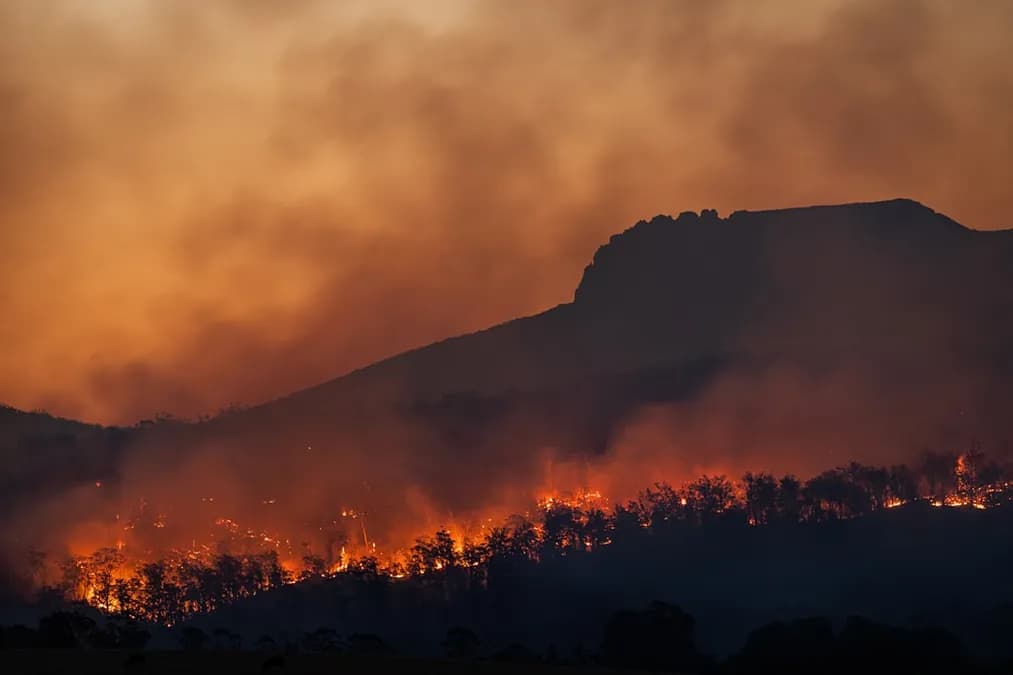
Drought also worsens wildfire risk. Dry vegetation becomes fuel. In Mediterranean climates, western North America, and Australia, drought combined with heat waves has contributed to longer fire seasons and more extreme fire behavior. The ecological damage can be compounded when post-fire rains arrive, producing erosion, debris flows, and degraded water quality.
Communities experience drought through water bills, restrictions, health risks, and displacement. Rural households dependent on shallow wells may lose water before municipal systems do. Low-income families are often less able to pay for deeper wells, bottled water, air conditioning, or higher food prices. Indigenous communities, pastoralists, and smallholder farmers can face disproportionate losses because water is tied not only to income but also to culture, land, and sovereignty.
Public health risks include heat illness, dust exposure, reduced water quality, and mental health stress among farmers and communities facing repeated losses. During drought, lower streamflow can concentrate pollutants. Harmful algal blooms may become more likely in warm, stagnant water. In dryland regions, dust storms can aggravate asthma and other respiratory conditions.
Energy systems are exposed as well. Hydropower output falls when reservoirs decline. Thermal power plants may struggle if cooling water is limited or too warm. During the 2022 drought in Europe, low river levels disrupted shipping on the Rhine, constrained power generation, and exposed how water scarcity can ripple through industrial supply chains.
Drought Monitoring Tools and Early Warning Systems
The U.S. Drought Monitor can classify one county as “severe drought” while a neighboring county is only “abnormally dry,” because its weekly map blends precipitation, soil moisture, streamflow, snowpack, reservoir data, vegetation stress, and on-the-ground reports. That expert synthesis is central to modern drought monitoring.
No single measurement captures drought. Rain gauges show what fell from the sky. Soil sensors show what plants can access. Stream gauges reveal river response. Reservoir data show stored supply. Groundwater wells show deeper, slower-moving deficits. Satellites detect vegetation stress, snow cover, land surface temperature, and changes in water storage.
The U.S. Drought Monitor, produced through a partnership among the National Drought Mitigation Center, NOAA, USDA, and other contributors, uses categories from D0 to D4: abnormally dry, moderate drought, severe drought, extreme drought, and exceptional drought. NOAA’s methodology emphasizes convergence of evidence. A map author does not rely on one index alone; the classification reflects multiple indicators across different time scales, plus local impact reports from experts.
Percentiles help translate data into severity. For many indicators, exceptional drought corresponds roughly to conditions expected only once every 50 to 100 years in a given climate record. Severe drought may align with conditions in the 6th to 10th percentile. This percentile approach matters because it compares a place with its own history rather than imposing one national rainfall threshold.
NASA’s GRACE and GRACE Follow-On missions added a major advance by measuring changes in Earth’s gravity field associated with shifts in water mass. In plain language, the satellites help “weigh” water stored in snow, soil, surface water, and aquifers. NASA scientists combine GRACE data with land-surface models to estimate groundwater and root-zone soil moisture anomalies, including weekly drought indicators used in U.S. monitoring.
GRACE is especially valuable for groundwater, which is difficult to measure consistently over large regions. Wells provide local detail, but satellite gravimetry can reveal basin-scale depletion. NASA and university researchers used GRACE data to show that more than 75% of water loss in the drought-stricken Colorado River Basin since late 2004 came from groundwater. That finding changed how many water managers viewed drought resilience: pumping can mask surface shortages while quietly drawing down long-term reserves.
Global early warning systems combine climate forecasts, satellite observations, crop models, and vulnerability data. The Famine Early Warning Systems Network, supported by U.S. agencies and international partners, tracks rainfall anomalies, vegetation conditions, market prices, and conflict risks to anticipate food crises. The European Drought Observatory monitors indicators across the continent. The World Meteorological Organization promotes integrated drought management built around monitoring, vulnerability assessment, and preparedness.
Early warning has the greatest value when it triggers early action. A seasonal forecast is not enough if governments, utilities, farmers, and humanitarian agencies lack decision rules. Effective systems define thresholds: when to reduce irrigation allocations, release drought-tolerant seed, pre-position livestock feed, restrict outdoor water use, or expand cash assistance.
Drought Mitigation and Preparedness Strategies
Australia’s Murray-Darling Basin learned during the Millennium Drought that emergency restrictions alone cannot manage chronic scarcity; water accounting, trading rules, environmental flows, and demand reduction all had to become part of the response. The lesson applies widely: drought mitigation works best before reservoirs reach crisis levels.
Preparedness starts with water budgets. Communities need to know how much water is available in average, dry, and extremely dry years; who has legal access; how much is lost through leakage; and how climate change may alter supply. Without that accounting, drought plans become wish lists.
Urban strategies include fixing distribution leaks, tiered pricing that protects basic household needs while discouraging waste, drought ordinances, water recycling, stormwater capture, and landscaping suited to local climate. Las Vegas offers a notable example: despite rapid population growth, the region reduced per-capita water use through turf removal incentives, strict outdoor watering rules, and reuse of indoor water returned to Lake Mead.
Agriculture requires a different toolkit. More efficient irrigation, such as drip systems and precision scheduling, can reduce water applied per acre, though savings must be managed carefully so efficiency does not simply expand irrigated acreage. Soil health practices such as cover cropping, reduced tillage, compost application, and agroforestry can improve infiltration and water retention. Crop diversification reduces dependence on a single water-sensitive harvest.
Drought-tolerant crop varieties help, but they are not a cure. Breeding can improve performance under moderate stress, yet even drought-tolerant crops fail when heat and moisture deficits exceed biological limits. The strongest agricultural strategies combine genetics, soil management, irrigation governance, insurance, climate information, and market support.
Groundwater management is critical. Aquifers can buffer drought, but unmanaged pumping creates a slow-moving crisis. Sustainable systems track withdrawals, recharge, and land subsidence; set pumping limits; protect recharge zones; and encourage managed aquifer recharge where geology allows. California’s Sustainable Groundwater Management Act, passed in 2014 during severe drought, marked a major shift toward local groundwater sustainability planning, though implementation remains difficult.
Ecosystem-based approaches can reduce risk while protecting biodiversity. Restoring wetlands can store water, filter pollutants, and sustain habitat. Reconnecting rivers to floodplains can recharge aquifers during wet periods. Forest thinning and prescribed fire, where ecologically appropriate, can reduce competition for water and lower the risk of catastrophic wildfire.
Financial tools matter because drought is also an economic shock. Index-based insurance can pay farmers when rainfall or vegetation indicators cross a threshold. Emergency credit can prevent distress sales of livestock. Social protection programs can help households buy food before malnutrition rises. But poorly designed subsidies can worsen risk if they encourage water-intensive crops in water-scarce basins.
Good drought governance is transparent. It sets priorities before scarcity peaks: drinking water, sanitation, ecosystem flows, food production, industry, recreation. It includes marginalized communities in planning. It also accepts hard limits. No reservoir expansion, desalination plant, or efficiency program can fully erase drought risk in a warming climate if demand keeps rising faster than supply.
Major Historical Droughts and Lessons Learned
The Dust Bowl of the 1930s displaced hundreds of thousands of people across the U.S. Great Plains, but the disaster was not caused by climate alone; deep plowing of native grasslands left soils exposed when drought and wind arrived. It remains one of the clearest examples of drought interacting with land mismanagement.
The Dust Bowl reshaped U.S. conservation policy. The federal government promoted shelterbelts, contour plowing, soil conservation districts, and erosion control. The lesson was blunt: healthy soils are drought infrastructure. When vegetation cover and soil structure are lost, drought becomes dust, crop failure, and migration.
The Sahel droughts of the 1970s and 1980s killed livestock, undermined livelihoods, and contributed to famine across parts of West Africa. Rainfall variability was severe, but vulnerability was also shaped by colonial land policies, rapid population growth, fragile markets, and limited services. Later recovery in parts of the Sahel showed that farmer-managed natural regeneration, local water harvesting, and improved governance can restore productivity even in drylands.
Australia’s Millennium Drought, generally dated from the late 1990s to 2009, exposed the limits of assuming that historical river flows would continue. Major cities imposed restrictions. Irrigators faced sharp allocation cuts. The crisis accelerated investment in water markets, desalination, recycling, and basin planning. It also raised enduring debates over how to balance farms, cities, and ecosystems.
The 2011-2017 California drought revealed the dual nature of groundwater as both lifeline and liability. Farmers pumped groundwater to offset reduced surface deliveries, preserving some production but causing land subsidence and aquifer depletion in parts of the Central Valley. The drought helped push groundwater reform into law, showing that crisis can open a policy window that normal years rarely provide.
The 2015-2018 Cape Town drought brought a major global city close to “Day Zero,” the point at which municipal taps would be shut off for many users. Aggressive demand reduction, public communication, pressure management, and eventual rainfall recovery helped avert the worst outcome. Cape Town’s experience showed that urban demand can fall rapidly when residents trust the severity of the warning, but it also exposed inequalities in who bears the burden of restrictions.
Recent droughts in the Colorado River Basin have forced a reckoning with over-allocation. The river supplies roughly 40 million people and millions of acres of farmland across the U.S. Southwest and northern Mexico, yet 20th-century legal allocations were based on flow estimates that were unusually wet compared with longer-term records. Declining Lake Mead and Lake Powell levels have made the arithmetic unavoidable: promises on paper cannot exceed water in the river.
Across these cases, the lessons repeat. Drought becomes disaster when exposure is high, ecosystems are degraded, institutions delay action, and water demand outruns supply. The most successful responses combine science, conservation, flexible allocation, social protection, and public trust.
Future Outlook: Drought Projections Under Climate Scenarios
By 2100, under high-emission pathways, IPCC AR6 projections indicate that drought-affected land could expand from about 15% to roughly 30%, doubling the share of land exposed to serious water stress in some climate assessments. That is not a distant abstraction; infrastructure built today will still be operating in that climate.
Future drought risk will be shaped by three forces: greenhouse gas emissions, water demand, and adaptation choices. Lower emissions can reduce the most extreme warming-driven drying. Better water management can reduce losses. Poor planning can turn manageable dry spells into cascading crises.
Climate models project increasing drought risk in several already vulnerable regions, including the Mediterranean, southwestern North America, southern Africa, parts of South America, and sections of Australia. In many mid-latitude and subtropical regions, higher evaporation is expected to intensify soil moisture deficits even where annual precipitation does not decline sharply.
The future will also bring more compound extremes. Drought may coincide with heat waves, wildfire smoke, crop pests, low river flows, or energy shortages. A hot drought can damage crops more severely than a cool drought. A drought followed by intense rainfall can produce erosion and water contamination rather than full recovery. Multiple breadbasket regions experiencing drought at the same time could strain global food markets.
Population growth and economic development will raise water demand in many basins. The United Nations has warned that billions of people already face water scarcity for at least part of the year. Irrigation, urban expansion, industrial use, and energy production will intensify competition unless water productivity improves and withdrawals are kept within renewable limits.
Technology will improve monitoring. Satellites such as GRACE Follow-On, soil moisture missions, thermal sensors, machine learning models, and dense ground networks will sharpen early warnings. But the central challenge is institutional. Forecasts must be connected to action, and action must be fair enough to hold public support.
The strongest drought strategies now look less like emergency response and more like climate risk management. They include diversified water supplies, protected aquifers, climate-informed crop choices, drought-ready public health systems, ecosystem restoration, enforceable groundwater rules, and transparent allocation plans. They also require reducing greenhouse gas emissions, because adaptation becomes harder and more expensive as warming rises.
Drought has always been part of climate variability. What is changing is the baseline on which drought unfolds: hotter air, altered snowpack, stressed ecosystems, larger populations, and more water-intensive economies. The science is clear enough to guide policy. The remaining question is whether societies manage drought as a recurring risk to be prepared for, or as a surprise to be rediscovered each time the rain fails.
Related coverage