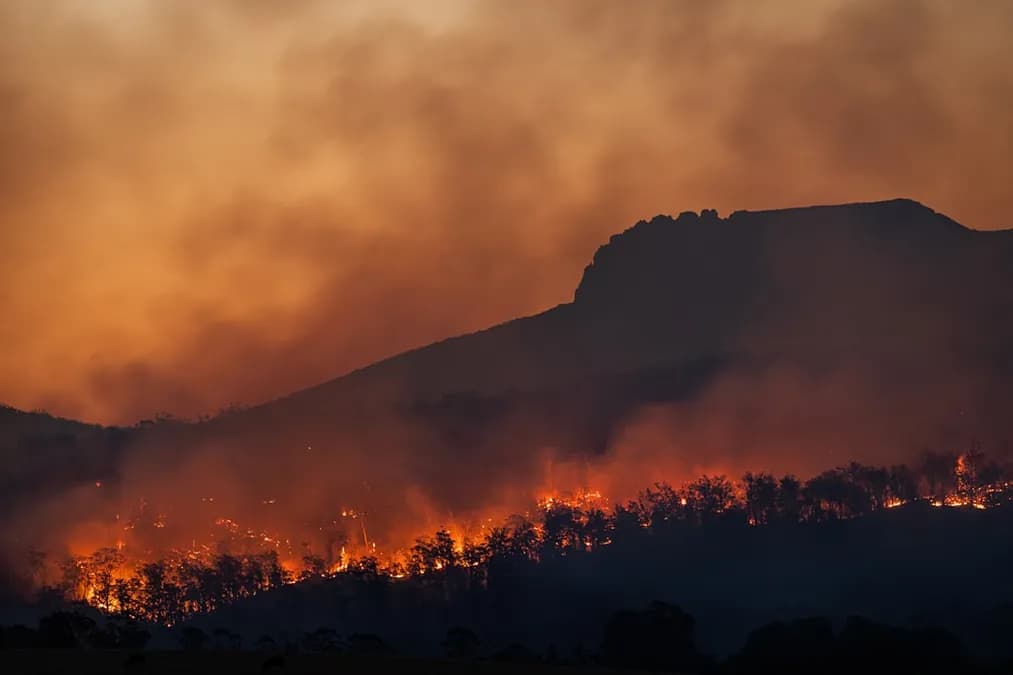
Overview of Climate Zones Across Asia
Asia spans roughly 44.6 million square kilometers, from Arctic Siberia to equatorial Indonesia, so no single climate label can describe it accurately. The climate of Asia continents is a mosaic of polar tundra, boreal forest, humid tropics, monsoon lowlands, high mountain plateaus, deserts, steppe grasslands, and densely populated coastal belts.
That range is shaped by three forces: latitude, landmass, and elevation. Northern Russia sits within Arctic and subarctic climate zones, where winter temperatures can fall below -40°C. Southeast Asia lies under warm oceanic influence, with year-round heat and high humidity. Between them, the Himalayas and Tibetan Plateau act as a climatic wall, steering winds, blocking cold air, and helping organize the South Asian monsoon.
The continent also contains some of the world’s sharpest rainfall contrasts. Mawsynram and Cherrapunji in northeastern India regularly rank among the wettest inhabited places on Earth, receiving more than 10,000 millimeters of rain in very wet years. By contrast, parts of the Arabian Peninsula, Iran, western China, and Central Asia receive less than 100 millimeters annually. This is why the climate of Asia continents cannot be reduced to “hot” or “monsoonal.” It is both.
Asia’s climate matters globally because Asia is home to about 60% of the world’s population and a large share of global food production, manufacturing, shipping, and energy demand. A failed monsoon in India, drought in the Mekong Basin, heat stress in China’s industrial regions, or flood damage in Pakistan can move food prices, supply chains, migration patterns, and public health risks far beyond the region.
The Intergovernmental Panel on Climate Change, through its Sixth Assessment Report Working Group I, states with high confidence that Asia has already warmed, with observed temperature increases clearly emerging beyond natural variability. The same assessment finds that future warming will be stronger at higher latitudes, especially across North Asia. In plain terms: Siberia warms faster than the tropics, but the human consequences of warming are often most severe in the humid, crowded, low-lying parts of Asia.
Tropical and Subtropical Climates in Southeast Asia
In April 2024, schools in parts of Southeast Asia shortened classes or closed during dangerous heat, a reminder that tropical climates are not simply warm but increasingly stressful for human bodies. Southeast Asia’s climate is dominated by high temperatures, seasonal rainfall, maritime humidity, and the shifting influence of monsoons and El Niño-Southern Oscillation events.
Read next How Climate Change Works: A Clear ExplainerCountries such as Indonesia, Malaysia, Singapore, Brunei, the Philippines, Thailand, Cambodia, Laos, Vietnam, and Myanmar sit mostly within tropical or subtropical belts. Near the equator, temperatures often vary by only a few degrees through the year, but rainfall can change dramatically from month to month. In Jakarta, Manila, Ho Chi Minh City, and Bangkok, the rainy season can bring intense downpours that overwhelm drainage systems designed for a cooler, less urbanized climate.
The climate of Asia continents is especially visible in Southeast Asia because land and ocean interact so tightly. Warm seas feed moisture into thunderstorms and tropical cyclones. The South China Sea, Bay of Bengal, Andaman Sea, and western Pacific all help shape rainfall patterns. The Philippines, exposed to the western Pacific typhoon corridor, is struck by multiple tropical cyclones in a typical year. Vietnam’s central coast faces flood risks when storms make landfall and release huge rainfall against mountain slopes.
Rice agriculture depends on this climate. So do fisheries, hydropower, and urban water systems. The Mekong River Basin supports tens of millions of people through rice, fish, irrigation, and transport, yet it is vulnerable to changing rainfall, upstream dam operations, drought, saltwater intrusion, and sea-level rise. In Vietnam’s Mekong Delta, salt intrusion has pushed inland during dry years, damaging rice paddies and fruit orchards.
WMO annual climate reports have repeatedly identified Asia as the world region most affected by weather, climate, and water-related hazards. In its State of the Climate in Asia 2023 reporting, WMO noted that floods and storms accounted for more than 80% of reported hydrometeorological disasters in Asia that year, affecting millions of people. Southeast Asia is a major part of that story, because dense coastal populations meet storm surge, extreme rainfall, and heat.
Continental and Arid Climates of Central Asia
In Kazakhstan, Uzbekistan, Turkmenistan, Kyrgyzstan, and Tajikistan, many communities live with hot summers, cold winters, and water systems fed by snow and glaciers hundreds of kilometers away. Central Asia’s climate is continental because it lies far from the moderating influence of oceans. It is also arid or semi-arid across vast areas.
Summer temperatures in desert regions such as the Karakum and Kyzylkum can exceed 40°C, while winter cold can be severe. Rainfall is limited, uneven, and often concentrated in spring. Much of the region depends on mountain snowpack and glaciers in the Tien Shan and Pamir ranges. When winter snow is low or spring melt arrives early, water stress spreads downstream into farms, cities, and hydropower systems.
The Aral Sea remains one of the starkest climate-and-water case studies in Asia. Decades of irrigation withdrawals from the Amu Darya and Syr Darya rivers shrank what was once one of the world’s largest inland water bodies. The disaster was driven mainly by water management, not climate change alone, but a hotter and drier climate worsens the legacy: exposed seabed dust, salinized soils, damaged fisheries, and health problems in nearby communities.
Central Asia also shows how warming can create contradictory hazards. More heat raises evaporation and drought risk. Yet warming can also intensify heavy precipitation when storms occur, because a warmer atmosphere can hold more water vapor. Mountain regions face glacial lake outburst flood risks as ice retreats and unstable lakes form behind moraine dams.
The Asian Development Bank has estimated that climate and disaster impacts impose very large economic burdens across Asia and the Pacific, including commonly cited estimates of about $92 billion annually in disaster-related economic costs. In Central Asia, those losses may appear less visible than coastal typhoon damage, but drought, irrigation stress, road damage, and hydropower volatility can erode development gains year after year.
East Asian Climate Dynamics
In September 2023, the Hong Kong Observatory recorded 158.1 millimeters of rain in one hour, the highest hourly rainfall there since records began in 1884. That single figure captures a central feature of East Asia’s climate: it is highly seasonal, densely urbanized, and increasingly exposed to extreme rainfall.
East Asia includes China, Japan, the Korean Peninsula, Mongolia, and Taiwan. Its climate ranges from humid subtropical zones in southern China and Taiwan to cold continental climates in northeast China and Mongolia. Japan’s climate is shaped by the surrounding seas, mountain chains, winter monsoon snowfall, summer heat, and typhoons. Korea experiences hot, humid summers and cold winters, with a rainy season known as jangma.
The East Asian monsoon drives much of the region’s annual rainfall. In winter, cold and dry air flows out of the Siberian High toward the Pacific. In summer, winds reverse and carry warm, moist air inland. The seasonal rain belt can stall, producing prolonged rainfall over southern China, Korea, and Japan. The same system supports agriculture but also drives flood disasters.
China’s climate risks vary by region. The north faces water scarcity, dust storms, and heat. The Yangtze River Basin faces flood and drought swings. Southern and eastern coastal provinces face typhoon rainfall, storm surge, sea-level rise, and heat stress. In 2022, China experienced a major heatwave and drought that affected the Yangtze Basin, reducing hydropower generation and disrupting industry. That event showed how climate risk can move from farms to factories to power grids.
Japan offers another example. The country has strong disaster preparedness, but warming raises the baseline for heatwaves and heavier rainfall. The Japan Meteorological Agency has reported rising temperatures and more frequent intense rain events over recent decades. In a country with steep terrain and dense cities, that means landslides, flash flooding, and transport disruption.
The climate of Asia continents is therefore not just a map of zones; it is a map of exposure. East Asia contains megacities, ports, electronics supply chains, energy corridors, and aging infrastructure. When typhoons or heatwaves strike, the economic effects travel quickly.
South Asian Monsoon and Its Global Significance
India receives roughly 70% to 80% of its annual rainfall during the June-to-September southwest monsoon, making the system one of the most consequential climate engines on Earth. The South Asian monsoon waters crops, refills reservoirs, cools landscapes, and supports hundreds of millions of livelihoods.
The monsoon is driven by seasonal heating differences between land and ocean. As the Indian subcontinent heats in late spring, low pressure develops over land, drawing moisture from the Arabian Sea and Bay of Bengal. The Himalayas and Tibetan Plateau help shape the circulation. When the system is strong and well distributed, farmers benefit. When rains arrive late, pause for too long, or fall in destructive bursts, the consequences can be severe.
Researchers at the Indian Institute of Tropical Meteorology in Pune, including scientists working through its Centre for Climate Change Research, have emphasized that global warming can increase the moisture available to monsoon storms even when circulation changes are complex. Studies associated with Indian monsoon dynamics have found rising risks from short-duration heavy rainfall, especially over parts of central India. The key point is simple: a warmer atmosphere can load storms with more water.
The monsoon does not fail or succeed in one uniform way. A national seasonal total can look near normal while some districts flood and others face drought. This spatial unevenness is one reason monsoon forecasting is so difficult and so valuable. The India Meteorological Department’s seasonal forecasts, subseasonal updates, and district-level warnings are now central to agriculture, reservoir management, health planning, and disaster response.
South Asia’s risks are amplified by population density. Pakistan’s 2022 floods affected tens of millions of people after exceptional monsoon rainfall combined with glacial melt and exposure in floodplains. Bangladesh has built major cyclone preparedness systems, including shelters and early warnings, yet remains vulnerable to river flooding, storm surge, and sea-level rise. Sri Lanka and Nepal face landslides after intense rain. Indian cities such as Mumbai, Chennai, Bengaluru, and Delhi face different combinations of flooding, heat, air pollution, and water stress.
Globally, the South Asian monsoon influences food markets, migration, energy demand, and humanitarian planning. Rice, wheat, cotton, sugarcane, pulses, hydropower, and groundwater recharge all depend on monsoon timing and intensity. That is why the climate of Asia continents has global significance: Asian rainfall is tied to global economic stability.
Climate Change Impacts Across Asian Regions
In 2023, WMO reported that Asia remained the world’s most disaster-affected region from weather, climate, and water-related hazards. The impacts were not theoretical. They included deadly floods, severe heatwaves, glacier mass loss, tropical cyclones, drought, and record ocean warmth.
Heat is the clearest signal. IPCC AR6 Working Group I finds that hot extremes have become more frequent and more intense across Asia, while cold extremes have decreased. This trend affects health first. Outdoor workers, elderly people, children, pregnant women, and residents of informal settlements face higher risks from heat stress. In humid regions, the danger is not only air temperature but wet-bulb conditions, which limit the body’s ability to cool itself through sweating.
Water is the second major pathway. Himalayan and high mountain glaciers are retreating in many areas, threatening long-term water security for river basins that support large populations. The Indus, Ganges, Brahmaputra, Mekong, Yangtze, and Yellow River systems all depend on complex combinations of rainfall, snow, ice melt, groundwater, and reservoir operations. Changes in timing can be as damaging as changes in total volume.
Coastal risk is rising as well. Sea-level rise increases baseline flood risk, while storm surge and heavy rainfall create compound flooding in deltas and coastal cities. Bangkok, Jakarta, Manila, Karachi, Mumbai, Shanghai, Guangzhou, Ho Chi Minh City, and Dhaka all face some mix of sea-level rise, subsidence, drainage stress, and population growth. Jakarta’s land subsidence, driven largely by groundwater extraction, shows how climate hazards often combine with local development choices.
Food systems are under pressure. Heat can reduce labor productivity and crop yields. Floods can destroy stored grain. Drought can push farmers to pump more groundwater. Saltwater intrusion can damage rice-growing deltas. Fisheries face warming seas, coral bleaching, acidification, and shifting species ranges.
Economic losses are large and uneven. The Asian Development Bank’s estimate of roughly $92 billion in annual climate disaster costs across Asia and the Pacific gives a useful scale, but averages hide hardship. A flooded household, a failed crop, or a destroyed fishing boat can erase years of savings. Insurance coverage remains thin in many vulnerable communities.
Climate Adaptation and Resilience Strategies
Bangladesh cut cyclone mortality dramatically over recent decades through early warning systems, cyclone shelters, evacuation planning, and community preparedness. That record shows a core lesson for Asia: adaptation works when science, infrastructure, local trust, and public finance move together.
Early warning is one of the highest-return strategies. WMO has called for universal early warning coverage because timely alerts can reduce deaths from cyclones, floods, heatwaves, and landslides. In Asia, the next frontier is not only national forecasts but last-mile communication: warnings that reach fishers, farmers, urban workers, school administrators, and local health clinics in language they can act on.
Urban adaptation must move faster. Cities need shaded streets, cool roofs, reflective surfaces, floodable parks, restored wetlands, upgraded drainage, and heat-health plans. These are practical measures, not luxuries. Ahmedabad in India, for example, developed one of South Asia’s best-known heat action plans after a deadly 2010 heatwave. The plan links forecasts with public warnings, health system preparation, and outreach to vulnerable residents.
Water resilience is equally urgent. Central Asia needs more efficient irrigation and cooperative basin management. South Asia needs groundwater governance, floodplain planning, and reservoir coordination. Southeast Asia needs delta protection that combines sediment management, mangrove restoration, salinity monitoring, and crop diversification. East Asia needs stronger defenses against extreme rainfall in cities where paved surfaces speed runoff.
Nature-based measures can reduce risk when designed well. Mangroves can buffer storm surge and support fisheries. Restored wetlands can store floodwater. Urban trees can reduce heat, though they require water and maintenance. Mountain slope restoration can reduce erosion and landslide risk. These measures cannot replace emissions cuts or engineered protection everywhere, but they can lower risk while improving ecosystems.
Finance remains the bottleneck. ADB has estimated adaptation costs for Asia and the Pacific at about $40 billion per year through mid-century, while its climate finance commitments aim to help developing member countries build resilience and reduce emissions. The challenge is targeting funds where risk is highest: informal settlements, smallholder farms, low-lying deltas, fragile mountain communities, and heat-exposed workers.
Future Climate Projections for Asia
Under higher-emissions futures, North Asia is projected to warm far more than the global average, while South, Southeast, and East Asia face sharper heat extremes and heavier rainfall events. IPCC AR6 Working Group I provides the baseline: warming has already occurred across Asia, and future changes scale with global emissions.
At 1.5°C of global warming, Asia faces more frequent and intense heat extremes than in the preindustrial climate. At 2°C and beyond, the risks expand: stronger heat stress, heavier precipitation extremes, greater glacier loss, sea-level rise, and more severe coastal flooding. The IPCC also finds that South, Southeast, and East Asian monsoon precipitation is likely to increase over the long term, mainly because warmer air carries more moisture, though regional details remain uncertain.
That uncertainty should not be misread as safety. Monsoon change is complex because greenhouse gases, aerosols, land use, ocean temperatures, and natural variability all interact. Aerosols historically weakened some monsoon circulations by reducing solar heating at the surface, while greenhouse warming increases atmospheric moisture. The result can be fewer rainy days in some settings but heavier bursts when rain falls.
For the climate of Asia continents, the future depends heavily on emissions choices and adaptation capacity. A lower-emissions pathway limits the rate and scale of warming, buying time for infrastructure, agriculture, public health, and ecosystems to adjust. A higher-emissions pathway pushes more places toward dangerous heat, chronic water stress, and repeated disaster losses.
Three projections deserve special attention. First, heatwaves will become more dangerous, especially in humid tropical and subtropical regions. Second, extreme rainfall will intensify, raising flash flood and landslide risk even where average rainfall changes are modest. Third, sea-level rise will continue for centuries, locking in long-term challenges for Asia’s deltas and coastal megacities.
The climate of Asia continents has always been defined by extremes: Siberian cold, Arabian heat, Himalayan snow, Pacific typhoons, and monsoon rain. Climate change is now shifting the odds behind those extremes. The scientific message is firm. Asia’s climate future is not predetermined, but the window for reducing risk is narrowing.
Related coverage