CNN's CEO Stays Put as Skydance Deal Reshapes Media Landscape
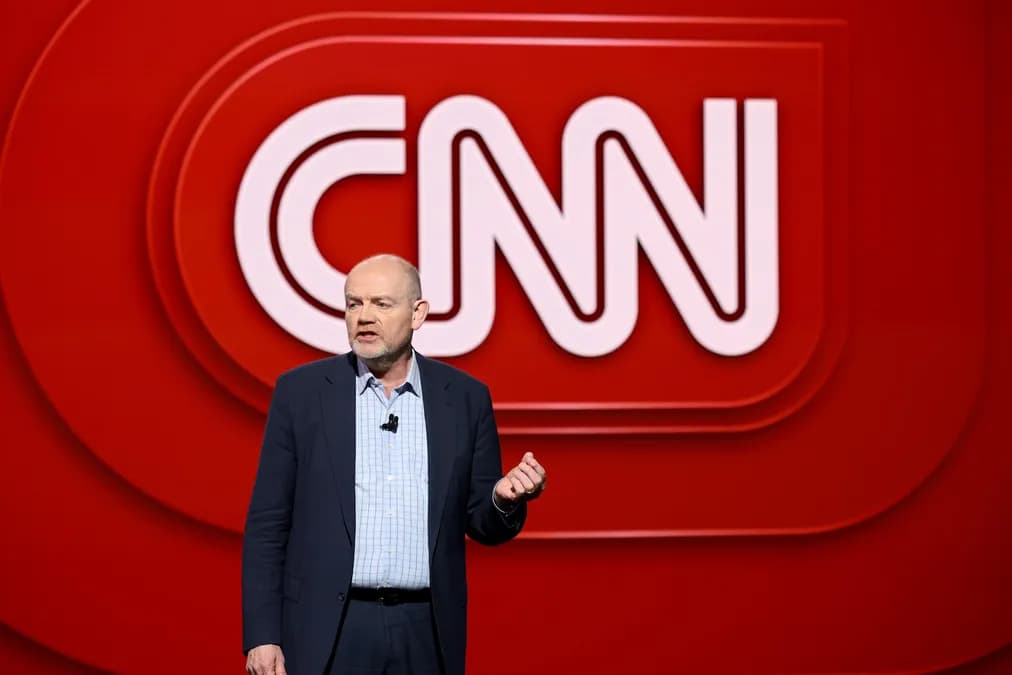
A $110 billion deal closing this week will redraw the map of American media more dramatically than any single transaction since AT&T's ill-fated acquisition of Time Warner in 2018. When Paramount Global's purchase of Warner Bros. Discovery finalizes under the Skydance banner, dozens of beloved brands — from MTV to HBO to Cartoon Network — will pass under a single corporate roof. Amid the organizational upheaval, one executive has publicly staked his claim to continuity: CNN CEO Mark Thompson, who confirmed in a staff memo that he will remain in his role and that the news network's editorial independence is, in his view, protected.
The announcement matters for reasons that extend well beyond one executive's job security. In an era when newsroom credibility is measurably tied to audience trust — Gallup's most recent survey found that only 31 percent of Americans express confidence in mass media, down from 68 percent in 1972 — the governance structures that insulate journalists from corporate pressure have never been more consequential. Thompson's decision to address staff directly, in writing, signals an awareness of exactly that dynamic.
Mark Thompson's Commitment to CNN's Editorial Independence
Thompson's internal memo offered employees something that corporate transitions rarely deliver: a direct, unambiguous commitment. He wrote that he believes the combined company will "fully support the principle and practice of the kind of independent news that CNN has always stood" for. The phrasing is deliberate. Thompson did not simply say the network would remain editorially independent — he framed independence as both a principle and a practice, a distinction that anyone who has watched a merger slowly erode a newsroom's culture will recognize as important.
Read next Laika's Wildwood: Stop-Motion Fantasy at TIFF 2026Thompson's background lends weight to those words. Before leading CNN, he served as Director-General of the BBC, one of the few broadcast institutions in the world that has developed rigorous statutory protections for editorial independence. He later ran The New York Times Company, where he oversaw the newsroom's digital transformation while keeping the Sulzberger family's longstanding firewall between business and editorial operations intact. His record suggests that the memo is not merely reassuring language drafted by a communications team.
Still, declarations of intent are not structural guarantees. The history of media consolidation is littered with sincere promises that dissolved under profit pressure. The question is not whether Thompson believes what he wrote — it is whether the architecture of the new combined entity will allow those beliefs to function as policy.
The Skydance–Paramount–WBD Deal: A Timeline and Structure
The deal now closing represents the culmination of a consolidation wave that accelerated after the 2017–2018 AT&T/Time Warner transaction. Skydance Media, the production company founded by David Ellison, moved first on Paramount, a process that involved months of regulatory review and competing bids. The subsequent absorption of Warner Bros. Discovery into the same corporate structure amplifies the scale considerably.
At $110 billion, the combined entity would rank among the largest media companies in the world by asset value, competing directly with Disney, Comcast's NBCUniversal, and the streaming arms of Apple and Amazon. The strategic logic centers on content scale: owning both the Paramount and Warner libraries gives the combined company a catalog depth that neither entity could achieve alone, while CNN provides a live-news anchor that pure entertainment companies lack.
For CNN specifically, the structural question is which division it will report into, what its budget autonomy will look like, and whether its leadership will have direct access to the board. Those details, which Thompson's memo does not address in the reported summary, will ultimately determine whether the independence he describes is durable or ceremonial.
What Media Consolidation Means for News Networks
The historical record on news divisions inside entertainment conglomerates is mixed at best. When Disney acquired ABC in 1995 for approximately $19 billion, ABC News retained its identity and much of its operational independence for years. The network's journalism did not immediately collapse. But over the following two decades, resources tightened, investigative units shrank, and the competitive pressure to align news programming with entertainment priorities gradually reshaped what the division produced. Media scholars at the Columbia Journalism School have documented how cross-promotional pressures — covering parent-company films and theme parks favorably, for instance — create subtle but real distortions in coverage.
NBC News under Comcast tells a similar story with different contours. Comcast's 2011 acquisition of NBCUniversal prompted commitments to firewall protections that satisfied federal regulators. In practice, the news division has operated with meaningful autonomy in some areas while facing documented instances of corporate interference in others. The departure of several senior MSNBC figures over the past decade has been attributed, at least in part, to tensions between news judgment and broader corporate strategy.
The Poynter Institute and the Society of Professional Journalists both maintain that structural independence — meaning formal governance rules, not just good intentions — is the only reliable protection for news organizations inside large conglomerates. A firewall written into a merger agreement carries more weight than a CEO memo, however sincere. The Reporters Committee for Freedom of the Press has similarly argued that ownership concentration at this scale makes enforceable editorial independence clauses not optional but essential.
Challenges Ahead for CNN Under the New Corporate Umbrella
CNN enters this transition carrying its own unresolved tensions. The network has spent the past several years attempting to redefine its position in a fractured news landscape, experimenting with streaming formats, adjusting its primetime lineup, and navigating politically charged debates about objectivity and impartiality. Its audience numbers, while still substantial, have declined from peak cable-news viewership.
Inside a $110 billion entertainment and media conglomerate, a news division that generates modest profit relative to a streaming platform or a blockbuster film franchise occupies a complicated position. Budget allocations, real estate, technology infrastructure — all of these will be negotiated in a new corporate context. Thompson's task is to secure CNN's resource base at a moment when his leverage as an independent CEO is transitioning to something less defined.
There is also the matter of regulatory scrutiny. Deals of this magnitude draw sustained attention from the Federal Communications Commission and the Department of Justice. Any conditions attached to the merger's approval — particularly around media ownership concentration in local markets — could affect how CNN distributes its content or how it staffs regional bureaus.
Industry Reactions and What Comes Next
Reaction to Thompson's memo within the journalism community has been cautiously measured. The public commitments are welcomed; the structural questions remain open. The specifics of CNN's governance within the new entity — reporting lines, budget authority, board representation — will be the real test of whether this week's closing represents a safe harbor or the beginning of a longer institutional struggle.
For audiences, the practical question is simpler: will CNN's journalism remain recognizable and trustworthy under this new ownership? Thompson's track record suggests he will fight to preserve what he described in his memo. Whether the combined company's leadership shares that commitment with equal conviction is something only time, and the coverage decisions made in the months ahead, will reveal.
The consolidation is now a fact. The editorial independence Thompson promised is, for now, a declaration. The distance between those two things is where the real story of CNN's future will be written.
Source: The Verge