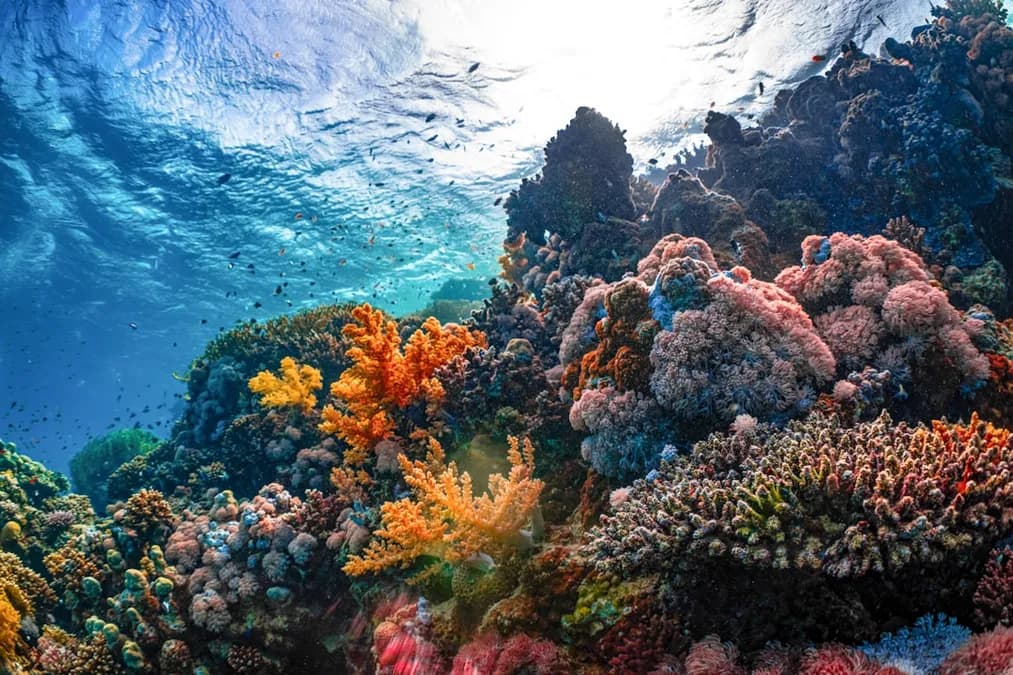
What Is Coral and Why It Matters for Our Planet
The recent 2023-2024 global mass bleaching event underscored coral vulnerability; NOAA reported that over 60% of reef areas experienced severe bleaching, a dramatic indicator of warming oceans. Corals are not rocks, nor are they simple plants. They are complex colonies of tiny animals, specifically polyps, that build massive calcium carbonate skeletons. This foundational structure provides the physical framework for entire ecosystems. These polyps maintain a symbiotic relationship with microscopic algae called zooxanthellae. The algae provide the coral with the majority of its energy through photosynthesis, while the coral gives the algae shelter and compounds necessary for growth. This mutualism is the engine that drives the entire reef system.
The Biology of Coral: Animal, Plant, or Both?
A deep-sea diver observing a vibrant reef structure might assume the color comes from flora, but the skeleton itself is pure animal architecture. The coral polyps are cnidarians, making them definitively animals. Their reliance on zooxanthellae, however, complicates the classification. When ocean temperatures exceed the thermal tolerance threshold—often cited by researchers in Nature Climate Change as just one degree Celsius above the average summer maximum—the coral expels the algae. This process, bleaching, starves the coral and leaves the skeletal structure vulnerable to disease and collapse. The fragility of this biological balance makes the entire system acutely sensitive to changes in ocean chemistry and temperature, directly linking coral health to global warming patterns.
Coral Reefs as Biodiversity Hotspots
Reefs support an astonishing level of life; they are often called the "rainforests of the sea." For every square kilometer of reef, thousands of species of fish, invertebrates, and other marine life rely on the physical complexity of the coral structure for shelter, breeding, and hunting. The economic value is immense, supporting coastal fisheries that feed millions and providing natural barriers against storm surges. When coral reefs degrade, the cascading effects ripple outward. AIMS research has documented that the loss of reef cover reduces local fish biomass and increases coastal erosion risk. Because of this foundational role, understanding the connection between coral reef climate change and ecosystem stability is paramount. Effective conservation requires immediate action to mitigate rising ocean acidity and temperature spikes, addressing the root causes of coral decline. The integrity of these underwater cities is critical to global climate resilience.
How Climate Change Is Killing Coral Reefs
When sea surface temperatures exceed the narrow thermal tolerance of their symbiotic algae, coral polyps expel the algae, leaving the white skeleton visible—a process known as bleaching. NOAA data confirms that the 2016 and 2017 global mass bleaching events were unprecedented in their scale, impacting over 60% of the world’s reef areas. Corals rely on zooxanthellae, single-celled organisms that provide the coral with up to 90% of its energy. When the ocean water warms just 1–2°C above the seasonal average, this delicate thermal balance breaks down, triggering a stress response that the coral cannot sustain. Scientists from the Australian Institute of Marine Science (AIMS) warn that repeated bleaching events, separated by less than a decade, prevent recovery, pushing reef systems past critical tipping points.
Read next How Climate Change Works: A Clear ExplainerOcean Temperature Rise and Coral Bleaching Explained
A single degree Celsius of sustained warming can fundamentally alter the physiology of reef-building corals. This isn't just a temporary stressor; it represents a permanent shift in the ocean’s chemistry and temperature profile. Consider the Great Barrier Reef, which has experienced multiple severe bleaching cycles in rapid succession, illustrating the acute vulnerability of these ecosystems. The cumulative impact of rising heat stress is directly tied to the accelerating pace of global climate change. Coral bleaching is not a death sentence immediately, but repeated failure to recover—especially when multiple warming periods stack up—leads to starvation and disease. The resulting decline in coral cover compromises the entire reef structure, threatening the thousands of species that rely on the complex three-dimensional habitat for shelter and food.
Ocean Acidification: The Silent Threat
The second, often less visible killer is ocean acidification. As the ocean absorbs excess atmospheric carbon dioxide, the pH balance decreases, a process that chemically weakens the foundation of the coral structure. This decline in carbonate ions makes it physically difficult for corals and other calcifying organisms, like mollusks and coralline algae, to build and maintain their calcium carbonate skeletons. Peer-reviewed findings published in Science have demonstrated that even if temperatures stabilize, insufficient carbonate saturation makes growth impossible. This dual assault—thermal stress from warming waters and structural weakness from acidification—is the primary mechanism through which global climate change undermines coral resilience. Addressing the root causes of coral reef climate change requires aggressive global decarbonization efforts alongside localized restoration using resilient coral strains.
The Scale of Global Coral Reef Decline
Mass Bleaching Events: From 1998 to Today
The global coral reef system has lost an estimated 50% of its coral cover since the 1950s, a decline driven primarily by escalating ocean temperatures and acidification. This loss is not gradual; it manifests in catastrophic, cyclical events like mass bleaching. The 2016-2017 global bleaching episode, for example, affected over 60% of surveyed reef areas across the Indo-Pacific, demonstrating a rapid, widespread ecological failure.
Bleaching occurs when elevated sea surface temperatures—often just 1 to 2 degrees Celsius above the seasonal average—stress the symbiotic relationship between coral polyps and the zooxanthellae algae they depend upon. When this thermal threshold is crossed, corals expel the algae, turning white and, if the stress persists, dying. Research published in Nature Climate Change has consistently shown that recovery time for massive reef structures requires decades of stable, favorable conditions, a rarity in the current climate trajectory.
The record is littered with such crises. The Great Barrier Reef experienced significant bleaching events in 1998, 2002, 2016, and 2017. Monitoring efforts by institutions like the Australian Institute of Marine Science (AIMS) track the severity, noting that the frequency of these acute thermal stress events now exceeds the natural recovery rate of many key species. This escalating pattern underscores the direct link between rising atmospheric carbon dioxide and the reef's viability.
While the challenge posed by coral reef climate change appears immense, scientific focus is shifting toward resilience. Experts are actively studying assisted evolution and selective breeding programs to identify "super corals"—strains exhibiting higher thermal tolerance. Furthermore, local interventions, such as establishing marine protected areas (MPAs) and improving water quality near reefs, bolster local resistance. The IPCC reports emphasize that while global emissions mitigation remains paramount, these localized, science-backed conservation efforts are critical immediate defenses, buying time for the reef ecosystem to adapt to the changing chemistry and heat of the ocean.
Economic and Human Consequences of Losing Coral Reefs
The loss of coral reefs translates directly into trillions of dollars in lost coastal protection and fisheries revenue. Over 50% of the world's coral reefs have been severely degraded or lost since the 1950s, fundamentally reshaping marine economies and human settlement patterns. Reef structures act as natural breakwaters; for every kilometer of healthy reef, the wave energy dissipation can reduce wave height by up to 97%, protecting coastlines that might otherwise face catastrophic erosion from tropical storms.
When these natural barriers fail, the economic fallout is immediate and measurable. Consider the fishing economies of the Indo-Pacific; studies published in Nature Climate Change estimate that the decline in reef health threatens the livelihoods of over 300 million people who rely on reef-associated fish stocks for protein and income. These ecosystems support biodiversity far exceeding their physical footprint, forming the base of complex food webs. Furthermore, reef degradation exacerbates the effects of coral reef climate change by weakening the structural integrity of the entire system.
Scientifically, the threat is rooted in thermal stress. Research indicates that sustained temperatures even 1°C above average sea surface temperature can trigger mass bleaching events, causing the coral polyps to expel their symbiotic algae (zooxanthellae). The 2023-2024 global mass bleaching event serves as a stark example, affecting an estimated 60%+ of surveyed reef areas. Experts at the Australian Institute of Marine Science (AIMS) emphasize that current rates of ocean warming outpace the ability of many coral species to adapt genetically.
The human cost extends beyond lost fish catches. Coastal communities face increased vulnerability to storm surge and sea-level rise, leading to potential climate migration. For instance, in parts of East Africa, the decline of reef resources, monitored by organizations like CORDIO, forces communities to overfish remaining stocks, creating a cycle of resource depletion and poverty. While the challenges presented by coral reef climate change are immense, targeted restoration efforts, such as coral gardening and the use of heat-resistant coral genotypes, offer crucial pathways. Policy must therefore move beyond mere conservation toward integrated coastal zone management that recognizes the reef's value as an indispensable natural infrastructure.
Coral Reef Restoration: Science and Solutions
The 2023-2024 global mass bleaching event severely impacted over 60% of the world's coral reef areas, underscoring the immediate crisis faced by these fragile ecosystems. Restoration efforts now fuse traditional ecological knowledge with advanced molecular biology to stabilize reef health. Coral gardening, for instance, involves cultivating fragments of resilient coral species in nurseries before transplanting them back onto damaged structures. This hands-on approach was pioneered by organizations like the Australian Institute of Marine Science (AIMS) and has seen success in areas like the Great Barrier Reef, where dedicated teams monitor growth rates and structural integrity.
Coral Gardening and Assisted Evolution
Scientific research is moving beyond simple transplantation toward assisted evolution. Researchers are identifying and selectively breeding coral genotypes that exhibit higher thermal tolerance. A critical finding from peer-reviewed studies published in Science indicates that sustained temperatures just 1°C above the annual average can trigger mass bleaching events, necessitating rapid intervention. By using genetic screening, scientists can boost the coral's natural defenses. Furthermore, "super corals"—hybrids bred for increased resistance—represent a powerful, though still developing, tool to combat the effects of coral reef climate change. These efforts aim to accelerate natural adaptation, providing a biological buffer against rising ocean temperatures.
Marine Protected Areas and Policy Responses
While biological intervention offers hope, large-scale policy shifts are necessary to provide a stable framework for recovery. Establishing and rigorously enforcing Marine Protected Areas (MPAs) reduces local stressors—such as overfishing and pollution—allowing reefs the necessary space to recover naturally. The World Resources Institute highlights that effective MPAs can boost biodiversity and resilience by protecting keystone species. Policymakers must pair these localized efforts with global carbon mitigation strategies. The IPCC reports repeatedly emphasize that without aggressive cuts to global emissions, localized conservation efforts will eventually fail. Addressing the root causes of reef degradation—namely, climate change—remains the single most crucial determinant of long-term survival.
What You Can Do to Help Save Coral Reefs
Over 50% of the world's coral reefs have been lost since the 1950s, a devastating statistic that underscores the urgency of intervention. Addressing coral decline requires action at multiple scales, from immediate changes in personal habits to sustained pressure on global policy. On a local level, minimizing physical stress on reefs is paramount. When snorkeling or diving, always maintain a buffer zone; touching or standing on coral fragments can introduce pathogens or cause physical breakage, impeding the slow process of recovery. Furthermore, drastically reducing nutrient runoff—by properly managing fertilizers on lawns or supporting local septic systems—directly lowers the stress load on reef ecosystems, preventing harmful algal blooms that smother polyps.
Systemic change hinges on addressing the root cause: rising ocean temperatures. Scientific literature, including reports from the Intergovernmental Panel on Climate Change, shows that even a sustained 1°C increase above average seasonal temperatures can trigger mass bleaching events, forcing corals to expel the symbiotic algae that provide their color and sustenance. To combat this, support organizations advocating for deep decarbonization. Vote for policies that mandate renewable energy infrastructure and hold large industrial polluters accountable for their carbon emissions.
Beyond personal choices, direct support for scientific research is critical. Institutions like the Australian Institute of Marine Science (AIMS) are developing advanced heat-resistant coral strains and mapping thermal refugia—areas predicted to remain cooler during bleaching events. Supporting these efforts funds crucial monitoring and resilience research. When considering travel, choose certified eco-tourism operators who adhere to strict environmental guidelines, ensuring your dollars contribute to conservation rather than degradation. Recognizing the link between warming waters and reef degradation, understanding the complex interplay of coral reef climate change is the first step toward effective advocacy. Finally, participating in local citizen science initiatives allows you to contribute vital data on coral cover and bleaching severity, providing the granular evidence needed by policymakers to enact protective marine spatial plans.