Federal agents arrested Greg Lui on Thursday, accusing the 38-year-old chief executive of Earthmade Computer of orchestrating a scheme to ship more than $300 million worth of export-controlled computer servers into China. The Department of Justice alleges Lui used falsified paperwork to conceal the true destination of the hardware, which contained Nvidia's A100 and H100 GPUs — the workhorses of modern artificial intelligence training.
The arrest represents one of the largest dollar-value enforcement actions tied to the illicit diversion of American semiconductor technology since the United States began tightening restrictions on advanced chip exports. According to the FBI's indictment, Lui conspired with freight-forwarding firms operating in South Asian countries including Malaysia and Singapore to route the servers away from their declared destinations and into Chinese hands.
Which Nvidia Chips Were Smuggled and Why They Matter
The A100 and H100 graphics processing units sit at the center of this case, and understanding their capabilities explains why federal prosecutors treated the alleged diversion as a national security matter rather than a routine customs violation.
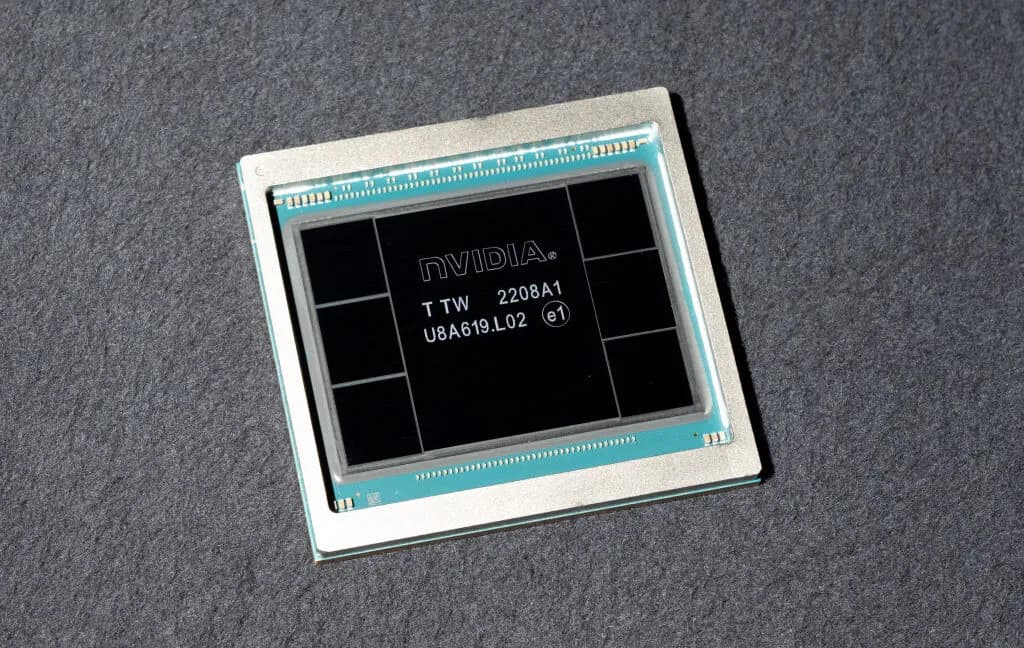
Nvidia's A100, built on the company's Ampere architecture, debuted in 2020 and quickly became the standard accelerator for training large language models. The H100, based on the newer Hopper architecture, followed in 2022 with substantially higher memory bandwidth and throughput. Neither chip represents Nvidia's current top tier — the company has since released more powerful processors — but that distinction matters less than policymakers sometimes suggest. What makes both GPUs strategically significant is their ability to process enormous datasets in parallel, the fundamental operation underlying AI model training at scale.
A single H100 can perform roughly 2,000 trillion operations per second in certain reduced-precision formats, and modern AI training clusters chain thousands of these units together. The quantities described in the indictment — enough servers to total $300 million — could plausibly equip a mid-sized AI research cluster capable of training frontier-class models. For the People's Liberation Army or Chinese state-linked firms seeking to accelerate military applications of machine learning, such a cache would compress years of development timelines.
The distinction between "most advanced" and "still extremely capable" trips up casual observers. Export control analysts consistently note that older-generation accelerators remain useful for inference workloads, model fine-tuning, and the iterative experimentation that precedes frontier training runs. Fewer than 5 percent of AI workloads require the absolute newest silicon; the remainder benefit substantially from hardware like the A100 and H100.
US Export Controls on Advanced Semiconductors: Background
The regulatory architecture underlying this prosecution dates to October 2022, when the Bureau of Industry and Security (BIS) — an agency within the Department of Commerce — issued sweeping rules restricting exports of advanced computing chips and semiconductor manufacturing equipment to China. Those controls, expanded significantly in October 2023, created licensing requirements for chips exceeding defined performance thresholds and imposed restrictions on US persons supporting Chinese advanced chip development.
Read next Laika's Wildwood: Stop-Motion Fantasy at TIFF 2026BIS maintains the Entity List, a roster of foreign companies and organizations subject to heightened export restrictions. Placement on the list effectively bars American firms from shipping controlled items to those entities without a license that is presumptively denied. The A100 and H100 both fall within the performance parameters covered by the 2022 and 2023 rules.
The controls function through a layered enforcement model. Exporters must obtain licenses before shipping controlled goods. Freight forwarders and logistics providers bear legal obligations under the Export Administration Regulations (EAR) to verify end-use and end-user information. Financial institutions must conduct due diligence. When parties falsify documentation to circumvent these requirements, they expose themselves to criminal liability under statutes carrying penalties of up to 20 years imprisonment and fines exceeding $1 million per violation.
Between 2022 and 2025, BIS brought dozens of enforcement actions related to semiconductor diversion, according to agency enforcement data. The Earthmade case dwarfs most of them in dollar value.
The Role of South Asian Freight Networks in Chip Diversion
Malaysia and Singapore appear repeatedly in chip-smuggling indictments for a structural reason. Both countries host major transshipment hubs — Port Klang and the Port of Singapore rank among the world's busiest — and both maintain legitimate, high-volume electronics trading relationships with China. That legitimate commerce provides cover for illicit shipments.
Trade-law analysts describe a familiar pattern: a shipment leaves the United States with paperwork naming a Malaysian or Singaporean consignee. The goods arrive at a free-trade zone or bonded warehouse. From there, documentation is altered or replaced, and the servers move onward — often through additional intermediary stops — before reaching Chinese territory. Each border crossing introduces a documentation checkpoint that a determined smuggler can exploit.
Freight-forwarding firms occupy a critical chokepoint in this chain. Under the EAR, forwarders are legally required to file Electronic Export Information and to screen parties against restricted-party lists. When forwarders collude with exporters rather than verify their claims, controls collapse. The indictment alleges precisely that dynamic: Earthmade worked with forwarding companies to construct a false paper trail.
Singapore and Malaysia have both strengthened their own export-control regimes in response to US pressure. Singapore's Customs Act was amended in 2023 to increase penalties for strategic-goods violations, and Malaysian authorities have participated in joint investigations with US counterparts. Enforcement gaps persist, however, particularly among smaller logistics operators with limited compliance infrastructure.
National Security Implications of AI Chip Proliferation
The strategic logic behind US chip controls rests on a straightforward premise: compute capacity translates into AI capability, and AI capability translates into military advantage. The Department of Defense has identified machine learning as foundational to applications including autonomous systems, intelligence analysis, electronic warfare, and logistics optimization.
China's domestic chip industry has made genuine progress. Huawei's Ascend series processors power domestic AI clusters, and SMIC has advanced its manufacturing processes. But independent analysts estimate China's leading-edge AI compute capacity remains years behind what American firms can access, constrained by both fabrication limits and the difficulty of scaling advanced packaging. Every smuggled H100 narrows that gap.
The concern extends beyond raw training capacity. Access to Nvidia's software ecosystem — the CUDA programming framework, cuDNN libraries, and associated developer tools — matters as much as the silicon itself. Engineers who train on Nvidia hardware develop skills and codebases optimized for that platform, creating durable dependencies that persist even after hardware is replaced.
Congress has responded to diversion cases by pushing for stricter enforcement. The Export Control Enforcement Act, introduced in 2024, would increase BIS enforcement staffing and impose mandatory reporting requirements on cloud providers offering AI compute. Whether such measures close the gaps that smugglers exploit remains contested among policy specialists.
What This Arrest Signals for Future Export Control Enforcement
The Earthmade prosecution follows a pattern established over the past three years: DOJ and BIS increasingly pursue individual executives rather than treating diversion as a corporate compliance failure. That shift raises the personal stakes for CEOs, logistics managers, and freight brokers throughout the supply chain.
Several factors suggest enforcement will intensify. BIS received expanded funding under recent appropriations legislation, permitting additional special agents and analysts. The agency has established dedicated semiconductor enforcement teams and deepened coordination with foreign customs authorities. And the dollar values involved in cases like this one — $300 million in a single alleged scheme — guarantee continued prosecutorial attention.
For companies operating in the semiconductor supply chain, the practical implications are concrete. Executives must verify end-users beyond contractual assurances. Freight forwarders must independently confirm consignee legitimacy. Red flags — unusually circuitous routings, cash payments, refusal to permit audits — demand escalation rather than accommodation.
The Lui case will likely become a reference point in compliance training for years. It demonstrates that federal investigators can reconstruct shipping records, trace financial flows, and build conspiracy cases reaching across multiple jurisdictions. The alleged scheme relied on falsified documents, but documents leave traces. That is the lesson the indictment delivers to anyone weighing similar shortcuts.
Source: Ars Technica - All content