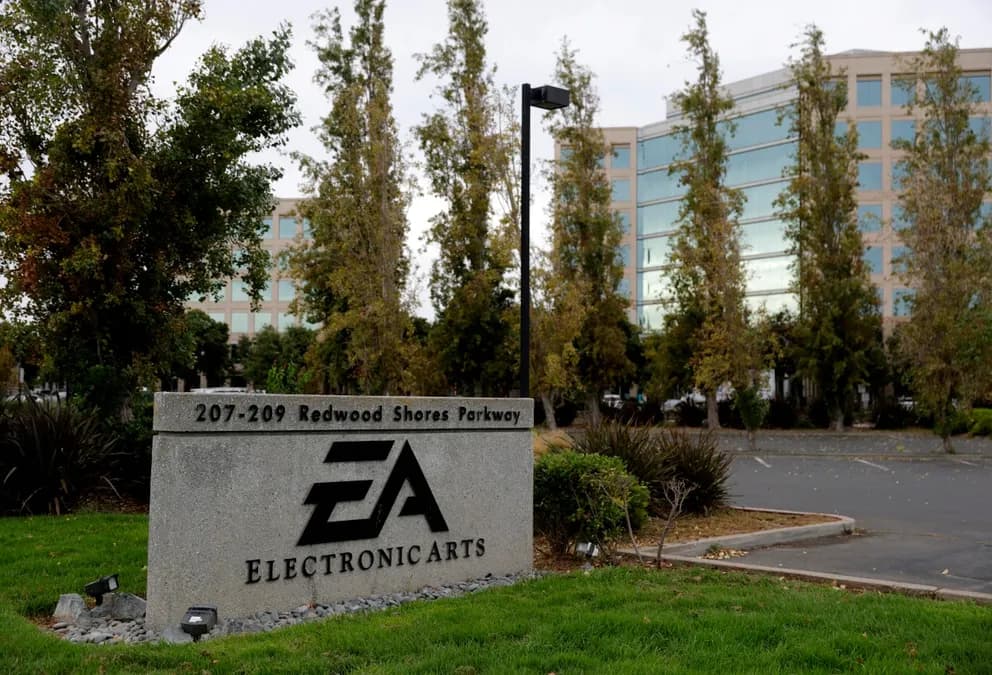
EA Bondholders Allege $1.4 Billion Default After Historic LBO
A $1.4 billion debt default allegation does not surface every quarter. When EA bondholders formally declared that Electronic Arts had triggered a default, the move immediately drew attention from restructuring attorneys, credit analysts, and private-equity deal teams watching from the sidelines. The dispute, which has been building since the videogame publisher went private in what has been described as the largest leveraged buyout ever completed, escalated sharply when bondholders alleged the company had failed to pay them off at a contractually mandated premium following the change of ownership.
The EA bondholders default allegation represents more than a bilateral creditor dispute. It raises foundational questions about how change-of-control covenants in corporate bonds are read, enforced, and litigated in the context of mega-LBOs — questions the market has been asking with increasing urgency as private-equity sponsors continue to pursue large-cap public company targets.
The Record-Breaking LBO That Started It All
The RJR Nabisco buyout of 1989 — approximately $25 billion in nominal terms — defined the LBO era for a generation of finance professionals. Subsequent deals, including the $45 billion acquisition of TXU (later Energy Future Holdings) in 2007 and the $33 billion buyout of HCA in 2006, pushed the boundaries further. According to aggregate deal-volume data tracked by PitchBook, global LBO activity has fluctuated dramatically with credit cycles, but transactions exceeding $20 billion remain rare enough to constitute market-moving events on their own.
Read next Iran's Hormuz Leverage and What It Means for Oil PricesElectronic Arts going private in what the market characterized as the largest LBO ever completed would, by definition, have surpassed all prior benchmarks. Deals of that scale require enormous debt financing — typically stacked across multiple tranches including senior secured loans, second-lien facilities, and unsecured notes. The unsecured notes, sold to bondholders who bought Electronic Arts' public debt, are precisely what sits at the center of this dispute.
Large LBOs are inherently capital-structure exercises. The acquiring sponsor strips out equity, loads the target with debt, and the existing bondholders — who priced their paper based on the investment-grade or high-yield profile of a standalone public company — suddenly find themselves holding obligations of a heavily indebted private entity with a very different risk profile. That mismatch is why change-of-control covenants exist.
The Change-of-Control Premium: What Bondholders Want
Bond indentures, the governing documents that define the relationship between issuer and creditor, routinely include change-of-control provisions. The structure varies meaningfully between investment-grade and high-yield paper. According to the Securities Industry and Financial Markets Association (SIFMA), investment-grade corporate bonds historically carried fewer protective covenants than high-yield bonds, a reflection of the lower perceived credit risk at issuance. High-yield indentures, by contrast, commonly include a "change-of-control put" — a right for bondholders to demand repurchase of their notes, typically at 101 cents on the dollar, if a defined change of ownership occurs.
The dispute with EA bondholders centers on whether the LBO transaction triggered exactly that obligation. Bondholders allege it did, and that Electronic Arts — now under private-equity ownership — owes them that premium. The issuer, presumably, disputes the interpretation or its application under the specific indenture language.
This is not a novel legal argument. Change-of-control put provisions were tested extensively in the wake of the 2007–2008 LBO wave. The Energy Future Holdings restructuring, which ran through years of contentious litigation, produced extensive case law on how courts read indenture definitions of "change of control" and what constitutes a qualifying triggering event. Restructuring attorneys who have studied those proceedings note that indenture language — specifically whether the definition of control references voting power, economic ownership, or board composition — is often determinative. A single clause can shift billions of dollars of liability.
The $1.4 billion figure at stake in the EA bondholders default allegation reflects either the outstanding principal of a specific tranche of notes or an aggregated claim across multiple series. Either way, it represents the kind of sum that mandates court involvement and, almost certainly, extended litigation.
Implications for Private Equity and the LBO Market
Private-equity sponsors negotiating LBO financing will be watching this dispute carefully. The outcome carries direct implications for deal structuring, specifically for how sponsors and their legal teams approach existing public debt at acquisition targets.
There are broadly two approaches when a sponsor acquires a public company carrying outstanding bonds. The first is to tender for the existing notes — paying off bondholders at or above par as part of the transaction financing — eliminating the covenant risk entirely. The second is to assume the debt, accepting that existing indenture protections remain in place. When sponsors choose the second path, they are betting either that no change-of-control trigger applies or that bondholders will not mount a coordinated challenge.
The EA bondholders default allegation suggests that bet did not pay off. Coordinated bondholder action — particularly when the debt outstanding is concentrated among institutional creditors like asset managers and hedge funds — is far more likely in a transaction of this visibility than in smaller, less scrutinized deals. Institutional investors in large high-yield tranches retain restructuring counsel, monitor indenture compliance, and are prepared to litigate.
Bloomberg data on leveraged loan and high-yield bond issuance shows that LBO-related debt financing has grown substantially as a share of overall corporate credit markets over the past decade. As deal sizes increase and existing-debt assumption becomes a more common structuring tool to contain upfront financing costs, the probability of exactly this type of indenture dispute rises proportionally.
What Happens Next: Legal Paths and Market Consequences
Following a formal default allegation, the timeline is largely governed by the indenture and applicable law. Bondholders who have declared a default typically trigger an acceleration provision — a demand that the full outstanding principal become immediately due — unless the issuer cures the alleged default within a prescribed notice period, often 30 to 60 days depending on the indenture.
If no cure is agreed, the dispute moves toward litigation or negotiated settlement. In LBO disputes of this complexity, negotiated settlement is common because the costs of extended litigation — legal fees, management distraction, credit-market signaling — tend to motivate both sides toward resolution. However, the scale of the alleged obligation here, $1.4 billion, makes a quick settlement at full demand less certain. Sponsors rarely write that size of a check without contesting the underlying legal theory.
Credit analysts covering the company's outstanding debt will watch secondary-market trading prices for the relevant notes closely. If the bonds trade at distressed levels — below 80 cents on the dollar, a threshold broadly associated with credit stress in high-yield markets — it signals that the market prices meaningful probability of a prolonged dispute or restructuring scenario. Secondary prices also affect the composition of the creditor group, as distressed hedge funds may acquire positions, shifting negotiating dynamics.
Key Takeaways for Investors and Deal Makers
The EA bondholders default dispute distills into a few durable lessons for those operating in credit markets and private equity.
First, change-of-control covenant language is not boilerplate. Every word of the triggering definition matters, and counsel engaged on both the buy side and the debt markets side of a large LBO should treat indenture review as a critical deal step, not a back-office formality.
Second, the scale of the deal does not insulate a sponsor from creditor action. If anything, record-breaking transactions attract more scrutiny, more sophisticated creditor advisors, and more willingness to litigate because the financial stakes justify it.
Third, existing bondholders in public companies that become LBO targets should understand their contractual rights precisely. The ability to demand repurchase at a premium is a meaningful economic right — in this case, potentially worth $1.4 billion. Failing to exercise it, or failing to monitor whether a triggering event has occurred, is a material oversight in portfolio management.
The EA bondholders default allegation, whatever its eventual legal resolution, has already accomplished something consequential: it has placed indenture enforcement back at the center of the LBO conversation, at a moment when deal volume and transaction sizes make that conversation overdue.
Source: WSJ.com: Markets