What Are Extreme Weather Events and Why Are They Increasing
Extreme weather events are episodes of unusual, severe, or unseasonal weather that fall outside the historical range for a place and time. They include record heat waves, intense rainfall, flash floods, droughts, hurricanes, wildfires, winter storms, and coastal storm surges. Weather has always produced extremes. What has changed is the background climate in which those events form.
The scientific consensus is clear: human-caused warming is making many extreme weather events more frequent, more intense, or both. The Intergovernmental Panel on Climate Change has concluded that every additional increment of global warming increases changes in extremes, including heat waves, heavy precipitation, agricultural droughts in some regions, and compound events. The physics is straightforward enough to state plainly: a warmer atmosphere holds more moisture, hotter land dries out faster, warmer oceans provide more energy to storms, and higher seas make coastal flooding more destructive.
The World Meteorological Organization reported that 2024 was the warmest year in the 175-year observational record, with global mean temperature about 1.55 degrees Celsius above the 1850-1900 average. That single year does not mean the Paris Agreement threshold has been permanently crossed, but it shows how close the planet now is to conditions that scientists have warned would sharply raise climate risks.
This does not mean climate change causes every storm, fire, or drought. It means climate change loads the dice. A heat wave that once would have been rare can become common. A rainstorm that once would have been severe can carry more water. A coastal flood that once required an unusually powerful storm can happen with a weaker one because the baseline sea level is higher.
Types of Extreme Climate Events Reshaping Our World
Heat waves are the clearest signal. They are becoming hotter, longer, and more common across most land regions. Extreme heat strains power grids, reduces labor productivity, worsens air pollution, damages crops, and can turn deadly quickly for older adults, outdoor workers, infants, and people without cooling. Urban neighborhoods with little shade or green space often face the highest temperatures.
Read next How Climate Change Works: A Clear ExplainerHeavy rainfall is another well-established climate signal. Warmer air can hold roughly 7% more water vapor for every 1 degree Celsius of warming. When conditions trigger rainfall, storms can release more water in shorter bursts. That raises the risk of flash flooding, landslides, sewage overflows, and crop losses. Cities built for older rainfall patterns are finding that drainage systems, roads, and rail lines are undersized for present-day downpours.
Droughts are more complex because rainfall patterns vary by region, but warming intensifies drought stress by increasing evaporation from soils and water bodies. In agricultural regions, this can reduce yields and force deeper reliance on groundwater. In forests and shrublands, hot droughts dry vegetation, lengthening fire seasons and making wildfires harder to contain.
Tropical cyclones are not simply becoming more numerous everywhere, but the strongest storms are gaining dangerous advantages. Warmer oceans can fuel rapid intensification, and a warmer atmosphere can increase rainfall from hurricanes and typhoons. Sea-level rise adds another layer by pushing storm surge farther inland.
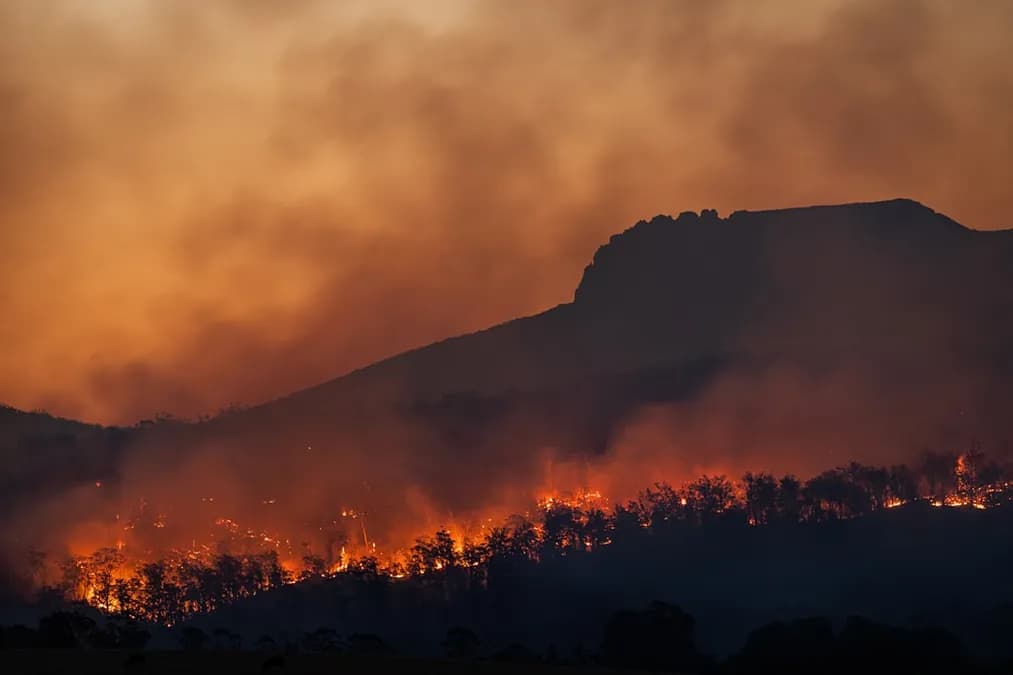
Wildfires are shaped by land management, ignition sources, wind, housing patterns, and vegetation. Climate change does not explain every fire, but hotter and drier conditions increase the odds that landscapes burn more intensely once a fire starts. The result is not only property loss but also smoke exposure hundreds or thousands of miles downwind.
The Science Behind Climate Extremes
Climate extremes emerge when natural variability operates inside a warming system. El Nino, La Nina, jet stream shifts, monsoons, atmospheric rivers, and ocean circulation patterns still matter. Climate change acts as a force multiplier, altering the baseline on which those patterns unfold.
Attribution science has made this relationship easier to measure. Researchers compare the observed world with a modeled world in which human greenhouse gas emissions did not warm the climate. By running many simulations, they estimate whether climate change made a specific event more likely or more intense. Groups such as World Weather Attribution now conduct rapid analyses after major disasters, often finding that extreme heat events in particular have become far more likely because of human-caused warming.
The strongest evidence links climate change to heat extremes, heavy precipitation, shrinking snowpack, sea-level rise, and worsening fire weather in many regions. The evidence is more regionally varied for meteorological drought and tropical cyclone frequency, but the direction of risk is still serious: warmer conditions can make drought impacts worse, and the most intense storms can carry more rain and produce greater coastal damage.
The main driver is greenhouse gas accumulation. Carbon dioxide, methane, and nitrous oxide trap heat in the atmosphere. Much of that excess heat is absorbed by the ocean, which has reached record heat content in recent years. Ocean heat matters because it affects marine ecosystems, coral reefs, rainfall patterns, and storm energy. Melting glaciers and ice sheets add water to the ocean, while warmer seawater expands, raising sea levels.
The result is a climate system with more energy and moisture. That combination does not produce the same hazard everywhere, but it increases volatility: wetter wet periods, hotter hot periods, and more damaging extremes when hazards overlap.
Global Regions Most Vulnerable to Extreme Climate Conditions
Vulnerability is not only about exposure to hazards. It is also about housing, infrastructure, income, health systems, governance, insurance, and the ability to recover. The same storm can be disruptive in one country and catastrophic in another.
Small island states face some of the clearest long-term risks. Sea-level rise, coastal erosion, saltwater intrusion, and stronger storm surge threaten homes, roads, freshwater supplies, and tourism-dependent economies. For low-lying atolls, adaptation options can be limited and expensive.
South Asia is highly exposed to heat stress, monsoon flooding, cyclones, and glacier-fed river changes. Dense populations and large outdoor workforces make extreme heat especially dangerous. When high heat combines with humidity, the body’s ability to cool itself declines, increasing the risk of heat illness and death.
Sub-Saharan Africa faces overlapping climate pressures, including drought, flooding, food insecurity, and limited adaptive capacity in some regions. Many households depend directly on rain-fed agriculture, so shifts in rainfall timing or heat extremes can affect income and nutrition quickly.
The Middle East and North Africa are warming rapidly and already face severe water stress. Extreme heat threatens public health, construction work, agriculture, and electricity demand. In some cities, cooling is becoming a basic resilience requirement rather than a comfort.
Europe has seen deadly heat waves, river floods, drought, and wildfire conditions. The 2021 floods in Germany and Belgium, the 2022 European heat wave, and repeated Mediterranean fire seasons show that wealthy regions are also vulnerable when infrastructure and planning are built around older climate assumptions.
North America faces a wide range of hazards: hurricanes on the Gulf and Atlantic coasts, wildfires in the West and Canada, inland flooding, heat waves, drought, and severe convective storms. According to NOAA, the United States experienced 403 weather and climate disasters from 1980 through 2024 with losses exceeding $1 billion each.
Human and Economic Impacts of Extreme Weather Events
The first cost of extreme weather is human life and health. Heat can kill silently, especially when nighttime temperatures stay high and bodies cannot recover. Floods drown people, spread contaminants, and destroy medical access. Wildfire smoke increases respiratory and cardiovascular risk. Storms interrupt dialysis, refrigeration for medicines, emergency services, and clean water.
The economic toll is rising because hazards are intensifying while more people and assets are located in exposed areas. NOAA reported 27 separate U.S. billion-dollar weather and climate disasters in 2024, with total costs of about $182.7 billion, according to a Congressional Research Service summary of NOAA data. Globally, insured losses capture only part of the damage; many of the worst losses in poorer countries are uninsured and therefore undercounted.
Agriculture is especially exposed. Heat stress reduces yields for staple crops such as wheat, maize, and rice. Drought raises irrigation demand and can deplete aquifers. Floods can wipe out harvests in days. Livestock suffer during heat waves, and fisheries are affected by marine heat waves, ocean acidification, and changing species ranges.
Extreme weather events also widen inequality. Wealthier households can evacuate, insure, rebuild, install air conditioning, or move. Lower-income households may live in flood-prone areas, poorly insulated housing, or neighborhoods with fewer trees. After disasters, renters, migrants, informal workers, and people with disabilities often face slower recovery and higher displacement risk.
There are also psychological costs: grief, trauma, anxiety, and the stress of repeated evacuation or rebuilding. For children, disasters can interrupt schooling and create long-term instability. For communities, repeated extremes can erode tax bases, strain local governments, and make insurance unaffordable.
Mitigation and Adaptation Strategies for an Extreme Climate Future
The central mitigation strategy is cutting greenhouse gas emissions quickly and deeply. That means replacing fossil fuels with clean electricity, electrifying transport and buildings, improving energy efficiency, reducing methane leaks, protecting forests, and changing industrial processes. Mitigation limits how much worse future extremes become. Adaptation reduces the damage from risks already locked in.
Adaptation starts with better information. Flood maps, heat-risk maps, wildfire-risk models, and early warning systems must reflect current and projected conditions, not only historical averages. The United Nations has warned that early warning systems are among the most effective climate adaptation tools because they give people time to move, cool down, protect assets, or prepare emergency services.
Cities can reduce heat risk by planting and maintaining trees, expanding reflective roofs and cool pavements, opening cooling centers, protecting renters from unsafe indoor temperatures, and designing streets with shade. Hospitals, schools, and elder-care facilities need backup power and heat protocols.
Flood resilience requires larger drainage capacity, restored wetlands, limits on building in high-risk zones, permeable surfaces, and buyout programs where repeated rebuilding no longer makes sense. Coastal communities need a mix of seawalls, dunes, mangroves, elevation, managed retreat, and stricter land-use planning.
For wildfires, adaptation includes defensible space around homes, fire-resistant building materials, prescribed burning where ecologically appropriate, better evacuation planning, and power-line management. Forest policy must balance fuel reduction with ecosystem protection.
Food and water systems need diversification. Farmers can use drought-tolerant crops, improved soil health, precision irrigation, shade systems, and better seasonal forecasts. Water agencies can reduce leaks, reuse wastewater, capture stormwater, and price scarcity more realistically while protecting basic access for households.
The future will not be defined by weather alone. It will be shaped by choices: how fast emissions fall, where homes are built, how infrastructure is designed, whether warnings reach vulnerable people, and whether governments treat extreme weather events as a present operating condition rather than a distant environmental issue. Climate change has made the atmosphere more dangerous, but the scale of harm remains a human decision.
Related coverage