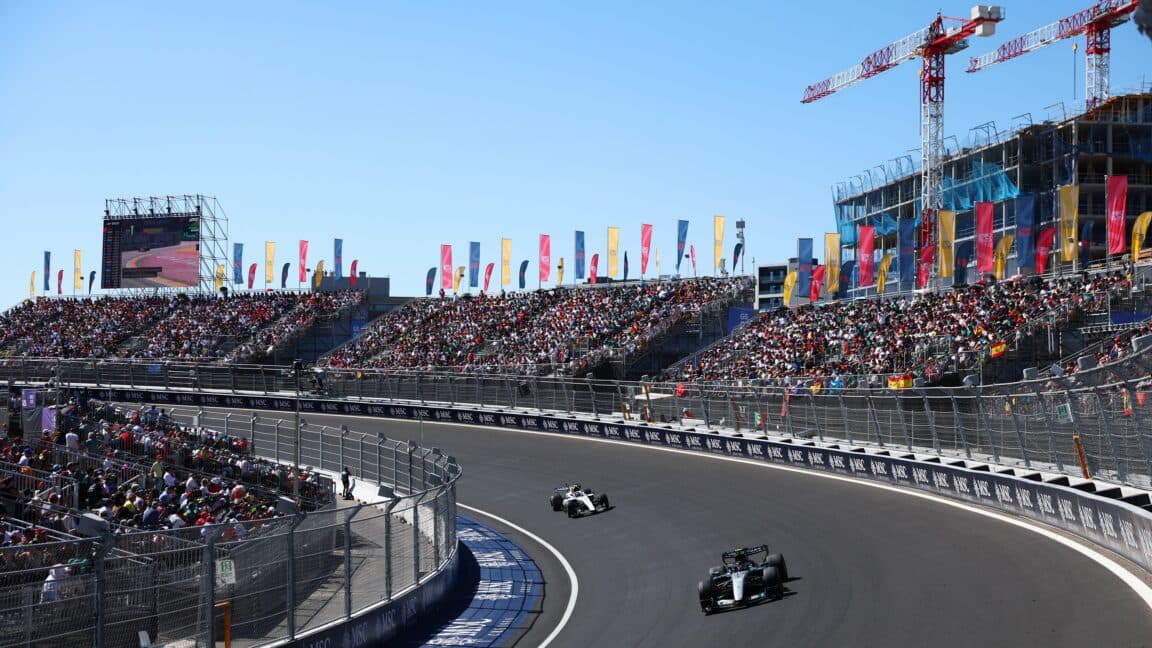
F1 Returns to Madrid: A New Street Circuit on the Calendar
The FIA's circuit homologation paperwork tells the story before a single car turns a wheel in anger. When Madrid joins the Formula 1 calendar, it will do so with a layout that, by confirmed track length figures, runs roughly twice the distance of the Principality's famous ribbon of asphalt. Monaco measures a shade over 3.3 kilometers. Madrid's new urban course, built around the IFEMA exhibition complex and the surrounding streets, stretches to more than double that. That single number reshapes everything that follows: lap counts, tire degradation curves, pit strategy windows, and the odds that a Sunday afternoon produces actual racing rather than a procession.
I have walked enough street circuits to know that length is a double-edged sword. A longer lap means fewer tours of the same piece of tarmac, which spreads wear across the surface and gives strategists more room to maneuver. It also means more corners to get wrong and more chances for a safety car to scramble the order. Madrid's organizing body has bet that the trade-off favors spectacle.
Madrid vs Monaco: The Street Circuit Comparison
Monaco is the outlier that proves no rule about street racing. Its 3.3-kilometer lap, its barriers that sit millimeters from the racing line, and its near-total absence of run-off make it a qualifying contest that happens to have a race attached. The FIA's own grade-one homologation standards allow for circuits with minimal escape roads only when speeds and corner radii are tightly controlled, and Monaco survives on grandfather rights as much as on current design logic. Average passes per race there routinely sit in the low single digits. DRS zones exist, but they rarely produce the kind of clean, side-by-side overtake that fans replay for years.
Read next Top Technology Trends in 2026 You Need to KnowMadrid, by contrast, is being built to modern homologation spec, which means wider track widths in key sections, defined run-off where the layout permits, and multiple DRS activation points engineered into the design from the start. The Monaco comparison is inevitable because both are urban, both thread through city streets, and both trade permanent-circuit amenities for atmosphere. But the similarities largely end at the barriers. One is a heritage relic preserved in amber. The other is a contemporary motorsport venue wearing city clothes.
The Monza Prelude: Context from Italy's Temple of Speed
Two weeks before attention shifted toward Spain, the paddock was in Monza, and I was there on the ground—learning firsthand that "accessible by public transport" can still mean a multi-mile walk through the Lombardy heat. The place was heaving with Tifosi in red, the hardcore Italian superfans whose hopes had a brutally short shelf life that weekend.
Charles Leclerc wrecked his teammate's race and then his own, all inside the opening two laps. For a crowd that had waited a year for a home triumph, the collapse was almost instant. What followed was the kind of afternoon that reminds you why street circuits and permanent tracks demand different skills from drivers and strategists alike. Monza's long straights and slow chicanes create genuine overtaking opportunities—the opposite of Monaco's claustrophobic puzzle—and one driver in particular exploited them.
Ferrari's Troubled Weekend and the Leclerc Factor
Leclerc's double disaster in the first two laps at Monza is the sort of sequence that defines a season. Taking out your own teammate's race before the tires have even come up to temperature compounds the damage: one incident, two cars compromised, and a constructor's points haul evaporating before the first pit window. For Ferrari, a home race already freighted with expectation, it was the worst possible start.
The redemption arc belonged to Mercedes' Kimi Antonelli, the first Italian title contender in my lifetime—a line I do not write lightly. Mercedes opted to fit a fresh engine and other power unit components, a decision that carried a grid penalty and sent Antonelli to 19th on the grid. I told my race companions that morning he would podium, easily. If anything, I was too cautious. Monza's long straights and slow corners gave him the overtaking tools he needed, and by the time Leclerc's heavy crash at Parabolica brought out the red flag, Antonelli had already carved his way up to 12th.
That kind of charge is possible at Monza because the circuit rewards power and bravery in equal measure. It is the template Madrid's designers should study. A street circuit that offers only Monaco-style single-file running cannot produce a drive like Antonelli's. A street circuit with well-placed DRS zones and corners that invite a late lunge can.
What Madrid's Circuit Design Means for Overtaking and Racing Quality
Ask a motorsport engineer what separates a street circuit that races well from one that strangles the field, and the answer rarely involves glamour. It involves corner radius, track width at the exit of the final turn, and the placement of detection and activation lines for DRS. Overtaking statistics from the modern era bear this out: newer urban circuits that were designed with passing in mind routinely record several times the average passes per race seen at Monaco, where the geometry simply does not allow two cars through the same corner at racing speed.
The engineering principle is straightforward. A driver needs a corner where the car ahead is compromised on exit—traction-limited, fighting for grip—so the car behind can carry more speed and complete the move before the next braking zone. Monaco offers almost none of these. Madrid, with twice the lap length and modern homologation requirements, has the physical room to engineer several. Whether the finished layout delivers on that potential depends on decisions made long before the first practice session: how wide the barriers sit, how the DRS zones are calibrated, and whether the final corner sets up a slipstream rather than a queue.
The risk is that Madrid becomes a Monaco that simply takes longer to lap. A long street circuit with no genuine overtaking spots is worse than a short one, because it stretches the boredom across a larger canvas. The upside is that the same length gives designers more chances to get it right.
Looking Ahead: F1's Urban Racing Experiment in Madrid
Formula 1 keeps betting on city streets, and Madrid is the latest wager. The commercial logic is sound—urban venues put the sport in front of people who will never drive to a purpose-built facility in the countryside. The sporting logic is unproven. Monaco endures because of its history, not its racing. Madrid has no such equity to fall back on, which means the circuit must earn its place on merit.
I will be watching two things when the cars finally run there. First, the average passes per race across the opening editions—if the figure climbs into double digits, the experiment works. Second, whether the lap length translates into strategic variety, with teams splitting pit windows and gambling on safety cars rather than settling into a single mandated stop. If both happen, Madrid becomes the template for a new generation of street circuits. If neither does, it becomes a cautionary tale: a Monaco that is twice as long and, as the headline writers will inevitably note, has none of the glamour to excuse it.
Source: Ars Technica - All content


