A new Fitbit is coming, and it may be the most strategically important one Google has released since completing its $2.1 billion acquisition of the fitness brand back in 2021. Leaked images circulating online have revealed what appears to be the Fitbit Edge, a device positioned squarely between the company's flagship Pixel Watch line and the budget-friendly Charge series. Here is what the leak tells us — and what it signals about Google's broader ambitions in the competitive wearables market.
What Is the Fitbit Edge? Everything We Know So Far
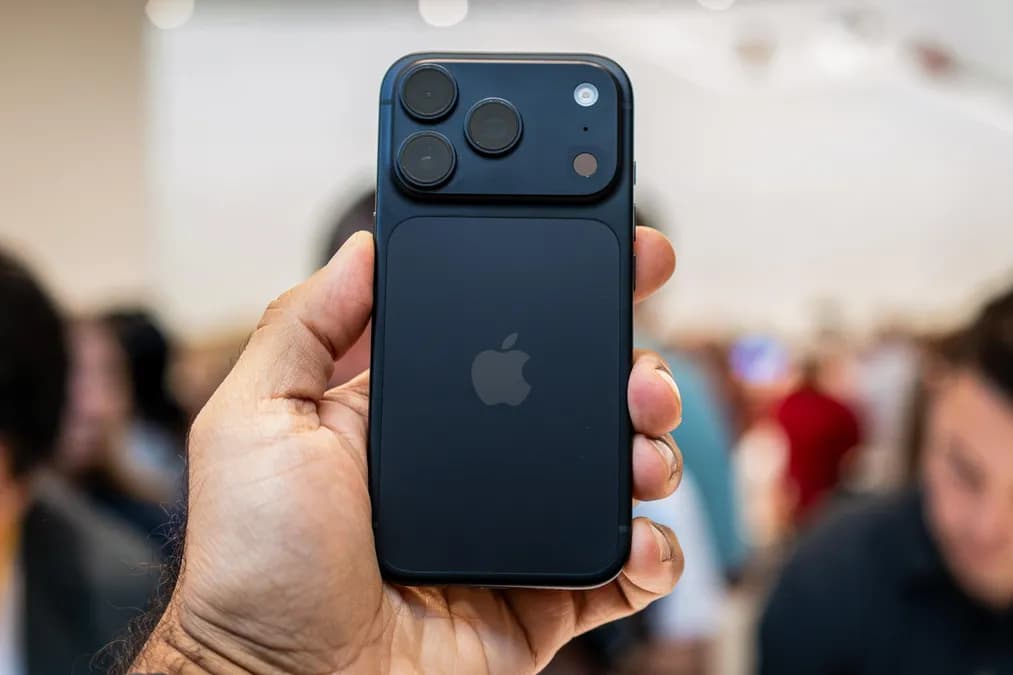
Images published by Android Headlines offer the clearest look yet at the Fitbit Edge, confirming what had previously been only rumor. The device appears to succeed the Charge line, which has long occupied Fitbit's midrange tier since the original Charge launched in 2014. The Edge has leaked before in fragmented form, but these new visuals provide enough detail to make a reasonable assessment of the hardware direction.
What we do not have: official pricing, a confirmed release date, a complete spec sheet, or any statement from Google. Every claim about this product right now carries the caveat that it comes from leaked imagery and secondary reporting, not an official announcement. That distinction matters, particularly for readers considering a purchase decision based on this information.
Still, the images are compelling. The Fitbit Edge is real enough to photograph, which suggests a product that has cleared at minimum the late-stage engineering sample phase — a meaningful signal that a launch is not hypothetically distant.
Where the Fitbit Edge Sits in Google's Wearable Lineup

Google currently fields two Fitbit form factors that define the extremes of its lineup. At the top sits the Pixel Watch 3, a full smartwatch with Google's Wear OS, ECG capability, and a price that starts above $300. At the entry level, the Charge 6 — released in 2023 — handles basic fitness tracking at a more approachable price.
Read next Laika's Wildwood: Stop-Motion Fantasy at TIFF 2026The gap between those two products is substantial, and the Fitbit Edge appears designed to occupy it. According to the leaked images, the Edge splits the difference: it carries more sophistication than the Charge but stops short of the Pixel Watch's full smartwatch ambitions. Think of it as the wearable equivalent of a mid-tower PC — not the workstation, not the laptop, but the device that handles most of what most people actually need.
This positioning is commercially rational. Counterpoint Research's global wearables data consistently shows that the sub-$200 fitness tracker segment accounts for a disproportionate share of unit volume relative to premium smartwatches. IDC's wearables tracker has similarly noted that basic and mid-tier bands continue to outship smartwatches in emerging markets and among users who prioritize battery life and simplicity over app ecosystems. A fitness tracker that edges closer to smartwatch functionality — without the smartwatch price — has a clear addressable market.
Design and Hardware Details From the Leaked Images

Based on the Android Headlines images, the Fitbit Edge adopts a form factor that reads as an evolution rather than a reinvention. The silhouette suggests a band-style wearable with a display that is larger or more refined than what the Charge 6 offers, moving it visually closer to Pixel Watch territory without adopting the circular watch case that defines that product.
The overall aesthetic appears more premium than the Charge's utilitarian design while remaining lighter and sportier than the Pixel Watch. That is a challenging design brief to execute — products designed to split the difference between two established lines frequently end up satisfying neither audience — but the leaked images suggest Google's industrial design team has made considered choices about where the Edge should land.
It is worth noting what cannot be confirmed from images alone: display technology, sensor suite, battery capacity, NFC for payments, and GPS status. These are precisely the specs that will determine whether the Edge is a genuine competitor in its segment or a stopgap between product refreshes.
Why Google Is Expanding Its Midrange Fitness Tracker Segment
Google's expansion into the fitness wearables middle ground reflects both market pressure and the longer arc of the Fitbit integration. When Google acquired Fitbit, it inherited a brand whose core user base was built on affordable, no-nonsense fitness tracking — not premium smartwatches. The Pixel Watch line has helped Google compete at the high end, but it risks leaving the legacy Fitbit customer without a compelling upgrade path.
Apple has executed a version of this strategy effectively. The Apple Watch SE exists specifically to capture users who want Apple Watch capability without the full Series price. Samsung's Galaxy Fit series similarly anchors the low end of that ecosystem while Galaxy Watch handles the premium tier. Google, to its credit, appears to recognize that ecosystem loyalty in wearables is built across a range of price points, not just at the flagship level.
Analysts who cover the wearables market have noted the challenge Google faces in differentiation. Firms like CCS Insight and Counterpoint have published commentary pointing out that Android-integrated fitness devices need to offer genuine software advantages — Google Health integration, Assistant features, sleep coaching tied to Fitbit Premium — to justify the ecosystem premium over a standalone Garmin or Xiaomi tracker at the same price. The Edge, if it ships with tighter Pixel phone integration and a polished health platform experience, could make that case more convincingly than the current Charge lineup does.
What to Expect: Features, Pricing, and Release Speculation
No official pricing has been confirmed. No release date has been announced. Google has not commented on the device's existence.
With those caveats firmly on the table: the Fitbit Edge's positioning between the Charge and the Pixel Watch suggests a retail price somewhere in the $150–$250 range is plausible. The Charge 6 currently retails for around $160 at launch pricing; the Pixel Watch 3 starts at $349. A product that substantively bridges the gap would logically price in between.
Feature expectations, based on the design direction and market context rather than confirmed specs: an improved heart rate sensor, sleep tracking with Fitbit Premium integration, likely some form of GPS (possibly connected GPS rather than built-in), and Android-specific notification support. Whether Google has added ECG functionality — a feature currently limited to the Pixel Watch — remains unknown and would be a significant differentiator if included.
Should You Wait for the Fitbit Edge or Buy Now?
If you are shopping for a fitness tracker right now and have been considering the Charge 6, the honest answer is: probably wait a few weeks to see if Google makes an official announcement. A leaked device this well-documented is typically close to launch, and buying the previous generation days before a successor is announced is a choice most buyers regret.
If you are a Pixel Watch owner looking for a secondary device — say, something for sleep tracking without wearing an expensive smartwatch to bed — the Edge could fill that role well, assuming the form factor and feature set land as the leaked images suggest.
If you are coming from outside the Google ecosystem entirely, the calculus is more complex. The Fitbit Edge will almost certainly be optimized for Android users and Fitbit Premium subscribers. Competing devices from Garmin, Samsung, and even Whoop occupy specific niches in this price tier with established track records.
Google has not announced the Fitbit Edge. What exists right now is a set of images, a history of a product line that has consistently occupied this market position, and a strategic rationale that makes a midrange tracker launch entirely sensible. The Edge may not carry every feature the leaked images seem to hint at — but as a product category, it fills a gap that Google's current lineup genuinely has. That alone makes it worth watching closely.
Source: The Verge