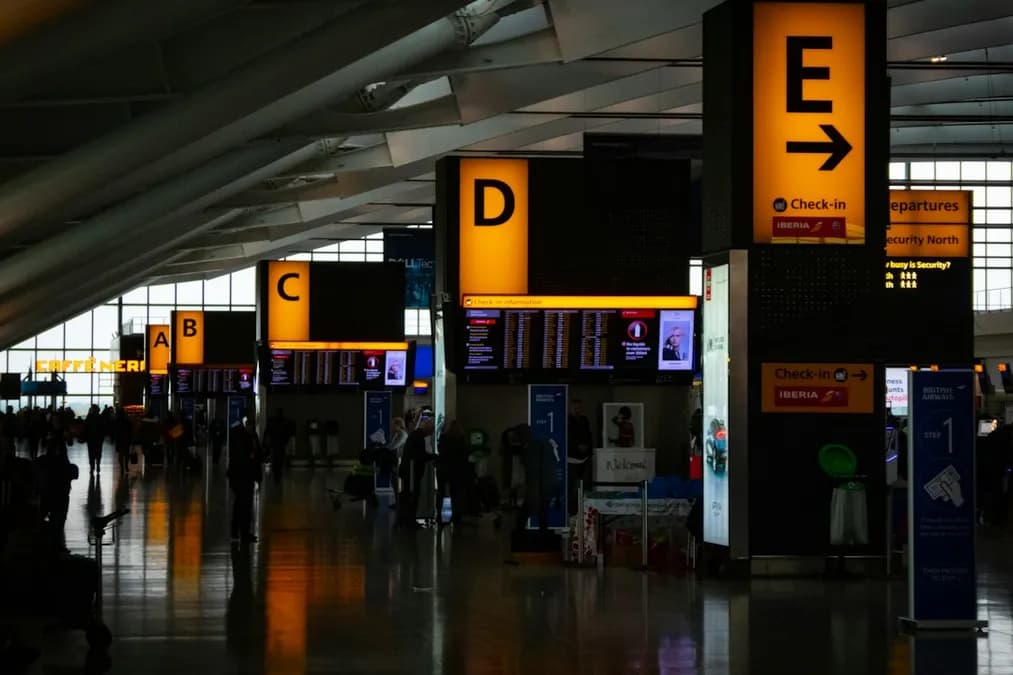
A foreign-owned airport operator wants the British taxpayer to help it build a runway that airlines don't want, passengers will pay a premium to use, and rival airports have no pressing need for. Welcome, once again, to the Heathrow third runway debate — a saga that tells you everything about how infrastructure spending distorts political judgment in this country.
Why the Heathrow Third Runway Debate Refuses to Die
Ask any transport economist why Heathrow expansion keeps returning to the political agenda and the answer has little to do with hard demand data. The project has survived multiple inquiries, legal challenges, two changes of government, a pandemic that rewrote aviation demand forecasting, and a climate crisis that has made the carbon arithmetic progressively harder to square. It persists not because the case is overwhelming but because the word "infrastructure" operates like a spell on the political class.
Mention a third runway and the room changes. Growth. Connectivity. Global Britain. The language of chest-beating and ambition rushes in before anyone has examined a spreadsheet. The Institute for Fiscal Studies has documented, across multiple analyses of major UK capital projects, a consistent pattern: large infrastructure commitments made on optimistic demand projections routinely overshoot on cost and undershoot on economic return. HS2 is the most recent and costly exhibit. Heathrow carries the same structural risks, amplified by the complexity of expanding an airport that is already encircled by one of the most densely populated urban zones in Europe.
The debate refuses to die because the project's primary beneficiary — the airport's owners — continues to press its case with the resources and lobbying infrastructure that a multi-billion-pound asset commands. That is rational behaviour for a private company. What is less rational is the Treasury's apparent willingness to treat that company's growth ambitions as a matter of national economic destiny.
The True Cost of Expansion: Who Pays and Who Profits
Heathrow is a foreign-owned private enterprise. Its shareholders are not the travelling British public; they are institutional investors whose fiduciary duty runs to returns on capital, not to the connectivity needs of regional UK economies. This is not a political point — it is a structural one, and it matters enormously when assessing who bears the cost of expansion and who captures the upside.
Read next France Is Dragging the Eurozone Toward a Debt CrisisThe Civil Aviation Authority, which regulates airport charges, has already flagged that Heathrow's proposed passenger surcharges to fund expansion would sit higher than equivalent levies at any comparable major European hub. Paris Charles de Gaulle, Amsterdam Schiphol, Frankfurt — none of them ask their passengers to absorb a per-head infrastructure cost at the level Heathrow is proposing. The CAA's published data on airport charge regulation makes clear that Heathrow already operates at the top of the European cost range; expansion would push it further still.
The airlines that use Heathrow are not enthusiastic. They have been sceptical, publicly and consistently, about the expansion timeline and the cost pass-through model. Airlines carry thin margins and are acutely sensitive to the difference between an airport that is expensive because it is operationally excellent and one that is expensive because its owners are amortising a construction project across ticket prices. Passengers, for their part, will not be offered a choice: if the surcharge model is approved, it will be embedded in every fare regardless of whether a traveller benefits from the new capacity.
So who profits? Primarily, the shareholders of the entity that owns the asset. A new runway is a new revenue-generating infrastructure permanently attached to their balance sheet. The public, by contrast, absorbs the risk through a regulatory framework that guarantees a return on the airport's capital base, and through the fiscal environment that treats Heathrow expansion as a national priority rather than what it is: a private investment seeking state facilitation.
Infrastructure Spending as Political Theatre

There is a peculiar asymmetry in how British politicians respond to spending proposals depending on whether the word "infrastructure" appears in the pitch. Propose increased funding for youth services or NHS community care and the fiscal hawks circle immediately. Can we afford it? What is the return? Show us the business case. Announce a runway, a rail line, or a road scheme and the arithmetic suddenly becomes secondary to the imagery. Infrastructure means growth. It means the future. It means we are serious.
This dynamic is not new. The Transport Select Committee has, across successive parliaments, questioned the demand modelling underpinning major aviation investment decisions, noting that passenger forecasts tend to be constructed in ways that are structurally optimistic — high-case scenarios become central cases, low-case outcomes are treated as tail risks rather than planning baselines. Former Treasury advisers have made similar observations about the gap between what projects promise at approval stage and what they deliver a decade later.
The problem is that by the time the gap becomes visible, the political capital has already been spent, the contracts signed, and the sunk-cost fallacy has taken over. Heathrow expansion, if approved on its current trajectory, would not deliver new capacity for the better part of two decades. That is two decades of political commitment locking in a set of assumptions about aviation demand, carbon policy, and the UK's position in global trade that may look very different by the time the first aircraft uses the new runway.
Gatwick's Empty Fields: The Overlooked Alternative
Drive south from London and the contrast is instructive. While the political and media class trains its attention on the west London site, fields adjacent to Gatwick remain largely undeveloped. Gatwick has long had capacity for meaningful expansion — not necessarily a full second runway on the Heathrow scale, but incremental increases in throughput that could relieve demand at a fraction of the cost and with considerably less disruption to surrounding communities.
The case for Gatwick as a relief valve has never been definitively rebutted. It has simply been drowned out. Part of this is path dependency — Heathrow has the long-haul routes, the airline partnerships, the slot value — and part of it is the political geography of south-east England, where infrastructure decisions tend to cluster around the gravitational pull of existing hubs rather than distribute capacity more rationally across the network.
A genuinely strategic aviation policy would examine the full picture: Gatwick's unused potential, the capacity that exists at regional airports, the degree to which Heathrow's congestion is a function of its ownership model rather than national need. That analysis has never been done rigorously in public, which tells you something about how the debate has been managed.
What the Treasury Should Actually Do
The Treasury's role in this is not to rubber-stamp private ambition dressed up as national necessity. It is to ask, with genuine rigour, whether public facilitation of Heathrow expansion — through regulatory support, planning override, and any direct or indirect fiscal commitment — represents a better use of the UK's constrained capital than the alternatives.
That means stress-testing the demand forecasts with independent economists rather than accepting the airport's own projections. It means the CAA conducting a thorough comparative analysis of European charge structures before approving a surcharge model that will make Heathrow the most expensive major hub on the continent. It means the Transport Select Committee receiving evidence not just from Heathrow's commercial team but from the airlines, from independent aviation economists, and from regional airport operators who might offer a different picture of where genuine capacity gaps lie.
If, after that analysis, expansion still pencils out — if the demand is real, the costs are fairly distributed, and the carbon implications have been honestly accounted for — then the case can be made on its merits. But the current trajectory, in which political enthusiasm substitutes for analytical rigour, should concern anyone who remembers the early optimism around HS2.
Conclusion: Glamour vs. Reason in UK Infrastructure Policy
The Heathrow third runway debate is a case study in how the glamour of large infrastructure projects short-circuits the normal disciplines of public spending. A foreign-owned private company wants to expand its asset. The airlines it serves are unconvinced. The passengers who will use it will pay surcharges above European norms. A rival airport sits with room to grow. And yet the project commands political attention and Treasury consideration as though the national interest were self-evidently aligned with the shareholders of an airport holding company.
Reason suggests the Treasury should refuse to make that alignment official. The public interest in aviation is real — connectivity matters, trade matters, regional access matters. None of those interests require the specific vehicle of a new Heathrow runway funded on terms that guarantee returns to private capital while distributing risk to passengers and taxpayers.
The word "infrastructure" should not be allowed to end a conversation. It should begin one.
Source: Opinion | The Guardian