How Climate Change Threatens Leopard Populations Worldwide
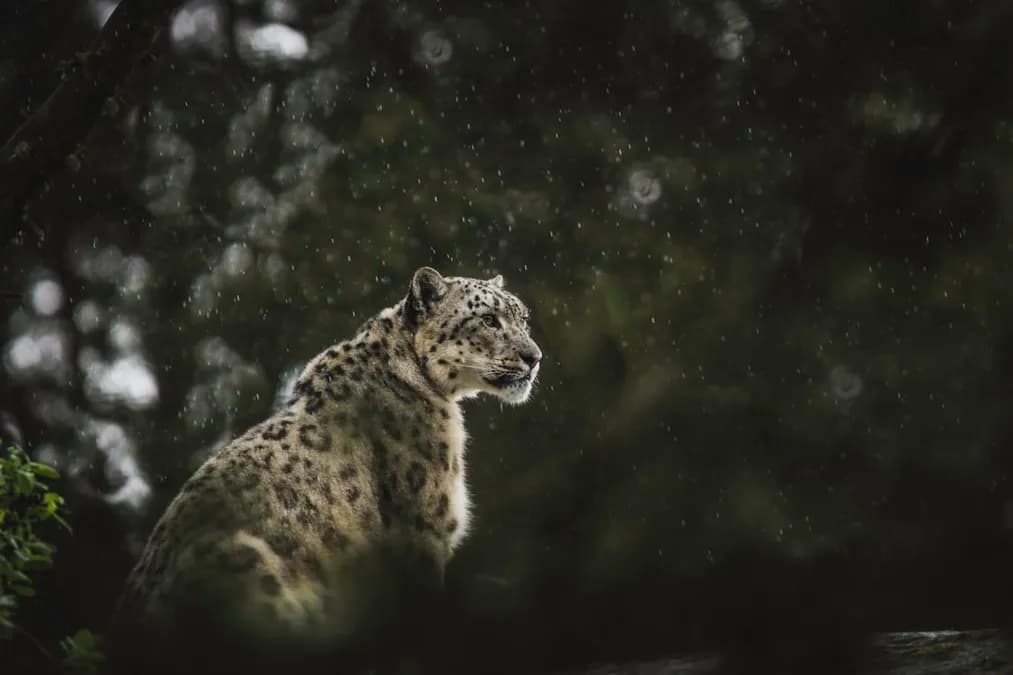
The IUCN Red List classifies the leopard (Panthera pardus) as Vulnerable after a documented population decline of more than 30% and a historic range contraction estimated at 63% to 75%. That loss is not only a story of poaching or expanding farms. It is increasingly a leopard climate change story: hotter dry seasons, shifting rainfall, larger fires, shrinking prey bases, and new pressure on the remaining corridors that connect fragmented populations.
Leopards are often described as adaptable because they survive in savannas, rainforests, mountains, scrublands, deserts, and agricultural edges. That reputation can mislead policymakers. Adaptable does not mean invulnerable. A leopard can hunt many prey species, move at night, and hide near villages, but it still needs cover, water access, breeding territory, and enough wild prey to avoid conflict with people.
The first global range analysis published in PeerJ and developed with the IUCN Cat Specialist Group, Panthera, ZSL, and other partners found that leopards had vanished from vast portions of North Africa, the Middle East, Central Asia, Southeast Asia, and China. Lead author Andrew Jacobson said researchers were “blown away” by the scale of the loss. Climate change now acts on that already-damaged map.
For leopards, warming rarely kills in one dramatic event. More often, it tightens the vise. Drought reduces antelope, deer, wild pig, and smaller mammal populations. Heat changes livestock grazing patterns, pushing herders deeper into carnivore habitat. Forest stress and fire open roads into remote areas. When prey declines, leopards take goats or calves. Retaliation follows.
That is why the phrase leopard climate change should be understood as a compound risk. Climate does not replace old threats. It multiplies them.
The Role of Leopards in Climate-Sensitive Ecosystems
In India’s Western Ghats, Sri Lanka’s highlands, southern Africa’s savannas, and the Russian Far East, leopards sit near the top of food webs that are already being altered by temperature and rainfall shifts. Their ecological role is practical, not symbolic. They regulate herbivores and mid-sized mammals, remove weak or sick prey, and influence where animals feed, rest, and move.
Read next How Climate Change Works: A Clear ExplainerA single adult leopard may hold a territory ranging from a few dozen square kilometers in prey-rich habitat to several hundred square kilometers in drier, less productive landscapes. That wide spatial need makes the species a living test of ecosystem connectivity. If a leopard can move safely through a landscape, many other species can too.
Climate change disrupts that function by changing the distribution of both cover and prey. In semi-arid Africa, longer droughts can push herbivores toward permanent water, concentrating prey but also increasing competition with livestock. In tropical forests, irregular fruiting patterns can affect primates and ungulates, which then affects leopard diet. In mountain systems, warming shifts vegetation upslope, compressing habitat for prey and predators.
The Intergovernmental Panel on Climate Change’s Sixth Assessment Report states that many terrestrial species are already shifting poleward or upward in elevation in response to warming. AR6 also warns that extinction risk rises sharply with each increment of warming: assessed species face higher risk at 2°C than at 1.5°C, and the risk rises further at 3°C. Big cats are not exempt from those ecological rules.
Leopards help keep climate-stressed systems from becoming biologically simplified. Remove the predator, and prey behavior changes. Remove the prey, and the predator turns to livestock. Break the habitat, and both outcomes become more likely.
Leopard Habitat Loss: Deforestation Meets Global Warming
More than three-quarters of West Africa’s Upper Guinean forests have been altered or lost, and many remaining forest blocks are small, hunted, or isolated. That pattern matters because climate change is hitting forests that have already been cut, burned, logged, or roaded. A continuous forest can buffer heat and drought. A fragmented one dries faster.
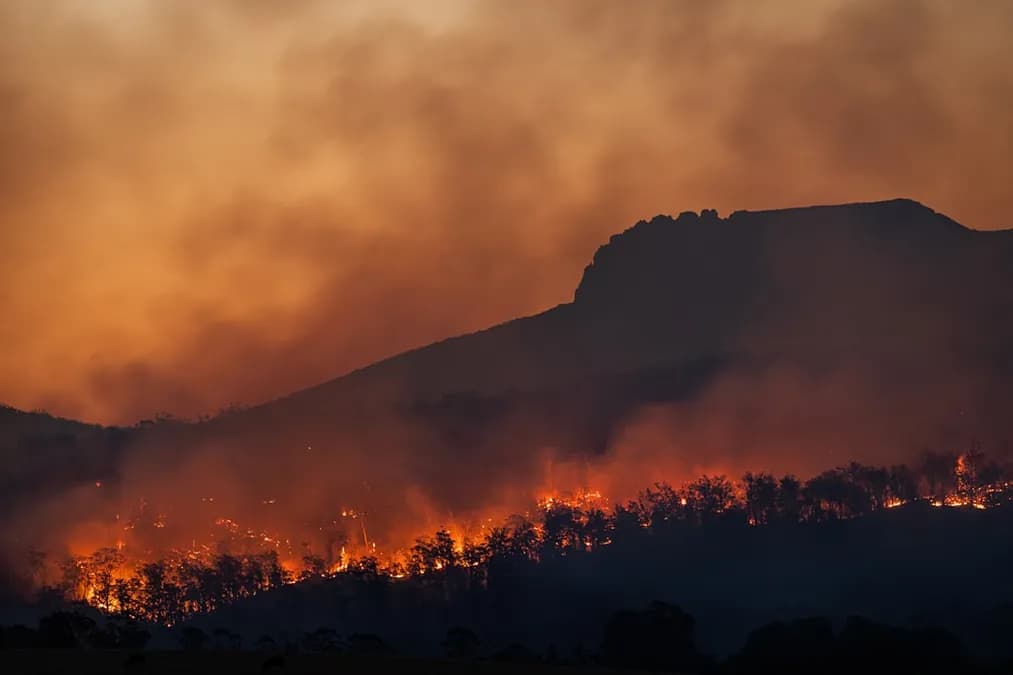
Deforestation and global warming reinforce each other. Tree loss raises local temperatures, reduces humidity, changes stream flow, and increases fire risk. Warming then makes degraded forest more vulnerable to additional fires and dieback. For leopards, the result is not just less habitat. It is lower-quality habitat.
In Southeast Asia, the Indochinese leopard has suffered one of the most severe collapses. Research published in Biological Conservation found the subspecies had disappeared from most of its former range and remained in only a small fraction of historical habitat, with strongholds mainly in parts of Thailand and Myanmar. Snaring, prey depletion, and forest loss drove the decline. Climate stress now adds another layer: hotter dry seasons, altered monsoon patterns, and more fire-prone forest edges.
In the Arabian Peninsula, the Arabian leopard survives in extremely low numbers in rugged mountains and desert escarpments. The issue there is water, prey, and space. Climate projections for arid regions point toward more frequent heat extremes and greater water stress. When ibex, gazelles, hyraxes, and other prey decline, the leopard’s margin for survival narrows.
Habitat loss also changes human behavior. Drought can push pastoralists to move herds farther. Crop failure can increase hunting pressure. Roads built for logging or mining become access routes for poachers. In this way, leopard climate change risk is also a land-use risk.
Current Leopard Population Status and Climate Projections
The global leopard population is not known with precision, which is itself a warning sign. The species ranges across parts of Africa and Asia, but many populations are poorly monitored, politically difficult to survey, or too fragmented for simple counts. The IUCN Red List assessment identifies habitat loss, prey depletion, illegal killing, and trade in skins and body parts as major threats.
Some subspecies are in especially serious trouble. The Amur leopard, found in the Russian Far East and northeast China, is listed as Critically Endangered. WWF describes the wild population as more than 84 individuals, while a WCS-cited 2018 scientific assessment estimated 84 adults and subadults in 2014-2015. More recent camera-trap studies suggest recovery in protected areas, but the population remains tiny and genetically vulnerable.
The Sri Lankan leopard is listed as Vulnerable, with fewer than 800 mature individuals estimated by IUCN. The Persian leopard is listed as Endangered, with fewer than 1,000 mature individuals. The Arabian leopard is Critically Endangered, with estimates commonly placed at fewer than 200 mature animals.
Climate models do not forecast one simple future for all leopards. Species distribution models for western leopard subspecies, including African, Arabian, and Persian leopards, show that future suitability depends on both emissions pathways and land-use change. Some areas may become more climatically suitable, but that does not help if they are farms, cities, fenced rangelands, or conflict zones. Habitat suitability is not the same as habitat availability.
IPCC AR6 provides the larger frame: warming shifts climate zones, changes precipitation, increases heat extremes, and raises risks of biome shifts when combined with land-use change. For big cats, that means protected areas designed around twentieth-century habitat may not fully match twenty-first-century needs. Corridors become central, not optional.
The keyword for policy is movement. Leopards need to move as prey moves, vegetation changes, and conflict zones emerge. Without connected landscapes, leopard climate change pressure becomes a trap.
Case Studies: Leopard Subspecies Under Climate Pressure
In Land of the Leopard National Park, camera traps monitor one of the rarest cats on Earth through snow, forest, and borderland terrain shared by Russia and China. The Amur leopard’s recovery from a few dozen animals is one of modern carnivore conservation’s cautious successes, but climate risk remains. Warmer winters, altered snow patterns, forest fires, and disease risks can affect prey such as roe deer, sika deer, and wild boar. A population that small has little room for bad years.
In Sri Lanka’s Central Highlands, the Wilderness and Wildlife Conservation Trust’s Leopard Project has documented the need for field-based leopard ecology rather than assumptions. The island’s leopards occupy wet forests, dry zones, tea landscapes, and protected areas such as Yala and Horton Plains. Climate change can intensify landslides, drought, and water stress, while expanding human settlement around leopard habitat. When leopards move through plantations and villages, coexistence becomes as important as park protection.
In the Arabian Peninsula, the Arabian leopard faces a harsher equation. Small populations, sparse prey, rugged terrain, and extreme heat leave little ecological slack. Conservation work by Saudi Arabia’s Royal Commission for AlUla, Panthera, and regional partners has focused on surveys, captive breeding, habitat assessment, and prey restoration. Climate change makes those efforts more urgent because arid mountain systems are highly sensitive to rainfall shifts.
In Southeast Asia, the Indochinese leopard shows what happens when climate stress lands on an already-collapsing population. Snares remove prey and predators indiscriminately. Forest conversion breaks habitat. Climate-driven fire and drought can further reduce cover and prey productivity. The result is a landscape where leopards may be technically present but functionally disappearing.
In Africa, leopards remain more widespread than in much of Asia, yet local declines are serious. In Namibia, South Africa, Kenya, and Tanzania, drought can intensify livestock conflict. In West and Central Africa, forest loss and bushmeat hunting reduce prey. A leopard can survive near people, but not where every antelope is hunted out and every livestock loss triggers poisoning.
These case studies show the same pattern at different scales. Leopard climate change threats are strongest where populations are already small, isolated, or dependent on climate-sensitive prey.
Conservation Strategies for Climate Resilience
A protected area of 500 square kilometers can hold leopards, but it may not protect them if drought pushes prey beyond its boundary or if warming shifts suitable habitat uphill or poleward. Climate resilience begins with connected habitat. Corridors allow dispersing young leopards to find territories, maintain gene flow, and track changing prey distributions.
The first strategy is to protect and restore habitat mosaics, not just isolated reserves. That means forest blocks, river corridors, rocky escarpments, community conservancies, and low-conflict agricultural edges. For leopards, cover matters. So does prey. Rewilding prey populations, controlling snaring, and reducing illegal bushmeat hunting can be as important as guarding the cat itself.
The second strategy is conflict prevention. Predator-proof livestock enclosures, compensation systems, rapid response teams, and community insurance programs reduce retaliatory killing. These tools become more valuable under climate stress because drought and heat can increase livestock losses and push herders into leopard range.
The third strategy is climate-smart monitoring. Camera traps, genetic sampling, GPS collars, and local reporting can reveal whether leopards are moving into new areas, abandoning old ones, or becoming more conflict-prone. Monitoring must include prey, fire, water, and human land use. Counting cats alone is not enough.
The fourth strategy is to plan protected areas around future suitability. Conservation groups increasingly use species distribution models tied to climate scenarios, including CMIP6 projections used in IPCC AR6-era research. Those models can identify refugia: places likely to remain suitable as temperatures rise.
The fifth strategy is genetic rescue where appropriate. For tiny populations such as the Amur or Arabian leopard, maintaining genetic diversity may require carefully managed translocations, habitat expansion, or captive-breeding support. Such interventions must be conservative and science-led. They are not substitutes for habitat protection.
What Scientists and Organizations Are Doing Now
In the Russian Far East and northeast China, WCS and partners have used camera traps, prey surveys, and transboundary research to track Amur leopards and the tigers that share their habitat. The data show both progress and fragility. A count of 84 adults and subadults in 2014-2015 was encouraging compared with earlier estimates of fewer than 30, but a population under 100 remains exposed to disease, inbreeding, fire, and sudden prey decline.
Panthera supports leopard monitoring and conservation across several regions, including southern Africa and the Arabian Peninsula. Its work emphasizes field surveys, conflict reduction, and science-based management. That matters because leopards are often undercounted; their secretive behavior can hide decline until populations are badly fragmented.
The IUCN Cat Specialist Group provides the taxonomic and conservation framework used by governments, CITES authorities, and conservation planners. Its Red List assessments give a baseline for status, threats, and range. The 75% historic range-loss figure remains one of the clearest warnings in carnivore conservation.
The Leopard Project in Sri Lanka, led through the Wilderness and Wildlife Conservation Trust, has helped shift attention toward long-term, country-specific leopard ecology. Its researchers have stressed that effective conservation requires a thorough grounding in the species’ life history. That field perspective is vital in climate adaptation, where local terrain, prey, water, and people determine whether a leopard population survives.
WWF’s work on Amur leopards, landscape protection, anti-poaching, and community engagement adds another layer. While WWF public materials often describe the Amur leopard population as more than 84 individuals, the broader point is that recovery depends on habitat security across borders.
Scientific work is also expanding into predictive modeling. Studies on leopard habitat suitability in Nepal, Iran, and western Asia show how temperature, precipitation, elevation, prey, and land use may alter future range. These studies turn leopard climate change from a vague concern into mapped risk.
How You Can Support Leopard Conservation in a Changing Climate
A single snare can kill a leopard, but so can a supply chain that rewards deforestation, a warming trajectory that dries prey habitat, or a tourism economy that ignores local communities. Individual action cannot replace national policy, yet it can support the institutions and incentives that keep leopard landscapes intact.
Support organizations that publish field results and work with local communities, such as Panthera, WWF, WCS, the IUCN Cat Specialist Group’s partners, and credible country-level groups like Sri Lanka’s Wilderness and Wildlife Conservation Trust. Look for evidence: camera-trap monitoring, prey recovery, anti-snare patrols, conflict-reduction programs, and transparent reporting.
Choose wildlife tourism carefully. Responsible operators follow distance rules, avoid baiting, employ local guides, and support conservation funds. Bad tourism can stress cats, distort behavior, and create unsafe roads through habitat.
Reduce demand for products linked to forest loss. Beef, timber, palm oil, minerals, and infrastructure can all affect leopard landscapes depending on where and how they are produced. Certification is imperfect, but asking questions about sourcing helps shift markets.
Back climate policy that protects biodiversity. The IPCC AR6 message is direct: every fraction of warming avoided reduces ecological risk. For leopards, lower warming means fewer extreme droughts, less fire pressure, more stable prey systems, and a better chance that protected areas remain suitable.
Finally, treat coexistence as conservation, not charity. Many leopards live outside national parks. Their future depends on farmers, herders, forest communities, rangers, scientists, and governments sharing landscapes under harder climate conditions. The leopard climate change challenge is not only to save a beautiful predator. It is to keep whole ecosystems functional while the climate they evolved in changes around them.