The iPhone 18 Pro landed in customers' hands on Friday, and within hours the first wave of troubleshooting threads had already begun to form. Some buyers who pre-ordered Apple's latest flagship are reporting that Face ID — the centerpiece biometric system that Apple has refined over nearly a decade — is behaving erratically on day one. The problems range from outright setup failures to mid-use freezes that force a full reboot to the lock screen. Here is a clear-eyed look at what is actually happening, what is driving it, and what buyers should realistically expect next.
iPhone 18 Pro Face ID Problems: What's Happening
By the afternoon of launch day, a Reddit thread flagged by 9to5Mac had already aggregated complaints from iPhone 18 Pro and iPhone 18 Pro Max owners describing a specific and reproducible failure mode: Face ID authentication for certain locked actions — attempting to open a locked app, for instance — would fail to complete. Rather than displaying an error and prompting a passcode entry as normal, the device would freeze momentarily and then reboot entirely to the lock screen. That is not a graceful fallback. That is a crash.
At the same time, threads in the MacRumors forums surfaced additional, distinct issues that go beyond the freeze-and-reboot scenario. These are not duplicate reports of the same bug; they represent at least three separate Face ID failure modes appearing on the same hardware generation.
Crucially, not every iPhone 18 Pro owner is affected. The problem appears intermittent and device-dependent — some units exhibit it consistently, others never trigger it at all. That hit-or-miss distribution is meaningful. It suggests the issue is not a universal firmware defect baked into every unit shipped, but rather something triggered by a specific interaction between software state, hardware configuration, or perhaps individual device variance from manufacturing. That distinction matters when calibrating how alarmed buyers should be.
The Hardware Change That May Be at the Root
To understand why these particular bugs are drawing scrutiny, you need to understand what Apple changed inside the iPhone 18 Pro's display assembly. On previous iPhone Pro models, Face ID's infrared camera cluster sat behind the Dynamic Island pill cutout at the top-center of the screen. On the iPhone 18 Pro, Apple relocated the infrared camera to a position beneath the top-left corner of the display — an under-display placement designed to shrink the Dynamic Island's footprint to its smallest size yet.
Read next iPhone Duo's Hidden Fake Bezel Setting ExplainedThat is a non-trivial engineering decision. Placing an infrared camera beneath an OLED panel requires the display to permit enough IR transmission at the relevant wavelengths without degrading image quality or causing interference. Industry engineers and analysts who follow display technology have long noted that getting under-display sensors to behave consistently demands tight tolerances in both the panel manufacturing and the firmware that interprets the sensor output. Apple is not the first company to attempt under-display infrared sensing, and earlier efforts from other manufacturers have produced inconsistent authentication performance, particularly under varied ambient light conditions.
Apple has not commented publicly on whether this repositioned sensor is contributing to the reported bugs. The causal link remains unconfirmed. But the timing is hard to ignore: a new hardware placement, a new set of Face ID failure modes appearing specifically on the models with that new placement, all on the same launch weekend.
Three Distinct Face ID Bugs Users Are Seeing
Based on what MacRumors forum members and the Reddit thread have documented, the iPhone 18 Pro Face ID issues cluster into three separate behaviors.
The freeze-and-reboot. This is the most dramatic of the three. When Face ID is invoked to authenticate a specific action — unlocking a third-party app with per-app lock enabled is one confirmed trigger — the recognition attempt hangs, the device becomes unresponsive for several seconds, and then restarts to the passcode lock screen. Users lose whatever they were doing in the foreground app. Repeated attempts can reproduce it on affected units, though not always on the first try.
"Face ID is Not Available" at setup. A separate cohort of users reports hitting a dead end during initial device configuration. When navigating to Settings to enroll their face for the first time, the iPhone 18 Pro returns a "Face ID is Not Available" error message, blocking setup entirely. This is a harder problem to work around — without a successfully enrolled Face ID, users are locked into passcode authentication for everything that would otherwise use biometrics. Some users have reported that restarting the device or attempting setup again after a delay resolves it; others remain stuck.
"Require Attention for Face ID" being ignored. The third issue is subtler but potentially a security concern depending on how a user has configured their device. The "Require Attention for Face ID" setting, when enabled, requires the user to be looking directly at the device with eyes open for authentication to succeed. Several MacRumors forum members report that their iPhone 18 Pro models are unlocking even when this setting is active and their gaze is not fully directed at the sensor. For most users this is an inconvenience. For users who enabled that setting deliberately — for privacy in public spaces, or as an accessibility accommodation — it represents the device not honoring a conscious security preference.
What Apple Is Expected to Do Next
Apple's history with Face ID bugs is instructive here. When Face ID launched on the iPhone X in 2017, early adopters reported authentication failures in specific orientations and with certain lighting conditions. Apple addressed the most significant of those issues within weeks via a point-release software update, and iterative improvements continued through subsequent iOS versions. On the iPhone 12 and 13 series, reports of Face ID degrading after third-party screen repairs prompted Apple to eventually loosen the software-side pairing requirements between the TrueDepth camera module and the logic board — again, through an over-the-air update.
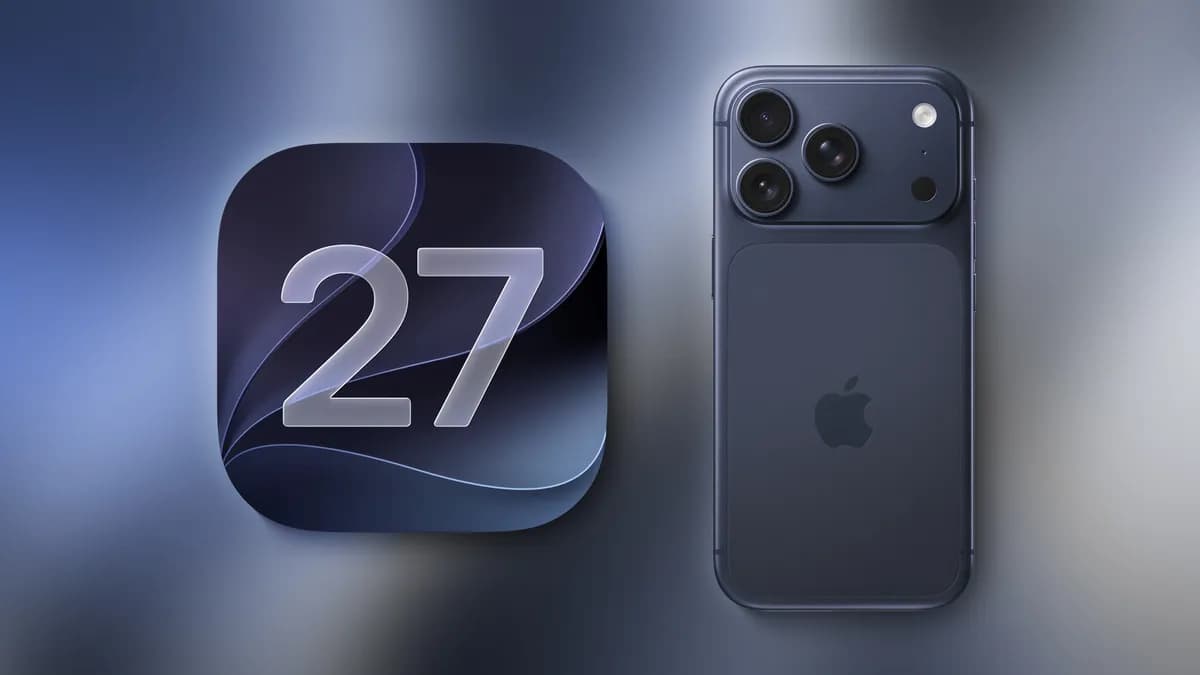
The pattern is consistent: Apple ships hardware, community reports surface edge cases, and iOS point-releases close the gap. Given that the iPhone 18 Pro ships with iOS 27, the likely path forward is a targeted fix in an iOS 27.x update. The question is timing. If the freeze-and-reboot is reproducible and tied to a specific software code path — an authentication request that fails to handle a sensor timeout gracefully, for example — that is the kind of bug Apple's engineers can isolate, patch, and ship relatively quickly. If the root cause sits deeper in the sensor driver or requires recalibration of how the repositioned infrared camera's output is interpreted, the fix could take longer.
The "Require Attention" bypass issue, in particular, may warrant an accelerated response given its security implications, even if Apple does not classify it as a critical vulnerability.
Should You Return Your iPhone 18 Pro or Wait for a Fix?
The honest answer depends on which bug you are hitting, if any. The majority of iPhone 18 Pro buyers are not encountering any of these problems. Self-reported issue counts on Reddit threads and forum posts skew toward affected users — people with a smooth experience rarely open a thread to say so. That is not to minimize the frustration of those affected; it is to say that the population of buyers experiencing Face ID failures is, in all likelihood, a minority of the total units sold.
If your device set up Face ID without error and authentication is working reliably, there is no evidence of a latent hardware defect that will surface later. The bugs reported appear to manifest on affected units from the first use, not develop over time.
If you are stuck on "Face ID is Not Available" and restarts have not resolved it, that is a legitimate hardware or deep firmware issue worth escalating to Apple Support. An Apple Store appointment or a call to AppleCare is the right move — not because the phone is certainly defective, but because Apple's diagnostics can determine whether the sensor itself is the problem or whether a restore and re-enrollment resolves it.
For everyone else: the freeze-and-reboot is disruptive, but an iOS 27 update addressing it is a near-certainty given Apple's track record. Returning the phone over a software bug that Apple will patch is a high-friction response to a problem with a lower-friction solution on the horizon. Watch for the first iOS 27 point-release, apply it promptly, and verify whether the behavior changes. That is the most practical path forward for the vast majority of iPhone 18 Pro buyers navigating these early-days iPhone 18 Pro Face ID issues.