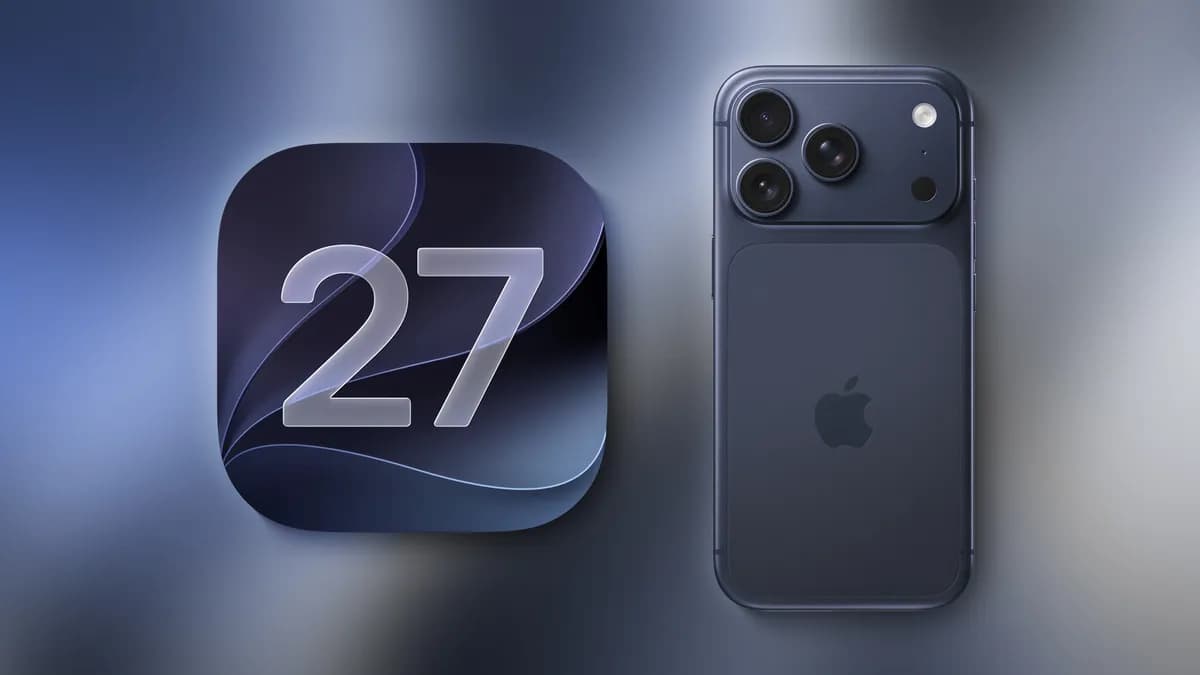
Every year, Apple takes the stage and declares its latest iPhone Pro the best it has ever made. Every year, the audience accepts this with a knowing smile. Of course it is. It is a new phone. But the iPhone 18 Pro carries a different kind of weight — not because of its processor benchmarks or its camera improvements, but because of what it almost certainly represents: the final refinement of a design language that has defined personal technology for nearly a decade.
If the Apple rumor community is reading the supply-chain signals correctly, 2026 is the last year the company ships a flagship smartphone that looks and feels like every iPhone has since 2017. That is not a minor footnote. That is the closing chapter of an era.
Why the iPhone 18 Pro Marks the End of an Era
The iPhone X, released in November 2017, did not just introduce Face ID or retire the Home button. It established a visual and structural grammar — a tall slab of glass and metal with a notch, then a Dynamic Island, framing an edge-to-edge OLED display — that has governed Apple's flagship design for nine consecutive years. Nine years. In consumer electronics, where product cycles are measured in months, that is extraordinary longevity.
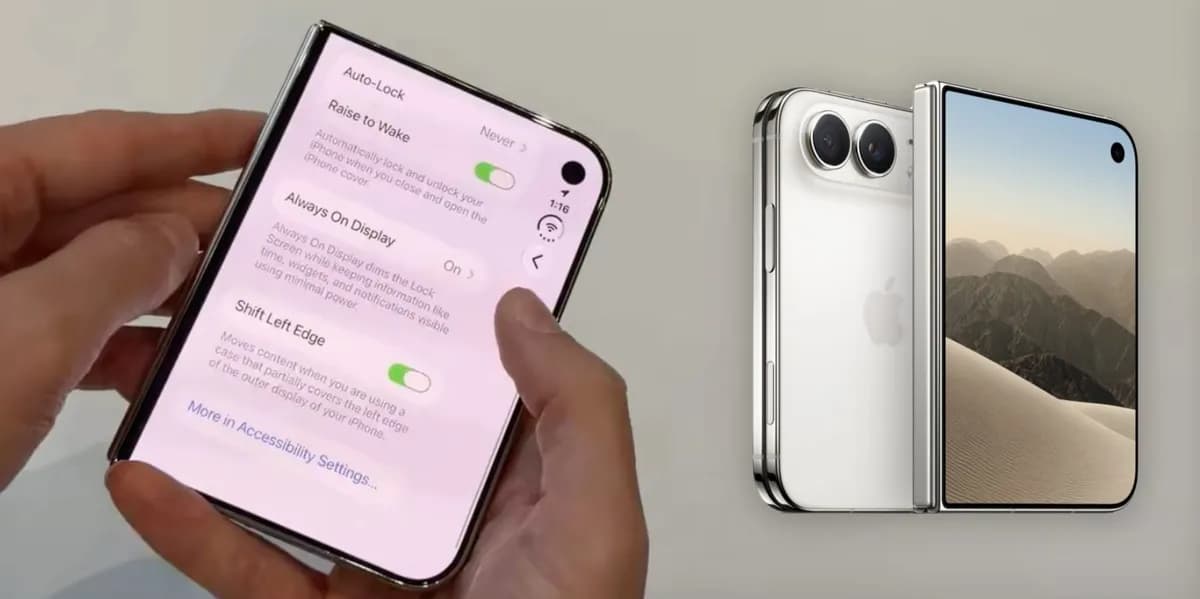
The iPhone 18 Pro arrives in 2026 as what appears to be the terminal expression of that grammar. Apple has, by all credible accounts, spent the past several years quietly preparing a successor form factor: a foldable iPhone that would represent the most fundamental physical departure since the original iPhone itself. The 18 Pro, then, is not just "the best iPhone we've ever made." It is the best version of a design philosophy that is about to be retired.
That distinction matters. It gives this particular device a kind of poignancy that no amount of marketing copy could manufacture.
A Decade of Evolutionary Change Since iPhone X

Tracing the arc from the iPhone X to the iPhone 18 Pro is an exercise in appreciating the power of disciplined iteration. Apple did not overhaul the form factor each year. It sharpened it. The notch shrank. The bezels thinned incrementally. Display technology advanced from 60Hz to ProMotion at 120Hz. The camera system grew from a dual-lens arrangement to a sophisticated three-camera array with periscope telephoto optics. The materials shifted from stainless steel to titanium.
Read next iPhone Duo's Hidden Fake Bezel Setting ExplainedAt each step, Apple demonstrated that meaningful progress does not require reinvention. The company extracted enormous engineering value from a single foundational design decision: a device built around a large, flat, continuous display surface.
This approach also served consumers well. Muscle memory accumulated. Third-party accessory ecosystems matured around stable dimensions. The form factor became, in the truest sense, familiar. Analysts have estimated that the global installed base of iPhone users surpassed one billion active devices in recent years — a staggering figure built largely on a product architecture that has not changed in profile since the Obama administration.
The iPhone 18 Pro represents the peak of that evolutionary climb. It is the summit before the trail descends into entirely new terrain.
What the Foldable Era Means for iPhone Design
The phrase "single slab of glass" has circulated within Apple design discussions for years, originally associated with the Jony Ive-era ambition to reduce the iPhone to its most essential, elemental expression: a display, and nothing else. The physical device would recede. The screen would be everything.
A foldable iPhone is, in a specific sense, the fullest realization of that vision. Unfold the device and you have a dramatically larger display surface — closer to a small tablet than a phone — that collapses to a pocketable form. The hardware disappears further into the background. The experience becomes the thing.
But the transition also introduces genuine complexity. Foldable display technology carries trade-offs that Apple has been characteristically reluctant to accept until it can control them. Early foldable devices from Samsung and Google have struggled with crease visibility, durability concerns around the fold mechanism, and software interfaces that do not yet fully exploit the expanded canvas. Apple, which has watched competitors iterate through these growing pains for years, is expected to enter the category only when it believes it can do so without apology.
That calculus explains the timing. If 2027 is indeed when the foldable iPhone arrives, it will have spent at least three years in serious development refinement — and will land with a design that reflects lessons Apple has absorbed from watching every other manufacturer try first.
Rumors Pointing to a 2027 Foldable iPhone Revolution
The consensus among Apple's most reliable supply-chain observers has been building steadily. Bloomberg's Mark Gurman, whose Apple coverage has a documented track record of accuracy on major product transitions, has reported that Apple is actively developing a foldable iPhone. Ming-Chi Kuo, the TF International Securities analyst whose supply-chain access has made him one of the most closely watched voices in Apple prediction, has similarly indicated that a foldable device is in Apple's near-term pipeline.
Neither source has been shy about framing 2027 as the credible target window for a first foldable iPhone. The supply-chain signals — component orders, manufacturing partner relationships, display specifications — point in the same direction.
What makes this particular rumor cycle feel different from the perennial "Apple is working on X" speculation is the convergence of multiple independent sources over a sustained period. This is not a single leaked photograph or an anonymous tip. It is a pattern of corroborating evidence that experienced Apple watchers treat with a different level of seriousness.
If the 2027 timeline holds, the iPhone 18 Pro will have been the last flagship Apple shipped before crossing that threshold. History tends to assign significance to such moments only in retrospect. For once, we have the unusual opportunity to recognize one in advance.
Should You Buy the iPhone 18 Pro as the Last of Its Kind?
The obvious contrarian question is whether "last of its kind" is a reason to buy or a reason to wait. The answer depends almost entirely on what kind of buyer you are.
If you are someone who upgrades every two to three years and values a mature, refined experience with a proven ecosystem of cases, accessories, and software optimizations, the iPhone 18 Pro is a compelling endpoint. You are buying the most polished version of a device architecture that has had nine years of refinement. There are no first-generation compromises. The software is tuned for the hardware. The supply chain for replacement parts is robust. Nothing about this phone is experimental.
If you are an early adopter who welcomes new form factors and can absorb the inevitable first-generation rough edges, waiting for the foldable makes sense — with the understanding that first-generation Apple foldables will almost certainly carry a premium price and will represent Apple's initial attempt at an entirely new product category, however carefully prepared.
There is also a middle path: buy the iPhone 18 Pro now, use it for two or three years, and upgrade to a second-generation foldable once Apple has had a product cycle to address whatever surprises emerge.
What Apple's Transition Means for Loyal iPhone Users
Large-scale product transitions at Apple rarely feel abrupt from the inside, even when they are historically significant. The company excels at managing continuity — at ensuring that the experience of switching from one paradigm to the next feels less like a rupture and more like a natural extension.
The iPhone X itself proved this. The removal of the Home button was, on paper, a dramatic change for users who had built years of motor memory around it. In practice, Apple's gesture-based navigation system was intuitive enough that most users adapted within days. The transition was a disruption that did not feel like one.
The shift to foldables will require more significant adaptation. A larger unfolded display changes how applications are laid out, how content is consumed, and how the device is held. These are not trivial adjustments. Apple's software teams will spend considerable effort building interfaces that take genuine advantage of the expanded canvas rather than simply stretching existing layouts.
For users who have spent years with the current iPhone Pro form factor, there will be an adjustment period. The familiar weight and proportions will be replaced by something new. The ergonomics of a foldable — heavier, thicker at the hinge, different in the hand when folded versus unfolded — will take time to absorb.
The iPhone 18 Pro offers one final year to appreciate how far that original 2017 design vision was taken before Apple begins building the next one. That, in itself, is worth noticing.
Source: 9to5Mac