Apple's Bold Software Bet With the iPhone Duo
Apple has never launched a new iPhone form factor quietly. The iPhone Duo, the company's latest hardware departure, arrives with a mechanical twist that demands a corresponding software commitment — and Apple is essentially asking every developer in the App Store ecosystem to make that commitment on its timeline.
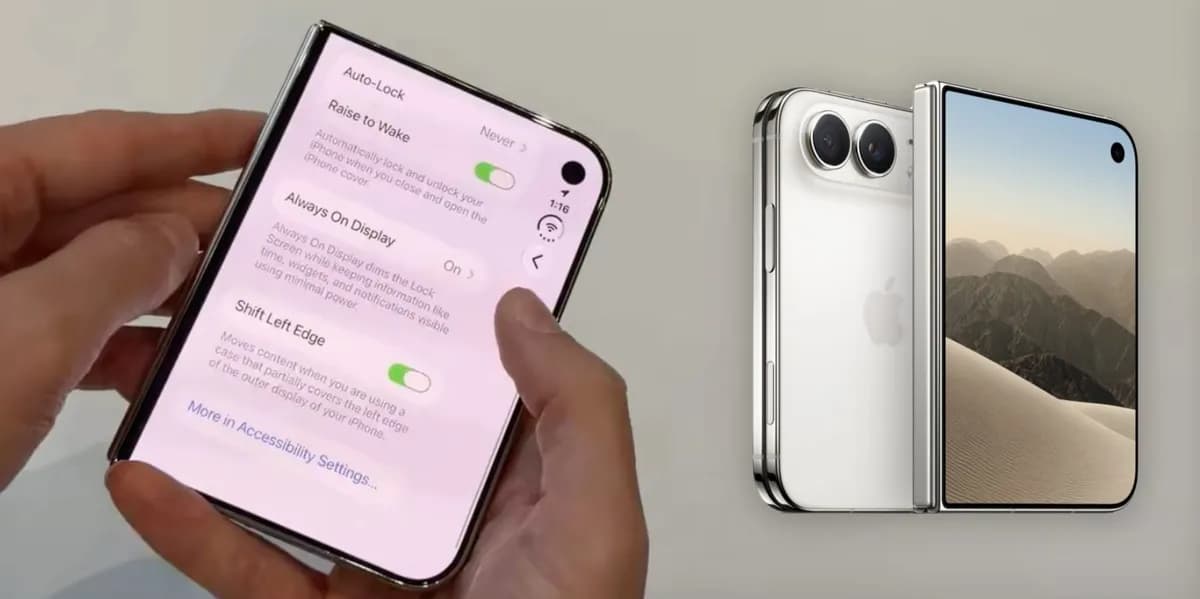
Every app on the iPhone Duo must be recompiled against iOS 27.0 at a minimum to properly fill the device's larger inner display. That is not a suggestion. Without a recompile, apps will not adapt to the Duo's distinctive screen geometry. They will render in black bars, visually marooned in the center of a display that cost buyers a premium price to acquire.
The stakes are real on both sides. Apple built hardware that can only fully shine with developer participation. Developers face a compliance cost they did not budget for and a timeline Apple has set unilaterally. The Duo's launch is, in a meaningful sense, only half-complete until the third-party software catches up.
iOS 27 and iOS 27.1: Two Tiers of Duo Support

Apple has structured Duo compatibility into two distinct thresholds, which creates a layered adoption curve for developers to navigate.
Read next iPhone Duo's Hidden Fake Bezel Setting ExplainedThe first tier requires recompiling against iOS 27.0. Any app that clears this bar will at least fill the Duo's larger inner display without letterboxing. This is the floor — the minimum a developer must do to avoid the embarrassment of black bars. It is also, technically, a low barrier. Recompiling against a new minimum deployment target in Xcode does not necessarily require rewriting logic, redesigning layouts, or shipping new features. For many straightforward apps, the work is measured in hours rather than weeks.
The second tier is where the real design investment lives. iOS 27.1 introduces the Duo's unique tab bar and a suite of UI components purpose-built for the form factor. To adopt those elements, developers must do more than flip a compiler flag — they need to actively engineer against new APIs. This is discretionary work, the kind studios undertake when they see revenue potential in a hardware segment, not merely to stay off Apple's bad list.
The separation into two tiers is a deliberate Apple strategy. It lowers the threshold for basic compliance while creating a visible ceiling for premium Duo experiences. Developers who stop at iOS 27.0 will have apps that work but feel generic. Developers who invest in 27.1 will have apps that feel native to the hardware. Apple is betting the promise of differentiation is incentive enough.
The Black Bars Problem: A Real Risk for Early Adopters

Black bars are the silent tax of every major Apple screen transition. Most iPhone users who bought an original iPhone X in 2017 encountered them immediately — apps that had not yet been updated for the Super Retina display sat with pillarboxing until their developers shipped updates. The App Store's sheer size, exceeding 1.8 million apps at various points of measurement, guarantees that even a small non-compliance rate represents tens of thousands of affected titles.
For iPhone Duo buyers, this is a concrete quality-of-life risk at launch. The device's larger inner display is arguably its defining feature. An app that fails to fill it does not merely look unpolished — it actively undermines the argument for buying the hardware. A banking app, a news reader, a fitness tracker, all pinched behind letterboxing, sends an implicit message to early adopters: you paid early for an experience that is not ready yet.
Apple has historically tolerated this gap as a transitional cost. The question is whether the Duo's form factor is distinct enough that the black bars problem becomes more visible, and more damaging to early adopter sentiment, than it was on previous screen transitions.
Why Developers May — or May Not — Comply Quickly
The developer community's reaction to forced recompile cycles has rarely been uniformly enthusiastic. Conversations on Hacker News and Apple Developer Forums following major SDK transitions repeatedly surface the same friction points: CI pipeline updates, regression testing across device families, App Store review queue uncertainty, and the opportunity cost of pulling engineers off roadmap work to handle platform compliance.
Small indie developers — who represent a substantial portion of the App Store's catalog by count — face a structurally different calculation than large studios. A solo developer maintaining a utility app alongside a day job cannot treat an iOS 27.0 recompile as a sprint task. Support tickets, day-job obligations, and a small user base that may not even own a Duo can all push the compliance work to the back of the queue for months.
Enterprise and productivity app developers face a different constraint: internal approval cycles. Submitting an updated binary often requires QA sign-off, legal review of what changed, and sometimes executive approval for platform version bumps. These processes do not move at Apple's pace.
The more commercially motivated segment — consumer apps with large iPhone userbases and active development teams — will likely move quickly. Social platforms, major media apps, and games with top-chart ambitions cannot afford to look broken on a new flagship device. Their compliance timeline is measured in weeks, not quarters.
Historical Precedent: How Apple Has Navigated Transition Risks Before
Apple has been here before, and the historical record is instructive about how long these gaps persist.
When iPhone X launched in November 2017, the adoption rate for the new Safe Area layout APIs was notably slow in the first month. Many third-party apps shipped with layout bugs or black bars well into early 2018, months after the device went on sale. Apple eventually set a hard deadline — new App Store submissions were required to support the iPhone X display from a specific date, a lever the company has used repeatedly to accelerate compliance.
The Dynamic Island, introduced with the iPhone 14 Pro in 2022, followed a similar arc. Apple provided ActivityKit and the Live Activities framework, but meaningful third-party adoption of Dynamic Island-native features took roughly six to nine months from launch before it felt like a broadly supported platform feature rather than a novelty used by a handful of marquee apps.
Both precedents suggest the Duo's iOS 27.0 compliance problem will resolve itself — eventually. The black bars phase is not permanent. But if the Dynamic Island timeline is a reference point, "eventually" could mean well into 2027 for the long tail of the catalog.
Apple's most effective tool in these transitions has been the App Store submission deadline. If the company mandates iOS 27.0 as a minimum deployment target for new and updated submissions, compliance accelerates sharply because developers cannot ship any update — bug fixes included — without clearing the bar.
What This Means for iPhone Duo Buyers at Launch
Buying an iPhone Duo at launch means accepting a software environment that is, by definition, incomplete. That has been true of every major Apple hardware launch in living memory, and sophisticated buyers factor it in. The Duo's recompile requirement does not change that calculus dramatically — it is a known variable, not a surprise.
What is worth watching is the second tier: iOS 27.1's tab bar and native UI components. Basic display scaling is a compliance checkbox. Thoughtful adaptation to the Duo's interaction model is a design investment. The difference between an app that merely avoids black bars and one that genuinely feels built for the Duo will be apparent within seconds of use.
Early Duo buyers who use a broad mix of apps — utilities, niche productivity tools, smaller social platforms — should expect some portion of their library to lag behind for months. Buyers whose daily workflow centers on a few major apps from well-resourced teams will likely have a cleaner experience faster.
Apple is wagering that developer economics will pull the ecosystem along quickly enough that the black bars phase is short-lived. It is a bet the company has made before and generally won. Whether the Duo's particular combination of a recompile requirement and a phased iOS target creates more friction than usual remains the open question.
Source: 9to5Mac