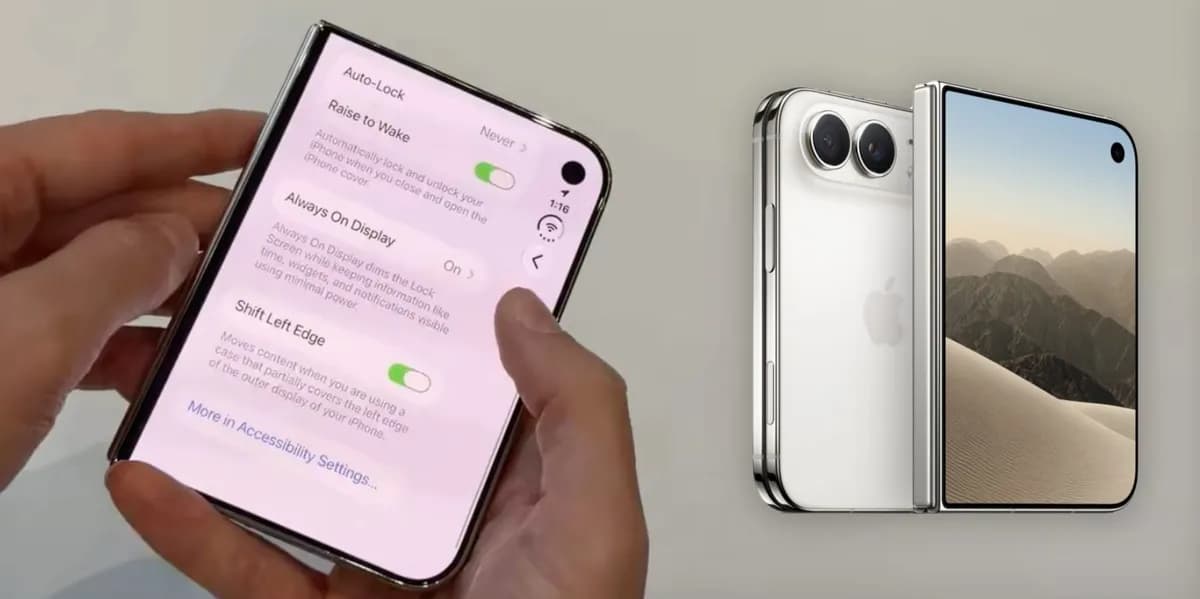
What iPhone Duo's Hidden StandBy Upgrades Reveal
Three weeks before Apple's October 23 launch event, the company's own software has already begun telling the story it hasn't officially told yet. Strings buried inside Apple's code — uncovered by 9to5Mac, a publication with a decade-long track record of accurate pre-announcement discoveries — point to unannounced upgrades coming to StandBy mode on the iPhone Duo. The features were never mentioned in any press release, keynote preview, or marketing brief. They simply exist, quietly waiting, in the code.
This is not an unusual occurrence for Apple watchers. It is, however, a meaningful one. StandBy mode has been one of Apple's most visible interface bets in recent iPhone history, and any expansion of its capabilities carries genuine implications for how users interact with their devices on a desk, nightstand, or charging pad. When a trusted outlet like 9to5Mac surfaces unreleased feature strings this close to a launch date, the signal-to-noise ratio is high. What the code reveals deserves serious examination.
What Is StandBy Mode and Why It Matters
Apple introduced StandBy in iOS 17, and the reception was immediate. When an iPhone is placed horizontally on a MagSafe or Qi charger, the screen activates into a full-screen ambient display — showing widgets, clocks, photos, and Live Activities in a format optimized for glanceable distance viewing. It transformed idle charging into a functional smart display experience without requiring a separate device.
Read next iPhone Duo's Hidden Fake Bezel Setting ExplainedThe relevance here is context: StandBy is not a niche feature. It sits at an intersection of hardware capability and software design that Apple has been methodically expanding. iOS 17 launched it as a broadly available feature, but with noticeable constraints — limited customization options, a fixed layout structure, and relatively conservative widget support. iOS 18 addressed some of those gaps. With the iPhone Duo on the horizon, iOS-adjacent code changes suggest Apple is ready to go further.
For consumers, StandBy mode is often the reason MagSafe charging pads sit in premium positions — on kitchen counters, home office desks, hotel rooms. It is a daily-use feature for a meaningful portion of iPhone owners, which makes even incremental improvements worth attention.
Unannounced StandBy Features Found in Apple's Code
9to5Mac's code analysis surfaced multiple StandBy-related feature strings that Apple has not announced through any official channel. The outlet has a well-documented history of this kind of discovery — during the iOS 16 development cycle, their code-diving surfaced satellite emergency messaging details and lock screen customization features weeks before Apple confirmed them. The pattern repeated through iOS 17 and iOS 18.
The reported summary confirms that the iPhone Duo StandBy mode changes are real, present in Apple's code, and currently unannounced. While the specific nature of each upgrade has not been enumerated in detail by the source, the existence of distinct, labeled feature strings indicates Apple has built and prepared new functionality — not merely experimented with it. Strings that appear in shipping or near-shipping code are not throwaway prototypes. They are features attached to identifiers, ready to be activated.
What can be reasoned from context: Apple's StandBy roadmap has consistently pointed toward richer interactivity, expanded third-party widget integration, and deeper Live Activities support. Any of these directions would align with the broader iPhone Duo positioning as a device meant to serve users across more use cases than prior generations. The specific features remain to be officially confirmed, but their presence in code at this stage of the product cycle carries significant weight.
iPhone Duo Launch Timeline and What to Expect on October 23
October 23 is now a fixed date on the Apple calendar, and the window between now and then is exactly the kind of pre-launch interval where code discoveries tend to cluster. Apple typically enters a code freeze period in the weeks before a major hardware launch, meaning what is in the build now is substantially what will ship on day one.
Historically, Apple has used this final stretch before launch for internal seeding, partner briefings, and regulatory filings — not public feature reveals. That means any capability already present in the code but not yet announced will either surface in a pre-launch media briefing or reveal itself at first boot. The October 23 date gives Apple two to three weeks to formally surface these StandBy features, through either a press release, an iPhone Duo feature page update, or a dedicated software announcement tied to the device.
Buyers planning for October 23 should factor StandBy into their assessment. MagSafe accessory compatibility, desk and nightstand setups, and smart home display use cases all become more relevant if Apple is genuinely expanding the feature set. The upgrades are not yet confirmed in terms of specific functionality, but their presence in code at this proximity to launch suggests they will ship with the device — not arrive in a later software update.
Why Apple Hides Features in Code Before Announcements
Apple embeds unreleased feature strings into iOS builds for practical engineering reasons, not as deliberate teasing. Features require infrastructure before they have user-facing names. A capability needs to be built, tested, integrated, and labeled internally before any marketing team decides how to frame it publicly. The result is that shipping code routinely contains identifiers for features that haven't cleared Apple's announcement pipeline.
This dynamic has played out consistently across multiple iOS generations. During iOS 16 development, code strings revealed the Dynamic Island's functional parameters before the iPhone 14 Pro was announced. iOS 17 betas contained StandBy mode references before WWDC 2023 made the feature official. In both cases, the gap between code discovery and public announcement was measured in weeks, not months — precisely the window that applies to the iPhone Duo right now.
9to5Mac's methodology in these cases is standard for sophisticated iOS analysis: examining framework strings, asset catalogs, and configuration files within beta or release builds. This approach does not require access to proprietary Apple documents or insider sources. It requires deep familiarity with Apple's naming conventions, an understanding of which strings are novel versus legacy, and the analytical rigor to distinguish genuine unreleased features from test artifacts. 9to5Mac has built its reputation over more than fifteen years on exactly this kind of work, with a hit rate that has made it one of the most-cited sources in pre-announcement Apple coverage.
For Apple, these discoveries carry a calculated cost. The company has never meaningfully adjusted its engineering practices to prevent code-string leaks, which suggests the exposure is either accepted or considered acceptable at the scale it occurs. The real announcement, the one with marketing language and polished demos, remains under Apple's control.
What These Leaks Mean for iPhone Duo Buyers
For anyone already planning to buy the iPhone Duo, the StandBy news carries a specific implication: the feature set you will receive at launch may be more complete than what Apple has publicly acknowledged. That is not a reason to delay a decision, but it is a reason to account for StandBy when weighing accessories, desk setups, and use cases.
The iPhone Duo StandBy mode upgrades, whatever their precise shape, appear to be shipping features rather than aspirational ones. Code at this stage of a product cycle reflects intent, engineering investment, and internal validation. Apple does not label and integrate features that are genuinely uncertain. The presence of these strings three weeks from launch is as close to confirmation as a code discovery can get without an official press release.
What remains unknown is the granularity of the changes — whether they expand widget behavior, introduce new clock or photo display formats, add interactivity, or extend Live Activities support in meaningful new directions. Apple will answer those questions on its own schedule. What 9to5Mac has established is that the answers exist, and that the iPhone Duo is arriving with StandBy capabilities its users haven't been told about yet.
That is, in the end, the clearest signal these leaks provide: Apple is not finished building the feature. It is finished hiding it.
Source: 9to5Mac