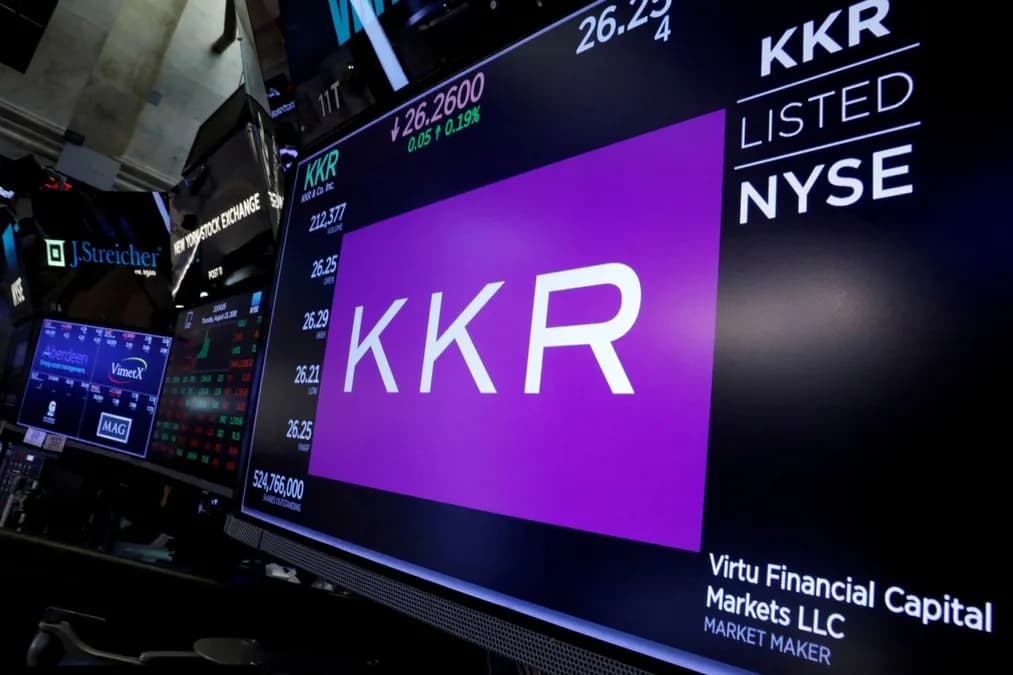
KKR Bets on Private Markets With Gen II Acquisition
KKR, one of the world's most recognized alternative asset managers, has struck a deal to acquire Gen II, a fund administrator specializing in private capital. The transaction is not merely a corporate purchase — it is a structural statement about where KKR believes the financial industry is heading. At its core, the KKR Gen II acquisition reflects a calculated conviction: that private markets will continue to absorb a greater share of global capital, and that the infrastructure supporting those markets is as valuable as the assets themselves.
Fund administration is unglamorous work. It involves maintaining the books, calculating net asset values, managing investor reporting, handling capital calls, and ensuring compliance across increasingly complex fund structures. None of that generates headlines on its own. Yet the decision by a firm of KKR's stature to buy into this space signals that the back office of private markets has become a strategic frontier — one where ownership of the pipes may prove as lucrative as ownership of the assets flowing through them.
Why Fund Administration Is a Strategic Asset
When a private equity fund closes a $5 billion vehicle, the work does not end at the signing ceremony. Capital must be called from limited partners on a rolling basis, portfolio company transactions must be tracked, fee waterfalls calculated, and audited financial statements produced. As fund structures grow more complex — encompassing co-investment vehicles, continuation funds, evergreen structures, and multi-asset class mandates — the operational burden grows with them.
Read next Iran's Hormuz Leverage and What It Means for Oil PricesGen II sits directly inside that operational burden. As a specialist fund administrator, the firm processes the financial infrastructure for private capital managers who either lack the internal capacity or prefer to outsource these functions for scalability and independence. For fund managers, using a third-party administrator also provides a layer of governance that institutional investors increasingly demand: an independent set of eyes on NAV calculations and reporting reduces the risk of conflicts of interest.
The value of this service scales with the industry it serves. Analysts and industry observers tracking the private markets space — including those publishing periodic reports through Preqin and McKinsey's Global Private Markets Report series — have documented that private market assets under management have grown dramatically over the past decade, crossing well into the double-digit trillions globally. Each incremental dollar of AUM flowing into private funds generates a corresponding administrative workload. That workload is what KKR is now positioned to capture.
The Proliferation of Private-Capital Funds
The sheer number of private capital vehicles has expanded at a pace that few predicted a decade ago. It is not only the flagship buyout funds that drive this growth. Infrastructure funds, private credit vehicles, real estate partnerships, fund-of-funds structures, secondaries funds, and hybrid products have all multiplied. Each comes with its own reporting obligations, investor base, regulatory requirements, and timeline.
Private equity firms themselves have become more institutional over time. What was once a cottage industry of small partnerships has evolved into a professional asset management sector, with large managers running dozens of concurrent funds targeting different strategies, geographies, and investor types. The administrative complexity of running a global alternatives platform in 2026 is categorically different from what it was in 2010.
This proliferation creates a durable and growing demand for specialized administrative services. A fund manager focused on generating returns has limited appetite to build proprietary operational infrastructure. Outsourcing to a specialist like Gen II is often the efficient path — and increasingly, the one that satisfies institutional LP due diligence requirements as well.
Investors Rotating Away From Public Markets
The structural backdrop to this acquisition is the sustained reallocation of institutional capital away from public equities and bonds toward private market alternatives. This shift did not happen overnight, and it is not driven by trend-chasing. It reflects a deliberate portfolio construction philosophy that gained mainstream acceptance over decades.
The Yale Endowment model, pioneered by the late David Swensen, demonstrated that long-horizon institutional investors could achieve superior risk-adjusted returns by allocating meaningfully to illiquid alternatives — private equity, venture capital, real assets, and absolute return strategies. Yale's endowment consistently outperformed peers with traditional 60/40 public market portfolios, and other university endowments, foundations, and sovereign wealth funds followed the template.
Pension funds have moved in the same direction, though often more cautiously given their liquidity needs and regulatory constraints. Large public pension plans in the United States, Canada, Australia, and Europe have steadily increased their allocations to private equity and infrastructure over the past fifteen years. Insurance companies, facing persistent low-yield environments in fixed income, have turned to private credit as a substitute for investment-grade bonds. Family offices and high-net-worth individuals, historically underserved by the private markets ecosystem, are increasingly gaining access through semi-liquid structures and feeder funds.
This broad-based rotation has compounded the growth in private fund formation. When more capital chases private market exposure, more funds get raised, more vehicles get structured, and more administration gets required. KKR is acquiring Gen II in the middle of this secular trend, not at its conclusion.
Consolidation in the Fund Services Industry
The fund administration sector has undergone meaningful consolidation over the past several years. Larger financial services firms and alternative asset managers have recognized that owning fund servicing capabilities provides multiple advantages: recurring fee revenue, sticky client relationships, proprietary data on industry flows, and the ability to cross-sell other services to the fund managers they serve.
Several major transactions in the broader fund services space have already reconfigured the competitive landscape. State Street, SS&C Technologies, and other established fund administrators have expanded their private markets capabilities through acquisitions. The entry of alternative asset managers directly into this space — rather than simply using these services as clients — marks a new chapter. KKR's move positions it not just as a consumer of fund administration but as a provider within the private markets ecosystem.
There are real competitive moats here. Switching costs in fund administration are high. A fund manager that has integrated its systems, investor records, and reporting workflows with one administrator faces substantial operational friction in moving to a competitor. Long-term contracts, embedded technology relationships, and regulatory documentation continuity all create barriers that benefit incumbent providers.
What This Means for Private Markets Outlook
The KKR Gen II acquisition carries a straightforward forward-looking message: the people who built one of the world's largest alternative asset management franchises believe the private markets industry has substantial runway ahead.
This matters as a market signal precisely because KKR is not merely a commentator on private markets trends — it is an active architect of them. The firm manages hundreds of billions in assets across multiple strategies and has a direct financial interest in reading the trajectory of institutional capital flows correctly. A deal to own a piece of the infrastructure serving that industry is an expression of conviction, not speculation.
For institutional investors assessing their own private market allocations, the transaction offers a useful data point. The back-office infrastructure of a growing industry tends to attract acquirers when that growth appears durable. The fact that KKR sees value in this layer of the market reinforces the thesis that private capital formation will continue expanding, and that the operational complexity supporting it will keep pace.
For the broader financial industry, the deal underscores a reality that has been building for years. The bifurcation between public and private markets is not a temporary phenomenon. It is a structural reorientation of how capital is allocated, managed, and administered. KKR's acquisition of Gen II is a bet placed squarely on that reorientation continuing — one that tells the market more through action than any investor presentation could.
Source: WSJ.com: Markets