New York Declares Measles State of Emergency
On Monday, New York Governor Kathy Hochul issued a state of emergency — a declaration that, in public health terms, signals a situation far beyond what routine outbreak response can contain. The trigger: a dramatic and accelerating rise in confirmed measles cases across rural stretches of New York, compounded by a deadly epidemic spreading through neighboring Pennsylvania. Hochul's administration framed the move as a response to a "growing number of measles cases across rural areas of New York and neighboring states," language that underscores how this measles outbreak 2026 has ceased to be a local anomaly and become a regional crisis demanding coordinated, emergency-level action.
States of emergency unlock specific powers — expedited procurement of vaccines and supplies, expanded authority for health departments to mandate quarantine and vaccination, and the ability to deploy National Guard medical assets. The fact that New York reached for these tools reflects a calculus that standard public health infrastructure was not keeping pace with transmission rates. It is a significant administrative step, and one that carries a blunt message to the public: measles is here, it is spreading, and the window for voluntary corrective action is closing.
Pennsylvania's Deadliest Measles Outbreak in Over 30 Years

Pennsylvania's crisis is the anchor of the broader regional emergency. What is unfolding there constitutes that state's worst measles outbreak in more than three decades — a benchmark that carries genuine epidemiological weight. The last time Pennsylvania faced anything of comparable scale, Bill Clinton had recently taken office and the internet was not yet a household utility. In the intervening years, the MMR (measles-mumps-rubella) vaccine had become so effective at suppressing transmission that most practicing pediatricians had never witnessed a substantial measles cluster in their careers.
Read next Medicaid Work Requirements Strand Cancer SurvivorsThe word "deadly" attached to Pennsylvania's outbreak is not rhetorical. Measles kills. The World Health Organization estimates that globally, measles claimed the lives of more than 100,000 people in 2023 alone — the overwhelming majority of them children under five. In a wealthy, high-income state with functional hospitals and a functional vaccine supply chain, fatalities from measles represent a specific and preventable failure. They happen in predictable conditions: delayed diagnosis, immunocompromised patients who cannot receive the vaccine, infants too young for their first MMR dose, and pockets of community where vaccination rates fell below protective thresholds.
The details emerging from Pennsylvania's outbreak fit that pattern. Rural geographies, in particular, create conditions where vaccine access is uneven, primary care providers are stretched thin, and tight-knit communities can amplify transmission before health officials confirm the index case.
How the US Reached a Three-Decade High in Measles Cases

The United States declared measles eliminated in the year 2000. That declaration, issued by the Centers for Disease Control and Prevention, meant that the country had interrupted endemic transmission — measles was no longer continuously spreading person-to-person within American borders. Cases still appeared, carried in by international travelers, but they were contained before chains of transmission could establish themselves. For a generation of American children, measles became, for practical purposes, a historical disease.
The measles outbreak 2026 signals a measurable departure from that baseline. It did not appear suddenly. The erosion of population immunity has been documented in CDC surveillance data for years. In 2019, the US recorded more than 1,200 measles cases — the highest annual count since 1992 — driven largely by under-vaccinated Orthodox Jewish communities in New York. COVID-19 then disrupted childhood immunization schedules globally, producing what the WHO described as a "perfect storm" of coverage gaps. Between 2019 and 2021, an estimated 25 million children worldwide missed their first MMR dose. A portion of those children are now school-aged, and their susceptibility is cumulative.
Herd immunity against measles requires approximately 95 percent MMR coverage in a given population — a threshold set by measles's unusually high transmissibility, with a basic reproduction number (R0) estimated between 12 and 18. That means one infected person can, in a fully susceptible population, infect twelve to eighteen others. No other common vaccine-preventable disease spreads as efficiently. When coverage in a community drops even modestly — to 90 percent, or 85 percent — the unvaccinated concentrate in social networks (neighborhoods, religious congregations, school cohorts) where the effective reproduction number can still exceed one, sustaining spread. Rural communities with historically lower healthcare access are particularly vulnerable to this dynamic.
What This Outbreak Means for Vaccination Policy
New York's emergency declaration is, in effect, a policy indictment as much as a public health intervention. The state has among the more permissive non-medical vaccine exemption laws in the Northeast, and while it tightened its religious exemption statute following the 2019 outbreak, implementation and enforcement remain contested at the local level. Pennsylvania's statute still permits non-medical exemptions with a relatively low administrative barrier — a circumstance that public health advocates have argued for years creates structural conditions for exactly the kind of outbreak now underway.
The policy debate crystallizes around three pressure points. First, school exemption laws: exemptions function as a proxy for concentrated susceptibility. Where exemption rates in individual school buildings exceed five or ten percent, the herd immunity threshold is locally breached, regardless of statewide averages. Second, outbreak response protocols: the speed at which health departments can confirm cases, trace contacts, and mandate exclusions from schools and congregate settings directly determines whether an outbreak stays small or becomes regional. Emergency declarations accelerate those protocols but also reveal how slow baseline bureaucracy can be. Third, vaccine access in rural and underserved areas: in many rural Pennsylvania and New York counties, the nearest federally qualified health center is an hour's drive away. Low-income parents without reliable transportation face a structural barrier to timely vaccination that neither a public information campaign nor a mandate can fully resolve without addressing the underlying access gap.
Expert Perspectives on Preventing Future Outbreaks
Infectious disease specialists and state health officials have consistently pointed to the same set of interventions as most likely to prevent recurrence. Closing coverage gaps in school-age children through proactive catch-up campaigns — modeled on the WHO's supplementary immunization activities — is the most direct lever. Analysis of the 2019 New York outbreak found that targeted mass vaccination events in the affected ZIP codes, combined with aggressive case investigation, ultimately contained spread that had threatened to become endemic.
Some public health experts argue that the emergency framing itself, while operationally useful, can inadvertently reinforce a reactive posture toward vaccine-preventable disease. The underlying surveillance infrastructure — the systems that detect and verify cases, map exposure networks, and project trajectory — requires sustained funding in non-emergency years. When those systems are underfunded between outbreaks, the first signal of resurgence arrives late, and interventions must be larger and more expensive to compensate.
The harder policy question — one the current emergency does not resolve — is what level of legal compulsion, if any, is appropriate to protect community immunity. That question sits at the intersection of public health law, constitutional jurisprudence, and community trust. No regulatory change produces durable compliance without the latter.
What Parents and Communities Should Do Now
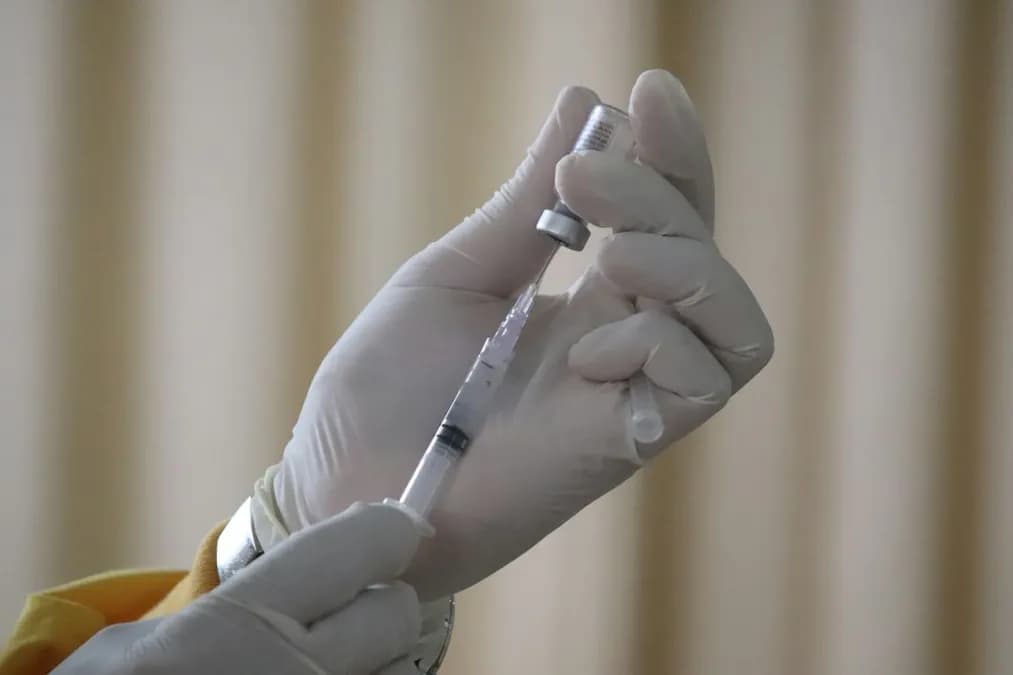
Check vaccination records now, not when a case appears in your child's school district. The MMR vaccine is administered in two doses: the first between twelve and fifteen months, the second between four and six years. Children who have received both doses on schedule are considered protected. Adults born before 1957 are generally presumed immune through natural exposure. Adults born after 1957 who cannot document two doses should speak with a healthcare provider about vaccination.
Parents of infants under twelve months — the age at which the first MMR dose is typically given — face the most acute vulnerability during an active outbreak. In outbreak conditions, the CDC and AAP (American Academy of Pediatrics) guidelines allow for early vaccination as young as six months, with the standard two-dose series completed thereafter. If you live in New York, Pennsylvania, or adjacent areas where transmission has been confirmed, contact your pediatrician to discuss whether early vaccination is appropriate for your child.
Community institutions — schools, religious congregations, early childhood programs — should audit their own vaccination records for enrolled members and work with local health departments to identify coverage gaps before a case arrives at the door. The measles outbreak 2026 did not emerge from a single act of negligence. It is the product of years of accumulated gaps in coverage, access, and institutional follow-through. Closing those gaps, at the level of individual families and individual institutions, is both the immediate task and the only durable path back to the protection the country built and, for a generation, maintained.
Source: Society | The Guardian