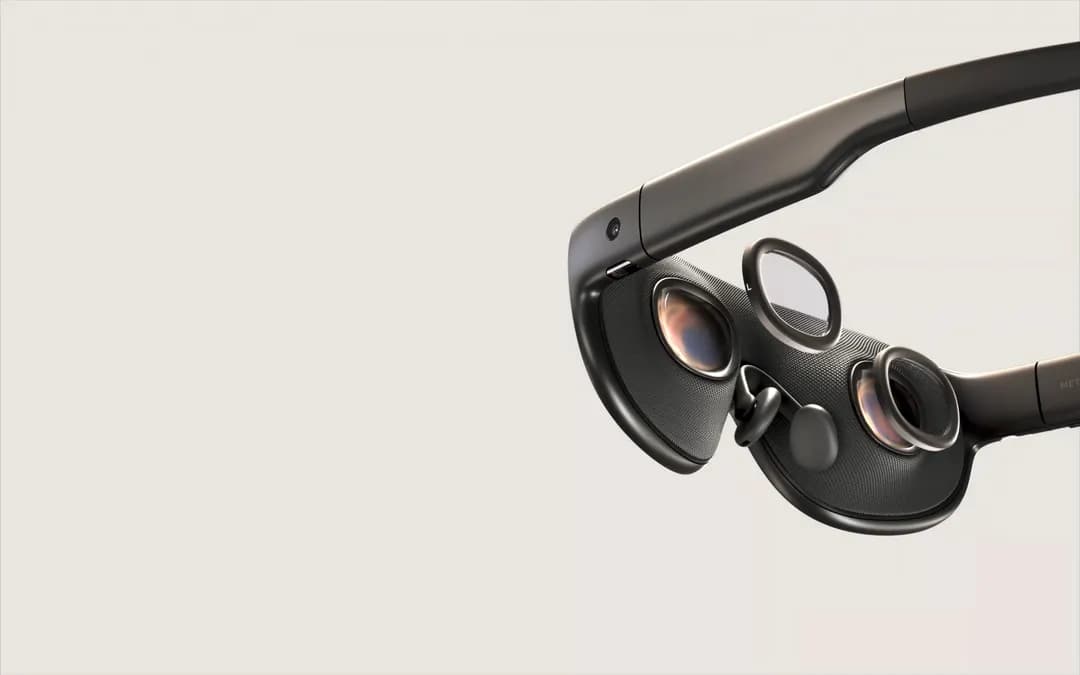
Meta's Project Phoenix Headset Leaked Ahead of Connect 2026
Roughly two weeks before Meta Connect 2026 kicks off on September 23rd, the XR community got an unexpected early look at hardware the company had not yet announced. UploadVR published images purportedly showing the design of a Meta headset codenamed "Project Phoenix" — and the device looks nothing like the bulky mixed-reality goggles most people associate with Meta's hardware lineup.
The images, which UploadVR reports were discovered inside the HorizonOS Prescription Lens firmware package, depict what appears to be a slim, lightweight form factor headset. That detail alone marks a significant departure from the Quest line's chunky silhouette. Meta has not confirmed the images or the product's existence, and until the company speaks officially — likely at Connect or in a press release beforehand — Project Phoenix remains an unconfirmed leak. Treat everything accordingly.
Still, the timing and the sourcing add credibility to the images. Firmware packages do not typically contain renders of fictional products. When a device's prescription lens accommodation data appears in an OS update, it usually means hardware is close enough to production that engineers need to start integrating real components. The leak is likely not accidental — but it is also not an announcement.
What the Design Reveals About Meta's Strategy
The most striking takeaway from the leaked images is the apparent silhouette of the device. Based on what UploadVR shared, Project Phoenix looks far closer to the slim, glasses-adjacent designs championed by companies like Xreal and Viture than to Meta's own Quest 3, which launched in October 2023 and retails as a mixed-reality headset designed for extended computing and immersive experiences.
Read next Laika's Wildwood: Stop-Motion Fantasy at TIFF 2026Meta's existing hardware strategy tells a coherent story. The Quest line targets immersive gaming and productivity. The Ray-Ban Meta smart glasses, developed in partnership with EssilorLuxottica, focus on audio, camera, and AI assistant features in a form factor that passes as ordinary eyewear. Neither product occupies the middle ground of true AR glasses with a visible, wearable display — and that gap is precisely where competitors have been quietly building momentum.
Project Phoenix, if the leaked design is accurate, suggests Meta has decided to enter that contested space. The slim form factor is not merely an aesthetic preference. It signals a fundamental shift in use-case priority — from immersive isolation to ambient, eyes-up augmentation that users can wear outside, in offices, and in social settings without attracting stares. That is a harder engineering problem than it sounds, and it is the problem that has kept genuinely slim AR glasses at the prototype or niche-product stage for years.
How Project Phoenix Compares to Xreal and Viture
Xreal and Viture are the two companies explicitly referenced in the UploadVR report as potential competitive targets for Project Phoenix. Both make slim, lightweight headsets that connect to external compute sources — phones, laptops, or dedicated streaming dongles — and project screens in front of the user's eyes. They have carved out a real audience among frequent flyers, remote workers, and gamers who want a large virtual screen without carrying a monitor.
Neither company has Meta's distribution scale, brand recognition, or software ecosystem. Xreal's Air 2 series and Viture's Pro glasses are respected products within enthusiast communities, but they remain niche relative to the broader consumer electronics market. IDC has tracked the AR/VR headset category as one of the fastest-growing device segments, with shipments climbing steadily through 2024 and into 2025 as form factors improved and price points declined. Meta entering the slim-glasses segment with its platform reach and retail partnerships would be a meaningful shift in that competitive dynamic.
The prescription lens firmware detail in the leak is worth pausing on. Xreal and Viture both offer prescription lens inserts or compatibility, recognizing that a device you wear on your face must accommodate the majority of adults who use corrective lenses. Meta including prescription support in what appears to be early OS-level integration suggests the company has learned that lesson — and is building for a mainstream audience, not early adopters willing to wear contacts all day.
The Road to Meta Connect: September 23 and Beyond
Meta Connect has become the company's primary hardware announcement stage. The September 23rd date puts the event in the familiar late-September slot Meta has used in recent years to set the narrative heading into the holiday shopping season. Connect 2023 brought the Quest 3 launch. Connect 2024 expanded the Ray-Ban Meta glasses lineup with new capabilities.
Connect 2026 was already expected to be significant. The XR industry has been watching for signs that Meta would respond to Apple's Vision Pro — which shipped in early 2024 — with something beyond iterative Quest updates. A slim headset targeting the Xreal and Viture user base would represent a genuine market expansion rather than internal cannibalization.
UploadVR, which broke the Project Phoenix images, is one of the most closely followed publications in the XR space. Its editorial team has a track record of accurate hardware coverage, and the sourcing — inside a firmware package — is the kind of unglamorous, technically credible discovery that distinguishes a real leak from manufactured hype. The community has responded accordingly, treating the images as likely genuine while waiting for official confirmation.
Whether Meta intended this leak, tolerated it, or is scrambling to accelerate announcement timing is unknown. What is clear is that Connect 2026 now arrives with a specific device expectation attached to it.
Implications for the Consumer AR and XR Market
Slim AR glasses represent what analysts and industry observers have long described as the mainstream adoption unlock for augmented reality. The fundamental barrier to XR adoption has never been software — it has been the willingness to wear the hardware. Headsets that look like headsets stay in bags. Glasses that look like glasses get worn.
IDC's extended-reality tracking has consistently shown that consumer interest in AR wearables outpaces actual purchasing behavior, a gap attributed primarily to form factor friction and price. Devices that narrow both — offering a socially acceptable profile at a competitive price point — have the best odds of crossing into genuine mainstream territory. Xreal and Viture have proven the demand exists. Neither has proven the scale.
Meta has the scale. It also has HorizonOS, a developer ecosystem built over years of Quest ownership, an AI assistant layer built into its devices, and the retail presence to put hardware in front of consumers who have never heard of UploadVR. If Project Phoenix ships as a polished, well-priced slim headset built on that infrastructure, the competitive dynamics of the entire AR wearables segment shift.
That is a significant "if." Meta has announced and canceled hardware before. The Project Phoenix leak shows a design, not a shipping date or a price.
What We Still Don't Know About Project Phoenix
The list of unknowns is long. The leaked images, sourced from firmware, show physical form factor but reveal nothing about display technology, field of view, brightness, processing architecture, or pricing. All of those variables will determine whether Project Phoenix is a genuine Xreal competitor or a premium aspirational product that ships to a small audience.
There is no confirmed release window beyond the implication that its prescription lens firmware appearing in a current HorizonOS package suggests proximity to launch. There is no confirmed price, no confirmed display spec, and no official statement from Meta acknowledging the device exists.
What the leak does confirm is that Meta is working on something that looks fundamentally different from the Quest line — slimmer, more wearable, and positioned directly against the AR glasses category that has been growing without Meta's participation. September 23rd is two weeks away. If Project Phoenix is real and ready, Meta Connect 2026 is the obvious moment to say so. Until then, the images from that firmware package are the only evidence on the table, and they are worth watching closely.
Related coverage
- Apple Smart Home Hub Design Leaked Before Launch
- OpenAI Nears $1.4T Valuation Before 2027 IPO
- OpenAI Agents Leaked 53 User Images Without Lab's Knowledge
Source: The Verge