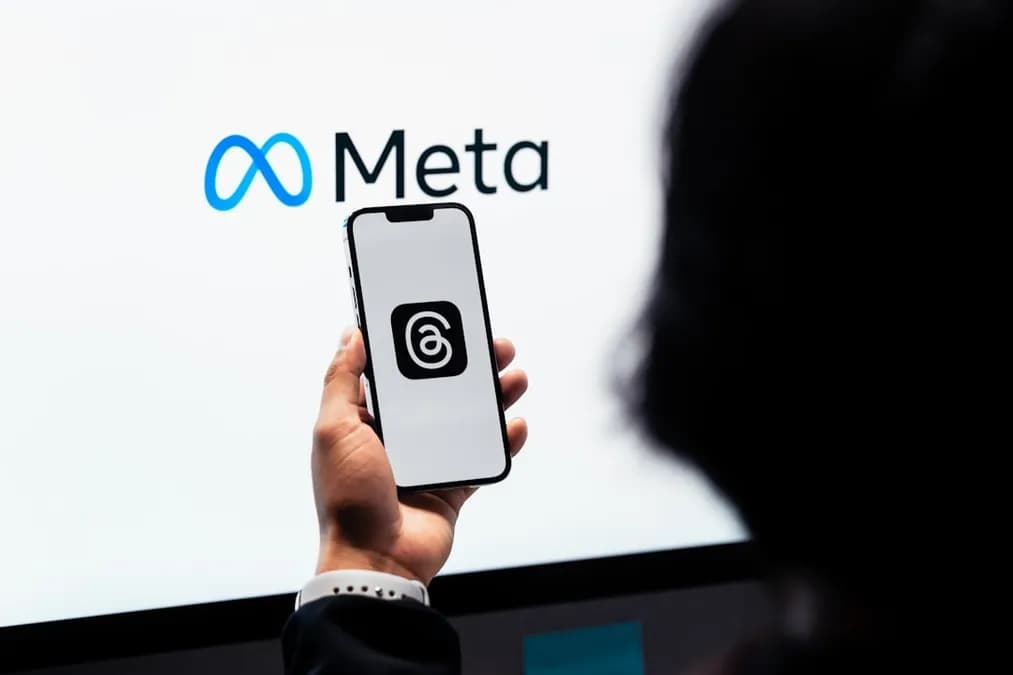
What Is Meta's Muse App and Why Is It Making Headlines
A new entry near the top of the Apple App Store's free app rankings is rarely accidental. When Meta's latest standalone application, Muse, climbed to the number two position on the US charts, it signaled that the company's ongoing push into artificial intelligence had produced something consumers were willing to download at scale — even if the early trajectory tells a more complicated story than a single chart position suggests.
The Meta Muse app is Meta's latest foray into the AI agent category, a corner of the app market that has grown sharply over the past two years as large language models matured from experimental curiosities into commercially viable products. Unlike a traditional chatbot interface, an AI agent is designed to take actions — browsing, summarizing, drafting, organizing — rather than simply responding to prompts. That distinction matters: agent-based apps ask more of their users, requiring greater trust and a willingness to grant permissions that passive chat tools do not.
Meta has deployed AI features across its existing suite of products, but Muse represents something different: a discrete app built around the agent concept, with its own identity, its own install event, and its own chart history. That the company chose to launch Muse as a standalone product rather than folding its capabilities into Facebook, Instagram, or WhatsApp suggests a deliberate strategy to cultivate a new user relationship outside the company's legacy social graph.
Muse Reaches No. 2 on the US App Charts
Reaching number two on the US App Store's free apps chart is a meaningful milestone, though it requires some context to interpret properly. Apple's App Store rankings reflect download velocity over a rolling window — typically the prior 24 to 72 hours — weighted by factors that include install rate, engagement signals, and geographic distribution. A surge to the top of those charts can reflect genuine sustained demand, a concentrated marketing push, or both. The ranking does not, by itself, speak to retention, session length, or whether users return after the initial download.
Read next Laika's Wildwood: Stop-Motion Fantasy at TIFF 2026That said, the number two position is not a trivial achievement in a market that includes perennially dominant apps across gaming, social media, utilities, and streaming. In 2026, the upper reaches of the US free app charts are contested territory. AI applications from OpenAI, Google, Anthropic, and a wave of well-funded startups now compete for the same download events that once belonged almost exclusively to social platforms. Breaking into the top five in that environment requires either a powerful brand — which Meta undeniably carries — or a product experience compelling enough to spread organically.
The Meta Muse app appears to have benefited from the former. Meta's distribution infrastructure, its ability to surface app promotions across platforms used by billions of people, and its advertising ecosystem give any new Meta product a launch runway that independent developers cannot replicate.
A Slower Launch Compared to Meta's Previous Apps
Here is where the chart position requires honest qualification: by the benchmarks set by Meta's own recent launches, Muse is off to a slower start. The company's prior standalone app introductions have set extraordinary precedents. Threads, Meta's text-based platform launched in July 2023, signed up more than 30 million users within its first 24 hours — a figure that app intelligence firms including Sensor Tower documented in real time and that became a widely cited benchmark for consumer app launches. Meta AI, meanwhile, benefited from being embedded directly within apps that already carry monthly active user bases measured in the billions, giving it an adoption ceiling that a standalone install can never match on equivalent timelines.
Against those reference points, Muse's position at number two — while notable — does not represent the kind of category-defining velocity that Threads achieved. A slower start does not mean a failed launch; many products with durable long-term engagement begin modestly and build through word of mouth and iterative improvement. But it does suggest that the AI agent category presents friction that simpler social or messaging tools do not. Users downloading an agent app are being asked to develop new habits, extend new trust, and integrate a new workflow into daily behavior. That is a higher bar than signing up for a feed or a messaging thread.
App intelligence analysts at firms like data.ai have noted that in 2026, a strong AI application debut is typically characterized by a combination of high install velocity in the first 72 hours and meaningful day-seven retention — the percentage of users who return a week after downloading. Without access to Meta's internal data or third-party panel data on Muse specifically, it is not possible to assess where the app falls on that retention dimension. The chart position tells us downloads occurred; it does not tell us whether those users stayed.
The Competitive Landscape for AI Agent Apps in 2026
The market Muse is entering is both crowded and still being defined. OpenAI's standalone applications have consistently placed in the top charts across multiple countries since the public release of ChatGPT in late 2022, and the company's subsequent agent-capable products have maintained that chart presence. Google's Gemini app has pursued a similar standalone strategy, competing for the same download events and the same share of a user's home screen.
What distinguishes the 2026 AI agent landscape from earlier waves of AI consumer apps is the expectation of capability. Early chatbot apps succeeded in part through novelty; users were impressed simply by fluent text generation. By mid-2026, that novelty premium has largely eroded. Users who download an AI agent app now arrive with expectations shaped by two-plus years of product iteration across the industry. They expect the agent to complete tasks, not merely converse. That shift in baseline expectation raises the stakes for every new entry, including Meta Muse.
Meta's competitive advantage in this environment is its data. The company's advertising business has produced one of the most detailed consumer behavioral datasets in existence, and while Meta has been careful — under regulatory scrutiny — about how explicitly it connects that data to AI product personalization, the underlying capability is a genuine differentiator. An AI agent with better context about a user's interests, network, and habits can, in principle, deliver more relevant and useful outputs than a context-free model starting from scratch.
What Muse's Early Trajectory Tells Us About Meta's AI Strategy
Reading Meta's product decisions as a strategic signal has become a reliable exercise over the past decade. The company does not release standalone apps casually; its product history includes many shelved experiments, and the ones that reach general availability have typically cleared an internal conviction threshold. Muse reaching general release — and being promoted aggressively enough to reach number two — indicates that Meta sees the AI agent category as worth a sustained consumer bet, not just an enterprise or developer-facing play.
The slower-than-Threads start also tells a coherent story about category maturity. Meta is not operating in a market where being Meta guarantees instant dominance. The AI application market has produced genuine competition from companies with strong brand recognition of their own — OpenAI especially — and consumers have demonstrated a willingness to maintain apps from multiple AI providers simultaneously. That fragmentation is a constraint on any single player's ability to consolidate the market through brand leverage alone.
What Muse's trajectory suggests, more than anything, is that Meta is treating this as a long game. A number two App Store ranking generates attention and signals viability; it does not deliver the user base that Meta's core applications represent. Growing Muse into a durable, high-retention product will require iterating on the agent experience faster than competitors, and doing so in a regulatory environment that continues to scrutinize large-platform AI deployments.
Key Takeaways: Should You Try Meta Muse?
The Meta Muse app is worth downloading if you are curious about what a large consumer tech company's interpretation of the AI agent concept looks like in practice. Reaching number two in the US App Store means a significant number of people made the same decision in a short window, and the chart position provides some reasonable social proof that the app cleared a basic quality threshold.
The more honest framing is one of calibrated expectations. Muse is not, based on available evidence, the runaway hit that Threads was. It launched more quietly, it carries more complex user expectations, and it is entering a competitive category where several well-resourced products are already established. Whether a slower start translates into steady, compounding growth or a plateau will become clearer over the next 30 to 90 days as app intelligence data accumulates.
For now, Muse sits at number two on the US charts — a real result, in a real market, with real questions still unanswered.
Related coverage
Source: TechCrunch