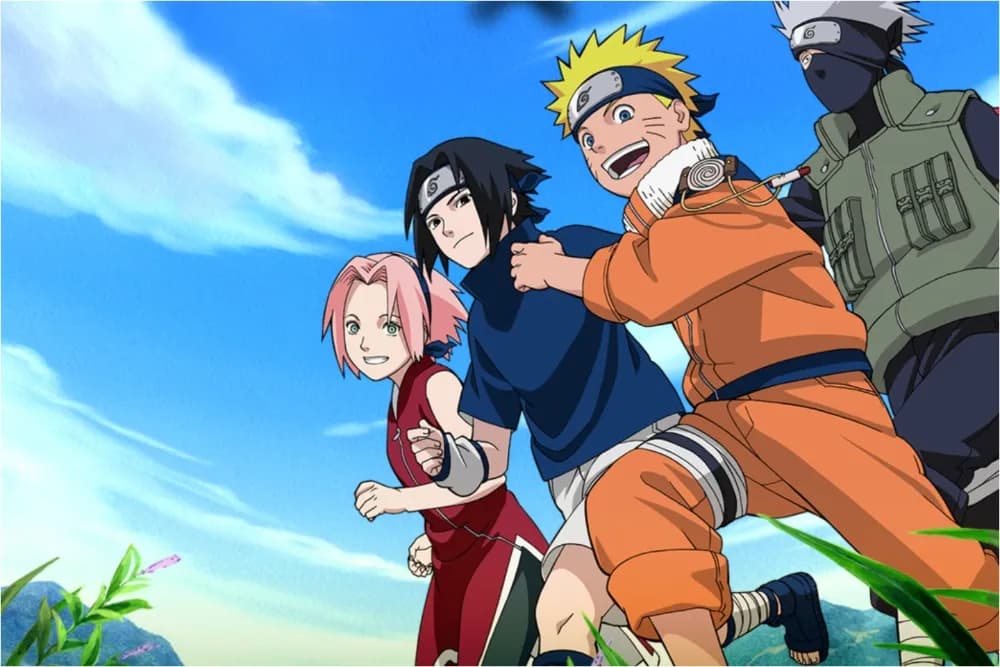
Naruto Is Back: New Anime and Manga Officially Confirmed
Over 250 million copies sold. That is the staggering global footprint of Masashi Kishimoto's Naruto manga, according to Shueisha records — a number that establishes, without question, why the franchise's latest announcement sent shockwaves through the anime community almost immediately. Variety confirmed the news on October 10, 2026: a brand-new Naruto anime TV series is in production, and Kishimoto himself is returning to write a new manga set in the Naruto universe titled Shadow Rising.
Both projects were officially announced, marking the most significant expansion of the franchise since Boruto: Naruto Next Generations carried the story forward. For fans who grew up watching Naruto Uzumaki's journey from lonely outcast to Hokage, this is not a nostalgic cash-in. It is Kishimoto stepping back into the world he built from scratch — and this time, he is bringing a collaborator with him.
The dual announcement signals that this is a coordinated franchise push, not a single spinoff. A new manga and a new anime arriving together suggests a deliberate creative strategy, one designed to serve both longtime readers and a new generation of viewers who may have only discovered the series through streaming platforms.
Shadow Rising: Kishimoto Returns to the Naruto Manga

Kishimoto's decision to return to Naruto with an original manga titled Shadow Rising carries significant weight. The original Naruto manga ran in Weekly Shonen Jump from 1999 to 2014 — fifteen years of continuous storytelling across 700 chapters. After its conclusion, Kishimoto stepped back to let other creative voices, including his former assistant Mikio Ikemoto, take the wheel on Boruto. His return to the manga page represents a deliberate choice, not an obligation.
Read next 1963 : le tube yéyé qui a enflammé la France — reconnaîtrez-vous cette voix ?Shadow Rising does not yet have a confirmed serialization schedule or detailed plot synopsis beyond what has been announced, but the title alone carries thematic weight for readers familiar with Kishimoto's storytelling. Shadows, in the Naruto universe, have always carried dual meaning — the Shadow Clone Jutsu that defined Naruto's fighting style, and the philosophical shadows cast by figures like Madara Uchiha and Kaguya. Whether Shadow Rising revisits established characters or introduces an entirely new cast remains to be seen.
What matters here is authorship. Kishimoto writing a new Naruto manga is not a licensed extension or a supervised spinoff. It is the creator of the world returning to it with full creative authority. For a franchise that has, since 2014, been largely steered by other hands, that distinction is enormous.
The NINKŪ Crossover: A New Kind of Naruto Anime

The new Naruto anime series is not a direct continuation of Boruto or a straight adaptation of Shadow Rising. It is a crossover with NINKŪ, a manga created by Koji Kiriyama. Both Kishimoto and Kiriyama will supervise the production — a creative arrangement that positions the series as a genuine collaboration rather than a franchise extension borrowing another IP for name recognition.
NINKŪ is itself a notable property with its own dedicated readership, and a crossover of this scale between two distinct manga universes is unusual enough to demand attention. The shonen publishing landscape has seen collaborative events before — Weekly Shonen Jump's anniversary specials have long featured crossover artwork and short stories featuring characters from Dragon Ball, One Piece, and Bleach appearing together — but a full crossover anime series supervised by both original creators is a rarer proposition.
Kishimoto co-supervising the anime adds a layer of creative accountability that Naruto fans have come to value highly. The original Naruto anime ran from 2002 to 2007, followed by Naruto: Shippuden from 2007 to 2017 — a combined fifteen-year broadcast run across two series. That era defined an entire generation of anime viewership globally. Inserting a new crossover anime into that legacy requires careful stewardship, and the fact that Kishimoto is directly involved in the project signals the production team understands what is at stake.
The crossover format also creates commercial opportunity. NINKŪ fans who may never have explored the Naruto universe now have an entry point. Conversely, Naruto fans unfamiliar with NINKŪ have a reason to discover it. From a publishing and licensing standpoint, that kind of cross-pollination is exactly the kind of strategy that keeps shonen franchises commercially vital decades after their initial run.
Why This Announcement Matters for the Naruto Franchise
The gap between Naruto: Shippuden's conclusion in 2017 and this announcement spans nearly a decade. During that period, Boruto: Naruto Next Generations carried the franchise's animated presence, but it operated in the long shadow of its predecessor, facing the structural challenge that every sequel faces: how do you tell a compelling story when the original's resolution was so complete?
Kishimoto's return sidesteps that problem entirely. Shadow Rising and the crossover anime are not picking up where Boruto left off. They are Kishimoto reclaiming creative ground, which resets the conversation around the franchise's direction. This matters commercially because the Naruto brand — manga, anime, merchandise, video games, and licensing — remains one of the most valuable in entertainment. Shueisha and Viz Media have a financial stake in keeping the franchise culturally relevant, and a Kishimoto-authored manga is the strongest possible signal they can send to the market.
The announcement also arrives at a moment when anime has never had a larger global audience. Platforms like Crunchyroll and Netflix have expanded the international reach of Japanese animation dramatically over the past decade, creating an audience base for a new Naruto anime that dwarfs what the original series had access to at launch. The structural conditions for a franchise revival could not be more favorable.
Fan Reaction and Cultural Impact
Within hours of the Variety report, Naruto trended across social media platforms in multiple regions simultaneously. That response reflects something deeper than nostalgia. Naruto is one of the few anime franchises that functions as a genuine cultural touchstone across generations — parents who watched the original series are now introducing it to children, and the crossover generation that discovered Shippuden in adolescence is now in its late twenties and early thirties.
The announcement of Shadow Rising in particular drew emotional responses from fans who grew up reading Kishimoto's work chapter by chapter. For that cohort, a new Kishimoto Naruto manga is not just a new comic book — it is a return to a storytelling relationship they maintained for years.
The NINKŪ crossover element generated curiosity alongside excitement, with fans immediately researching the manga and its creator. That organic discovery process is exactly the kind of cultural momentum that sustains a franchise across a new creative cycle.
What to Expect Next from Kishimoto and the Naruto Universe
The immediate questions are practical ones. Serialization details for Shadow Rising — which publication, which schedule — have not yet been confirmed, and the crossover anime's production timeline remains unannounced. Both are forthcoming, and the official announcement suggests they are far enough into development to be declared publicly.
What Kishimoto's return makes clear is that the Naruto universe is not being managed as a legacy property held in place by licensing. It is being actively developed by its creator. That distinction shapes everything about how the next phase of the franchise should be understood. This is not maintenance. It is expansion.
For fans, the practical advice is straightforward: revisit the original series and Shippuden if you have not recently, explore NINKŪ to understand what Kishimoto and Kiriyama are building toward together, and watch official Shueisha and Viz Media channels for serialization and broadcast announcements.
The Naruto new anime series and Shadow Rising represent the beginning of a creative chapter, not a conclusion. Kishimoto built one of the most enduring stories in manga history once. There is every reason to believe he knows exactly what he wants to do with the second opportunity.
Source: Variety