RuneScape Animation Series Officially Announced
A RuneScape animation series is officially in development, with Lyrical Animation partnering with Jagex and creator Charlie "MoistCr1TiKaL" White to adapt the long-running MMORPG for the screen. Jagex CEO Jon Bellamy announced the project on stage at RuneFest in Birmingham, UK, on Saturday, confirming months of quiet speculation that the studio was exploring ways to extend Gielinor beyond interactive play.
The reveal at RuneFest matters as much as the announcement itself. RuneFest is Jagex's own fan convention, a gathering built around a player base that has sustained the franchise since RuneScape first launched in 2001. Making the reveal there — rather than at a general entertainment industry event — signals that Jagex views the animation project as a direct extension of its core community, not a side experiment aimed at outsiders. Bellamy's on-stage framing, described in Variety's report as a new step in Jagex's broader ambitions, positions the series as part of a deliberate strategy rather than a one-off licensing deal.
Lyrical Animation is leading development. White is attached as a partner on the project, a detail that carries unusual weight given his dual identity as a creator with a massive digital audience and a well-documented, long-standing affection for RuneScape. The combination — an established animation studio, the IP owner, and a creator with genuine fluency in the game — gives the project a structure that looks more collaborative than the typical licensing arrangement.
The Key Players Behind the Project

Charlie White built his audience the hard way, one video at a time, and the scale of that audience explains why his name is attached to a franchise adaptation. His YouTube channel, Penguinz0, has drawn millions of subscribers over more than a decade of near-daily uploads, reviews, and commentary, while his streaming presence has made him one of the most recognizable voices in gaming culture. That reach skews heavily toward the exact demographic Jagex needs for a screen adaptation to work: younger viewers who grew up on YouTube and Twitch as much as on television.
Read next 1963 : le tube yéyé qui a enflammé la France — reconnaîtrez-vous cette voix ?White's involvement is more than a marketing attach. He has been an outspoken RuneScape player for years, which gives him credibility with the game's existing community — a group that tends to be skeptical of outside adaptations. For Jagex, that credibility is a distribution asset. A creator with tens of millions of followers across platforms can introduce Gielinor to viewers who have never trained a skill or set foot in Varrock, while reassuring veterans that the source material is in sympathetic hands.
Lyrical Animation, meanwhile, brings production capability to a project that will require years of development before anything reaches a screen. Animation is labor-intensive, and series production at this scale typically involves hundreds of artists, writers, and technical staff. Pairing an animation studio with an IP owner and a creator-partner is an increasingly common structure in the streaming era, where platforms want built-in audiences and studios want recognizable properties.
Bringing the World of Gielinor to the Screen

Translating Gielinor for animation presents a specific set of creative problems. RuneScape's world is enormous — two decades of quests, regions, gods, factions, and lore, much of it delivered through text boxes, dialogue trees, and low-poly environments that gave players room to fill in the gaps with imagination. An animated series must decide what to dramatize, what to compress, and what to leave on the floor. That is a harder task than adapting a narrative-driven game with a fixed protagonist.
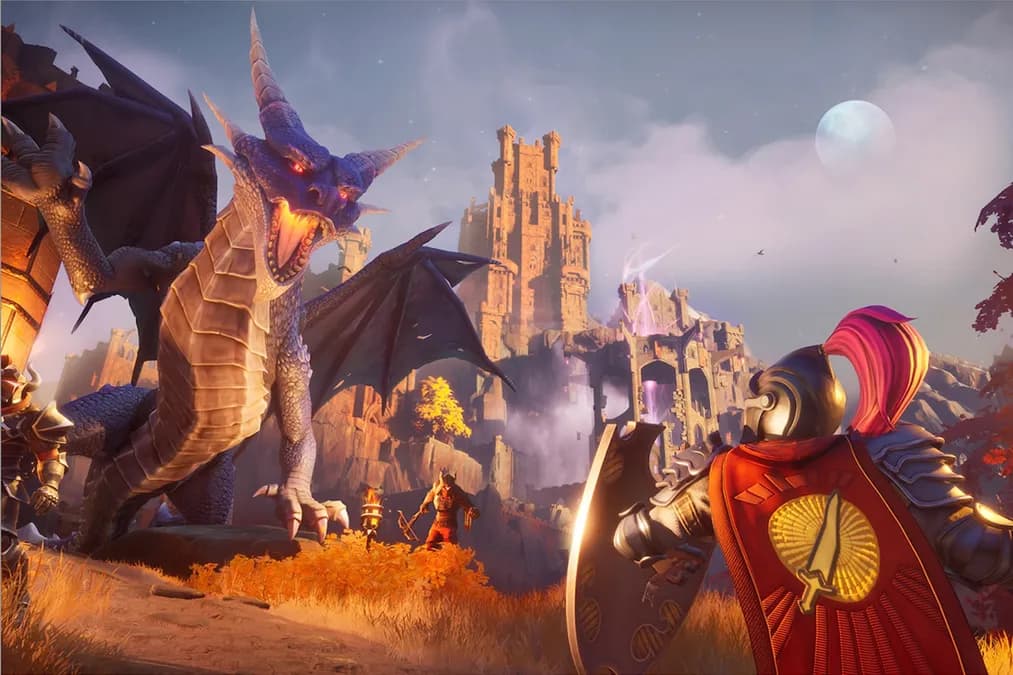
The franchise's visual identity has also shifted over time. RuneScape's original look was deliberately humble, constrained by the technology of the early 2000s. Later versions, including Old School RuneScape and RuneScape 3, refined that aesthetic while preserving a distinctive stylized tone. An animation series has to honor that identity without simply replicating it — viewers expect more visual sophistication than a game engine from 2001 can offer, but they also expect the world to feel like the one they remember.
Tone is another open question. RuneScape's storytelling ranges from broad comedy to genuine cosmic horror, often within the same quest line. The franchise has never been afraid of tonal whiplash, which gives an adaptation unusual latitude — but also means there is no single obvious template to follow. Whether Lyrical Animation leans into the game's humor, its mythic scale, or something in between will shape how fans receive the result.
What This Signals for Jagex's Broader IP Strategy
Jagex has spent years diversifying RuneScape beyond a single game. The company maintains two active versions of the MMORPG, has experimented with spin-offs, and has cultivated a transmedia presence through novels, tabletop tie-ins, and merchandise. The animation series fits that pattern, but it also represents a more ambitious step: a narrative product designed for viewers who may never log in at all.
That distinction is strategically significant. Game companies increasingly treat their IP as portfolios rather than products, and Jagex's move reflects a broader industry logic. A successful series can drive new player acquisition, deepen engagement among lapsed players, and create licensing and merchandising opportunities that a game alone cannot sustain. It also gives Jagex a story to tell investors, partners, and platform buyers about the franchise's ceiling.
The partner choice reinforces the strategy. Rather than handing the property to a legacy studio and hoping for the best, Jagex brought in a creator with a direct line to the audience it wants to reach. White's involvement signals that the company understands where gaming culture actually lives in 2026 — on YouTube and Twitch as much as on consoles and PCs. That instinct, more than any single creative decision, may determine whether the project lands.
RuneScape Joins a Growing Wave of Game Adaptations
Game-to-screen adaptations have moved from punchline to priority across the entertainment industry. Analyst firms including Ampere Analysis and Nielsen have tracked steady growth in commissioning activity around gaming IP, with streaming platforms treating established game franchises as lower-risk bets in a crowded content market. The logic is straightforward: games arrive with pre-built audiences, rich world-building, and recognizable brands, all of which reduce the marketing burden on a new series.
The results have validated that thinking. The Last of Us demonstrated that a prestige drama could honor its source material and reach viewers who had never played the game. Arcane, produced by Fortiche for Riot Games, became a critical and commercial success and proved that animation could carry a game franchise into mainstream cultural conversation. Cyberpunk: Edgerunners achieved something similar for CD Projekt Red, driving renewed interest in the underlying game years after launch. On the film side, The Super Mario Bros. Movie and Sonic the Hedgehog franchise showed that family-friendly game adaptations could generate billions.
RuneScape occupies a different niche than any of those properties. It is older than most of them, and its cultural footprint is defined less by a single narrative than by accumulated player memories. That makes it a harder adaptation but also a more interesting one. If Lyrical Animation can crack the format, RuneScape could join the small group of game franchises that successfully translated a live-service world into a passive-viewing experience.
What Fans Should Watch For Next
Three things will determine how this project develops. The first is format — whether the series targets a streaming platform, a broadcast partner, or a direct-to-consumer release, and whether it is scripted narrative, anthology, or something more experimental. Jagex has not disclosed those details, and the choices will shape everything downstream.
The second is creative leadership. An animation series lives or dies on its showrunner, writers, and art direction. Lyrical Animation's team, and how much input White and Jagex hold over the creative process, will be the clearest signal of what kind of show this becomes. Announcements about key hires typically follow initial project reveals within months.
The third is timeline. Animation production is slow, and a series announced in 2026 may not reach viewers until 2028 or later. Fans should expect a long runway of casting news, first-look images, and teaser material before anything substantial arrives. For a franchise that has kept players engaged for more than two decades, patience is a familiar virtue.
Related coverage
Source: Variety