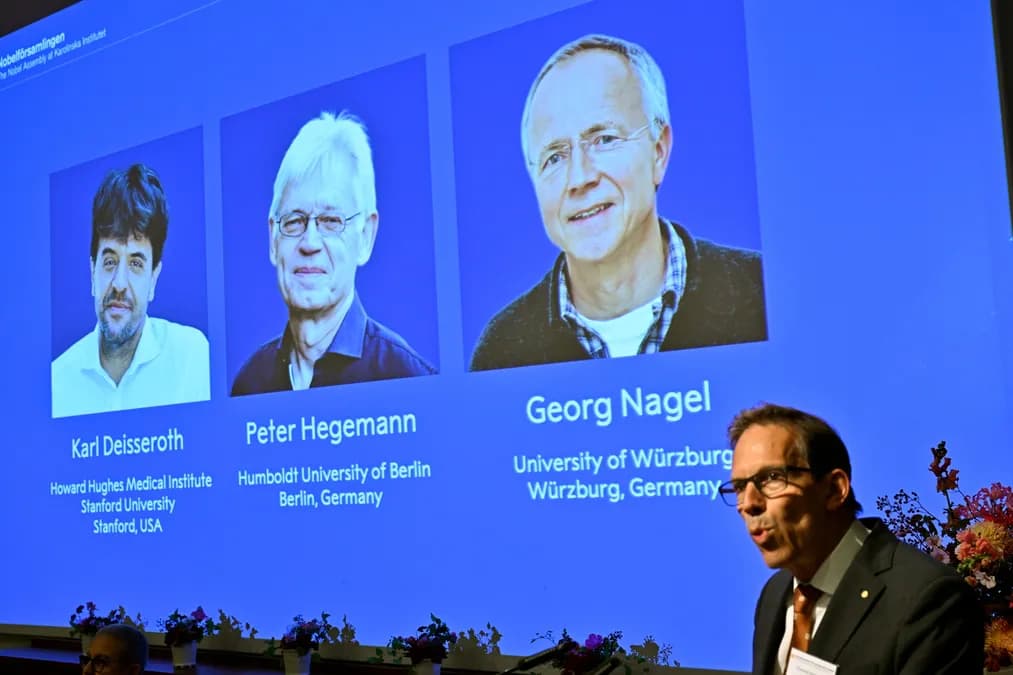
Three Scientists Win 2026 Nobel Prize in Medicine
On Monday, October 6, 2026, the Nobel Assembly at the Karolinska Institute in Stockholm announced that the Nobel Prize in Physiology or Medicine had been awarded to three scientists for their foundational work on how the brain governs the activity of individual nerve cells. The honor, one of the most prestigious in science, recognized research that has reshaped how researchers understand the brain's most fundamental operating logic — the moment-to-moment decision of whether a single neuron fires or stays silent.
The announcement came at a moment when neuroscience commands more public and clinical attention than at any previous point in the field's history. Neurological and psychiatric conditions — Alzheimer's disease, Parkinson's disease, depression, epilepsy, and dozens of related disorders — now affect hundreds of millions of people globally. The Nobel Prize medicine 2026 laureates addressed a question that sits beneath all of them: through what molecular and cellular mechanisms does the brain manage to turn the activity of its individual nerve cells on, or off, with such extraordinary precision?
The Nobel Committee cited the trio for discoveries that illuminate the regulatory architecture of neural circuits. Their work did not emerge from a single dramatic experiment but from years of painstaking investigation into the signaling systems that govern synaptic control, the molecular switches governing inhibition and excitation, and the dynamic states that allow neural networks to process information rather than simply relay it.
The Science Behind the Discovery: How the Brain Controls Nerve Cell Activity

The human brain contains approximately 86 billion neurons — a figure established through stereological counting studies published by Brazilian neuroscientist Suzana Herculano-Houzel and her collaborators. Each of those neurons can form thousands of synaptic connections, placing the total number of synapses somewhere in the range of 100 trillion. What makes that number more than a curiosity is what it implies for regulation: at every one of those connection points, the brain must decide, in milliseconds, whether an arriving signal will push a target neuron toward firing or hold it back.
Read next Medicaid Work Requirements Strand Cancer SurvivorsThat decision is not random. It is governed by precise biochemical machinery — receptor proteins, ion channels, and signaling cascades that respond to neurotransmitters released across the synaptic cleft. The balance between excitatory signals, primarily carried by glutamate, and inhibitory signals, primarily carried by gamma-aminobutyric acid (GABA), determines whether a neuron reaches the threshold required to generate an action potential. Tip that balance too far in either direction and the consequences are immediate: too much excitation produces seizures; too much inhibition shuts down circuits essential for cognition, motor control, or autonomic function.
The laureates' research clarified the mechanisms the brain uses to maintain that balance — how individual nerve cells sense their own activity levels and adjust their responsiveness accordingly, how signaling molecules communicate the need to scale up or dial down, and how regulatory proteins execute those adjustments at the level of individual synaptic contacts. This is not a simple toggle. It is a continuous, adaptive, context-sensitive regulation operating across billions of cells simultaneously.
Understanding those mechanisms at the molecular level is precisely the kind of knowledge that downstream therapeutic development requires. You cannot design a drug to modulate a system you have not yet characterized.
Why This Research Matters for Medicine and Society

Epilepsy alone affects approximately 50 million people worldwide, according to figures maintained by the World Health Organization. In roughly one-third of cases, existing medications fail to control seizures adequately — a gap that persists in large part because the field has lacked a complete picture of how the brain's inhibitory controls are maintained or lost. The laureates' work on nerve cell activity regulation speaks directly to that gap.
The implications extend well beyond epilepsy. Major depressive disorder, which the WHO estimates affects more than 280 million people globally, has long been associated with dysregulation of synaptic signaling — particularly in circuits involving the prefrontal cortex and limbic structures. Emerging therapeutic approaches, including newer classes of antidepressants targeting glutamatergic signaling, were built on foundational insights of exactly the type the Nobel committee recognized this week.
Alzheimer's research offers another concrete example. One of the field's consistent findings is that the disease disrupts the excitatory-inhibitory balance in hippocampal circuits before gross neurodegeneration becomes visible on imaging. Understanding how healthy brains regulate that balance — the question the 2026 laureates spent careers answering — is a prerequisite for understanding what goes wrong, and when intervention might be possible.
The societal dimension matters too. Neurological conditions account for a growing share of disability-adjusted life years in both high- and low-income countries. Basic science of this kind does not produce therapies on its own, but it creates the conceptual and mechanistic vocabulary without which applied research stalls.
A Brief History of Nobel Prizes in Neuroscience
The relationship between the Nobel Prize in Physiology or Medicine and neuroscience stretches back more than a century. In 1906, Camillo Golgi and Santiago Ramón y Cajal shared the prize for their work documenting the architecture of the nervous system — establishing, at the histological level, that neurons are discrete cells connected by contact rather than continuous tissue. That foundational insight made everything that followed possible.
In 1963, Alan Hodgkin, Andrew Huxley, and John Eccles were recognized for discoveries concerning the ionic mechanisms of the nerve cell membrane — work that explained, in electrochemical terms, how an action potential is generated and propagated. Four decades later, in 2000, the committee awarded the prize to Arvid Carlsson, Paul Greengard, and Eric Kandel for their contributions to signal transduction in the nervous system, a recognition that brought synaptic biochemistry into the Nobel canon. The 2014 prize went to John O'Keefe and May-Britt and Edvard Moser for the discovery of place cells and grid cells — the brain's internal positioning system.
The 2026 Nobel Prize medicine laureates join a lineage that has, at each step, pushed understanding of the brain from gross structure down toward the molecular. The arc is clear: from anatomy to electrophysiology to biochemistry to the real-time regulatory mechanisms that govern moment-by-moment neural computation.
Reactions From the Scientific Community
Across neuroscience departments and research institutes, the response to Monday's announcement was swift and substantive. The significance of the laureates' work was not a revelation to specialists — it had been recognized in the field for years through major awards, high-citation publications in journals including Nature Neuroscience and Neuron, and the downstream influence of their findings on both basic and clinical research programs.
Researchers working on synaptic plasticity, neural circuit disorders, and computational neuroscience described the prize as confirmation that the field had identified a genuine mechanistic substrate — not merely a descriptive correlation — for the regulation of brain activity. The distinction matters. Much of neuroscience over the past two decades has been characterized by association studies: observations that particular patterns of activity accompany particular cognitive or pathological states. The laureates' contributions belong to a different category: they describe mechanism, not correlation. They explain how the switch works, not merely that it exists.
That mechanistic depth is what makes work of this kind durable. Correlations can be overturned by better measurement or larger samples. Mechanisms, once robustly established, tend to anchor entire programs of subsequent inquiry.
What Comes Next: Future Research and Applications
The announcement of the Nobel Prize medicine 2026 will almost certainly accelerate funding and institutional attention toward the regulatory mechanisms the laureates identified. That is one of the practical functions the prize serves — directing resources toward areas that a global scientific jury has judged foundational.
In the near term, pharmaceutical researchers are likely to revisit the laureates' published findings as a blueprint for target identification. Regulatory proteins and receptor subtypes implicated in the on/off control of nerve cell activity represent a catalog of potential intervention points. The challenge, as always, will be specificity: achieving the desired effect in a target circuit without disrupting the countless other circuits that share the same molecular machinery.
Longer-range applications may involve closed-loop neurostimulation systems — devices that can monitor local neural activity and deliver precisely timed interventions to modulate that activity in real time. Those systems require exactly the mechanistic understanding the laureates provided in order to be programmed effectively. Brain-machine interfaces, similarly, depend on a granular understanding of how neural populations encode and suppress information.
What the three scientists awarded the 2026 prize have contributed, ultimately, is clarity. The brain's complexity has never been in doubt. What was missing — and what their careers addressed — was a precise account of one of its most consequential regulatory mechanisms. That account now exists, and the work it will enable has barely begun.
Related coverage
Source: NPR Topics: News