Nvidia Shield TV Pro Jumps to $299 Overnight
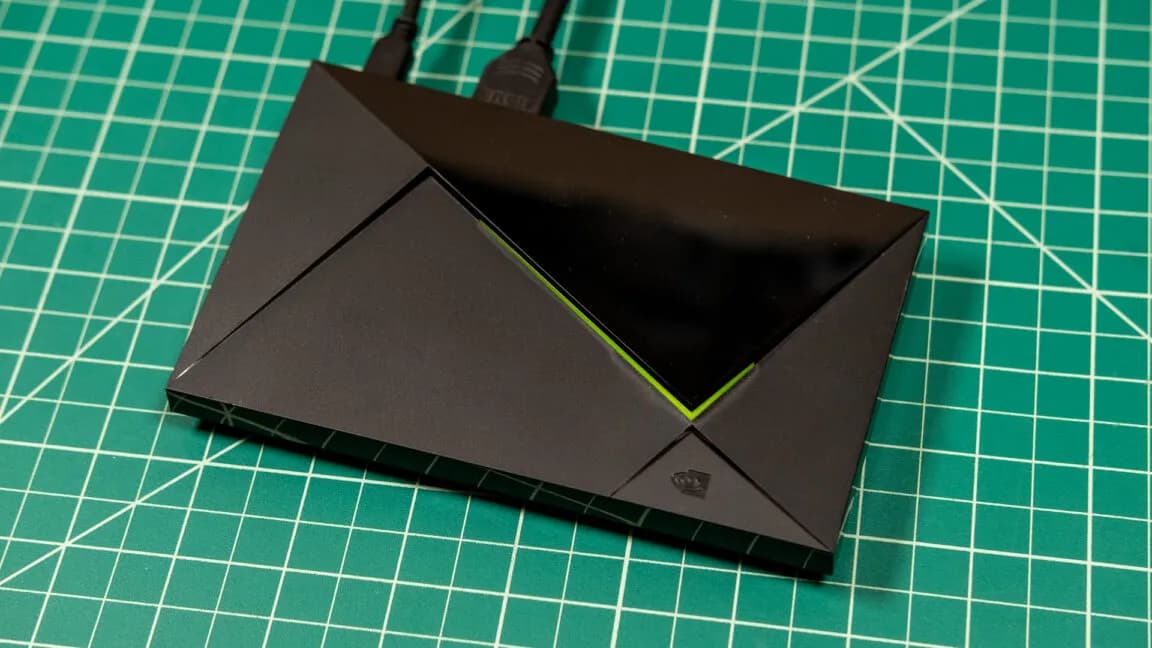
Effective October 2, 2026, the Nvidia Shield TV Pro costs $100 more than it did the day before. No new hardware. No new software. No significant feature additions. Just a price tag that now reads $299.99 — up from the $199.99 it carried since its 2019 launch. That is a 50 percent increase on a device whose core silicon is seven years old.
Nvidia confirmed the change without ambiguity. "Starting October 2, SHIELD Pro will be priced at $299. The cost of components, including memory, has increased substantially across the industry," a company spokesperson told Ars Technica. The statement is brief, but its implications reach well beyond a single streaming box. In 2026, memory costs have become an unavoidable variable in consumer electronics pricing — and no device, regardless of age, is immune.
The non-Pro Shield TV, which launched at $149.99, was already discontinued before this announcement. That leaves the Pro as the only entry point into Nvidia's streaming ecosystem, and that entry point just became significantly steeper.
AI's Role in Rising Memory and Component Costs
The generative AI boom has done something economists call demand-side compression: an enormous, fast-moving category of buyers — hyperscalers, cloud providers, AI accelerator manufacturers — competes for the same DRAM and NAND flash supply chains that consumer electronics depend on. When those buyers can pay significantly more per unit, foundries and memory manufacturers naturally prioritize their orders. What remains for consumer-grade devices comes at a premium.
Read next Laika's Wildwood: Stop-Motion Fantasy at TIFF 2026Market research firms like TrendForce and DRAMeXchange have tracked how AI server deployments have reshaped memory pricing across multiple quarters. The trend has been consistent: high-bandwidth memory for AI training and inference draws allocation away from standard DDR and LPDDR pools used in embedded systems, streaming devices, and budget electronics. The downstream effect is felt by manufacturers of products that were never designed to compete with data center hardware — products exactly like the Shield TV Pro.
This is not a new dynamic, but 2026 represents a point where the pressure has become visible at the consumer level in ways that were previously limited to laptops and mobile devices. A $100 overnight increase on a media streamer with a Tegra X1+ chip — a processor architecture that predates large language model proliferation entirely — is a tangible signal of how deep the supply chain disruption runs.
The irony is layered. Nvidia, which arguably more than any other company has accelerated demand for AI hardware through its data center GPU business, is also the company now passing AI-related cost increases on to consumers buying its oldest, least AI-intensive product. The Shield TV Pro does feature AI upscaling — a genuine selling point that improves lower-resolution content on 4K displays — but the memory cost pressures driving this price hike have nothing to do with that feature. They stem from the industrial-scale AI appetite that Nvidia's own data center division has helped create.
A Brief History of the Nvidia Shield TV Pro
When the current-generation Shield TV Pro arrived in 2019, it represented a meaningful evolution in Android TV streaming hardware. Built around the Tegra X1+ system-on-chip, it offered hardware decoding support for nearly every major codec in use at the time, including HDR formats that were still finding their footing on competing devices. The AI upscaling feature — branded as DLSS-adjacent in the living room context — was a genuine differentiator, intelligently enhancing 1080p and sub-4K content for modern televisions.
At $199.99, the Shield TV Pro sat at the high end of the streaming device market, but the hardware justified the premium. Its Plex Media Server capabilities, gamepad support, and compatibility with a wide ecosystem of Android TV applications gave it staying power that cheaper competitors from Roku and Amazon simply could not match at the time.
Seven years later, that same device ships in 2026 with the same Tegra X1+ processor, the same form factor, and the same fundamental feature set. The Android TV ecosystem has matured around it, and Nvidia has continued software support — a genuine rarity in consumer electronics — but the underlying silicon has not changed. The Shield TV Pro's longevity is both its most impressive attribute and the source of its current pricing awkwardness.
Is the Shield TV Pro Still Worth $299 in 2026?
This is where the calculus gets complicated for prospective buyers. At $199.99, the Shield TV Pro was easy to recommend despite its aging hardware, because nothing else in the streaming device space offered comparable media server integration, codec support depth, or Android TV flexibility. At $299.99, the comparison set changes.
The Tegra X1+, while still capable for streaming workloads — which are not particularly demanding — faces genuine competition from newer ARM-based media processors that support more recent codec standards, including AV1 hardware decoding, which has become increasingly relevant as YouTube and streaming services expand AV1 delivery. The Shield TV Pro's 2019 silicon predates widespread AV1 hardware decode support.
Against similarly priced 2026 competitors in the $250–$300 range, the Shield Pro's strengths remain distinct but narrower. It still handles local media playback better than most, and its Plex server functionality is legitimately unmatched at any price in the Android TV category. For that specific user — someone with a local media library who values codec depth and long software support windows — the Shield TV Pro at $299 remains defensible.
For the casual streamer who primarily uses Netflix, Disney+, and YouTube, the value proposition at $299 is harder to sustain. That buyer can find capable alternatives at half the price. The $100 increase does not add features; it simply reflects supply chain economics that fall hardest on consumers who don't have alternatives within the Shield ecosystem.
What This Means for Consumers Shopping Streaming Devices
The Nvidia Shield TV Pro Nvidia Shield TV Pro price increase is not an isolated event. It is a preview of a broader repricing wave working its way through consumer electronics as AI-driven memory demand keeps component costs elevated. Any device that uses DRAM or NAND flash — which is to say, essentially every computing device — is exposed to this pressure. Streaming boxes are simply the latest category to make the pressure visible.
For consumers actively shopping right now, a few practical considerations apply. First, if you already own a Shield TV Pro, the case for upgrading to a hypothetical future model — should Nvidia ever ship one — becomes weaker at $299, not stronger. Current owners are sitting on hardware that Nvidia has continued to support and that remains functional, and paying $299 for the same hardware they might already have makes little sense.
Second, the discontinuation of the non-Pro Shield TV removes the entry-level option entirely. There is no longer a way to enter the Nvidia Shield ecosystem at a moderate price. It is $299 or nothing, which is a meaningful shift in market positioning for a product line that once offered genuine price stratification.
Third, for shoppers comparing streaming devices across brands, the gap between the Shield Pro and competitors has widened in price terms even as it has narrowed in capability terms. A buyer who does not specifically need Plex server functionality or the depth of codec support the Tegra X1+ platform provides through years of driver maturation should evaluate whether the premium still makes sense for their use case.
What Nvidia's spokesperson did not address — and what remains the most pointed question — is whether the company plans any hardware refresh for the Shield line. At $299.99, a seven-year-old device running 2019 silicon crosses a threshold where buyers reasonably expect something newer. Memory cost pressures do not change that expectation. They only make the conversation more uncomfortable for the company trying to charge a premium for hardware that was already aging when the AI boom began.
Source: Ars Technica - All content