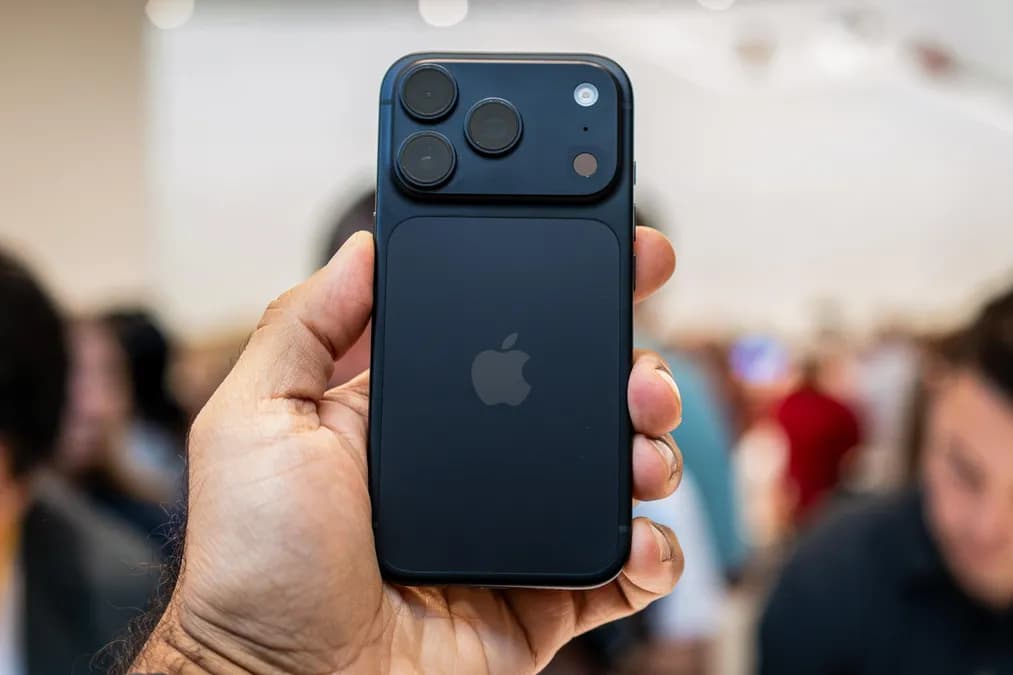
OpenAI's answer to Muse arrived this week, and it looks a whole lot like Muse dressed up in a suit and tie. That single sentence, pulled from The Verge's reporting on the launch, tells business buyers almost everything they need to know about the strategic bet OpenAI is making. Dots is a business-first product — for now, at least — and it carries a minimum price tag of $100 per month per user. If that number sounds steep for something that also lets you make a cute little Dot character, consider it a signal: OpenAI is not chasing casual users with this release. It is walking directly onto Muse's turf.
What Is OpenAI Dots and Why It Matters
When Gartner projected that global spending on generative AI would approach $644 billion in 2025, the headline number obscured a quieter shift: the money is migrating from experimentation budgets to line-of-business software contracts. Dots lands squarely in that migration. According to The Verge, the product is OpenAI's direct response to Muse, and its positioning is unmistakably commercial rather than consumer. The company even framed the launch as a "business-first" product, a phrase that matters because it sets expectations about roadmap priorities, support commitments, and feature velocity.
Why does this matter beyond another product launch? Because the business AI segment has, until now, been defined by tools built for teams rather than by the labs that build the underlying models. Muse established itself as the connective tissue between general-purpose models and the workflows knowledge workers actually perform. OpenAI entering that space means the company is no longer content to sell raw capability through an API and let others own the interface layer. Owning the interface means owning the renewal conversation.
The timing is not accidental. Enterprise adoption surveys from McKinsey have consistently shown that while a majority of organizations now use generative AI in at least one function, far fewer have scaled it across the enterprise. The gap between pilot and production is where vendors win or lose. Dots is OpenAI's attempt to close that gap with a packaged product rather than a platform.
Business-First by Design: The $100/Month Entry Point
A $100 monthly minimum places OpenAI Dots in a specific tier of the SaaS market, and the comparison set is instructive. Microsoft 365 Copilot has been widely cited at $30 per user per month, while ChatGPT's own Team tier sits lower still. Salesforce's Einstein offerings and Google's Gemini for Workspace bundle at various enterprise price points, but $100 per seat is closer to specialized vertical software than to general productivity add-ons. That is a deliberate choice.
Read next Laika's Wildwood: Stop-Motion Fantasy at TIFF 2026Consider what $100 buys in the current market. For a ten-person team, Dots costs $12,000 annually before any usage-based overage. That is real budget, the kind that requires a line item and an owner. Procurement teams will treat it accordingly, which means OpenAI must justify the price with measurable output rather than novelty.
The pricing also tells you who OpenAI does not expect to buy Dots. Individual power users, students, and hobbyists have cheaper paths into the company's models. The $100 floor filters the addressable market down to organizations that already have an AI budget and a mandate to spend it. That is a rational play. Analyst commentary on OpenAI's enterprise strategy has repeatedly noted that the company needs recurring, high-margin revenue to support its compute obligations, and consumer subscriptions alone cannot carry that load. Dots is a margin instrument as much as a product.
Cost per seat, however, is only half the equation. The real benchmark is cost per completed task. A $100 tool that eliminates three hours of weekly document work for a $75-per-hour knowledge worker pays for itself in under two weeks. That math is what OpenAI's sales motion will lean on, and it is why the business-first framing matters more than the sticker price.
The Muse Comparison: Familiar Features, Different Packaging
The Verge's characterization — Muse dressed up in a suit and tie — is more than a clever line. It describes a product strategy. Dots replicates the core Muse experience, including the personalization layer that lets users create a Dot character, and wraps it in commercial packaging: business tiers, administrative controls, and the pricing structure described above.
For buyers, feature parity with Muse is good news and bad news. The good news is that Dots arrives with a proven interaction model rather than an experimental one. Teams that already understand Muse will find Dots legible on day one. The bad news is differentiation. If Dots looks and behaves like Muse, the purchase decision collapses into questions about model quality, data handling, integration depth, and price — areas where both vendors will claim advantage.
There is a structural difference worth watching. Muse built its product around a model-agnostic posture, which appealed to enterprises wary of vendor lock-in. OpenAI, by contrast, controls both the model and the interface. That vertical integration can produce tighter performance and faster feature shipping, but it also concentrates risk. A CIO who standardizes on Dots is making a multi-year commitment to one company's roadmap, not just to one product.
Character creation, the feature both products share, is a tell. It signals that personalization is not a gimmick but a core retention mechanism. Users who invest time tuning a character develop switching costs that have nothing to do with contracts. Muse proved the mechanic works. OpenAI is now testing whether it works when the same user is also an expense line.
Personalization vs. Productivity: Can Dots Do Both?
Enterprise software has a long history of failing to be two things at once. Slack tried to be a productivity platform and a social hub; the social half drew regulatory scrutiny and IT headaches. Dots is attempting something similar: a tool that employees customize for personal affinity while administrators manage it for business output. Whether those goals coexist depends on governance.
The practical tension shows up in data. Personalized assistants accumulate conversational context, preferences, and behavioral signals. In a consumer product, that is a feature. In a regulated enterprise, it is a compliance surface. Dots buyers will need clarity on retention windows, training data usage, and audit logging — details that The Verge's report does not address and that procurement teams will demand before signing.
There is also the productivity question that bedevils every AI assistant: measurement. Deloitte's enterprise AI research has found that organizations struggle to quantify returns from generative tools because time savings accrue to individuals while costs accrue to departments. A $100 seat makes that asymmetry worse. The tool must demonstrate value at the organizational level, not just the user level.
Still, the combination is not naive. Personalization drives daily active use, and daily active use drives the task volume that eventually produces measurable returns. Muse has demonstrated that personalized assistants achieve stickier engagement than generic chatbots. If Dots inherits that engagement while adding administrative controls, it could resolve the tension rather than succumb to it.
Implications for the Enterprise AI Market
OpenAI moving into the business assistant category changes the competitive map in three ways.
First, it compresses the middle layer. Startups that built businesses on wrapping frontier models in workplace-friendly interfaces now face a supplier that is also a competitor. Muse is the most visible example, but the category includes dozens of smaller vendors. When your model provider ships your product, your differentiation must come from domain depth, integration, or service — not from the wrapper itself.
Second, it raises the stakes on pricing transparency. At $100 per month, Dots sets an anchor. Competitors can undercut it, but doing so invites questions about capability. They can also price above it, but only with demonstrable superiority. Either way, buyers gain leverage in negotiations that previously lacked a clear reference point.
Third, it validates the business-assistant category for enterprise budgets. Gartner's spending forecasts have consistently shown that AI investment is consolidating around fewer, larger vendors as pilot fatigue sets in. A major lab entering the segment accelerates that consolidation. For CIOs, fewer vendors means simpler procurement and harder exit decisions.
The counterargument deserves airtime. Vendor concentration carries risk: pricing power shifts to the supplier, roadmap influence shifts away from the customer, and outages become enterprise-wide events. The enterprises that navigated the cloud consolidation of the 2010s learned this lesson expensively. Dots buyers should negotiate accordingly.
Should Businesses Consider Switching to Dots?
For organizations already standardized on OpenAI's models, Dots is the path of least resistance. The integration story is simpler, the vendor relationship consolidates, and the personalization features arrive proven by Muse's track record. For organizations committed to model diversity, the calculus is harder. Adopting Dots means deepening dependence on a single supplier for both intelligence and interface.
Three questions should drive the evaluation. What is the fully loaded annual cost per team, including usage overages? What governance controls exist for the personalization data Dots accumulates? And what is the migration cost if the relationship sours in eighteen months? Teams that can answer those questions with numbers rather than assurances are ready to pilot.
The broader signal is clear regardless of individual purchasing decisions. OpenAI has stopped ceding the business workflow layer to partners and competitors. Dots is not a consumer product with a business plan attached — it is a business product that happens to include a consumer-style feature. Muse should take notice, and so should every vendor whose value proposition rests on making someone else's model usable at work.
Related coverage
Source: The Verge