What Is the Ozone Layer and Why Does It Matter?
About 90% of Earth’s ozone sits not at street level, where ozone is a pollutant, but high in the stratosphere, roughly 15 to 35 kilometers above the surface. That thin, invisible band is the ozone layer: a natural shield that absorbs most of the Sun’s biologically damaging ultraviolet radiation before it reaches people, crops, plankton, and ecosystems.
Ozone is a molecule made of three oxygen atoms, written as O3. It forms when sunlight splits ordinary oxygen molecules, allowing free oxygen atoms to recombine with O2. The result is a constantly renewing layer, not a fixed shell. If all atmospheric ozone were compressed to sea-level pressure, NASA Ozone Watch explains, it would be only about 3 millimeters thick.
That fragile scale matters. The ozone layer absorbs nearly all UV-C radiation and a large share of UV-B radiation, the wavelengths most strongly associated with DNA damage, sunburn, cataracts, immune suppression, and skin cancer. The World Health Organization reports that more than 1.5 million skin cancer cases and over 120,000 skin-cancer-related deaths occurred globally in 2020. WHO also estimates that a 10% decrease in ozone levels could lead to an additional 300,000 non-melanoma skin cancer cases and 4,500 melanoma cases.
The Antarctic “ozone hole” is not a literal opening in the sky. It is a seasonal region of extreme thinning, defined by NASA as the area where total column ozone falls below 220 Dobson Units. A Dobson Unit measures the number of ozone molecules in a column of air overhead. Normal global values are often around 300 Dobson Units, while the deepest Antarctic episodes have fallen far lower. NASA has reported that the thinnest satellite-observed Antarctic ozone values reached about 73 Dobson Units in 1994.
The ozone layer matters because it turns a hostile radiation environment into a livable one. Without it, daily life at Earth’s surface would mean far higher biological stress: more damaged DNA, weaker crop yields, declining marine productivity, faster degradation of materials, and heavier health burdens in countries already exposed to high ultraviolet radiation.
The Science Behind Ozone Depletion
In 1985, British Antarctic Survey scientists Joe Farman, Brian Gardiner, and Jonathan Shanklin published measurements showing that springtime ozone above Antarctica had dropped dramatically. The discovery came from routine observations at Halley Research Station, where ozone readings had become so low that Shanklin later described them as “falling off the graph.”
Read next How Climate Change Works: A Clear ExplainerThe cause was a class of long-lived industrial chemicals: chlorofluorocarbons, halons, carbon tetrachloride, methyl chloroform, and related ozone-depleting substances. For decades, CFCs were widely used in refrigeration, air conditioning, aerosol propellants, foam blowing, and solvents. They seemed safe near the ground because they were stable, nonflammable, and not acutely toxic. That stability was the problem.
CFCs can survive long enough to drift into the stratosphere. There, intense ultraviolet radiation breaks them apart, releasing chlorine atoms. Halons release bromine. One chlorine atom can destroy thousands of ozone molecules through catalytic reactions before being deactivated. Bromine is even more efficient, atom for atom.
Antarctica became the center of the crisis because its stratosphere has a distinctive winter chemistry. During the polar night, temperatures fall low enough for polar stratospheric clouds to form. Chemical reactions on the surfaces of those clouds convert relatively inert chlorine compounds into reactive forms. When sunlight returns in spring, chlorine monoxide reactions accelerate ozone destruction. The polar vortex then traps the chemistry over Antarctica long enough for a broad ozone hole to develop.
This is why the Antarctic ozone hole appears seasonally, usually from August through October, rather than staying the same size year-round. Meteorology matters. A colder, stronger vortex tends to produce a larger and deeper ozone hole; a warmer or more disrupted vortex can limit depletion even when long-lived chlorine and bromine remain in the atmosphere.
The chemistry is well tested. Ground instruments, balloons, aircraft campaigns, and satellites all point to the same mechanism. NASA’s Ozone Watch program tracks the annual hole using satellite observations, mapping both the area below 220 Dobson Units and the minimum ozone values. NOAA also measures ozone-depleting gases directly in the atmosphere, allowing scientists to test whether policy controls are showing up in the air itself.
They are. NOAA measurements show that ozone-depleting substances in the Antarctic stratosphere have fallen substantially from their peak. Stephen Montzka, a senior scientist at NOAA’s Global Monitoring Laboratory, said in a NASA-NOAA update that levels of ozone-depleting substances in the Antarctic stratosphere have declined by about one-third since peaking around 2000, relative to pre-ozone-hole levels.
That is the core science: long-lived chemicals released at the surface reached the stratosphere, sunlight unlocked chlorine and bromine, polar chemistry amplified the damage, and international controls are now slowly reducing the atmospheric burden.
The Connection Between Ozone Depletion and Climate Change
Many of the chemicals that damaged the ozone layer also trapped heat with extraordinary efficiency. CFC-11 and CFC-12, for example, are potent greenhouse gases, with global warming potentials thousands of times higher than carbon dioxide over a 100-year period.
That overlap often confuses people. Ozone depletion and climate change are different problems. Ozone depletion is mainly about the loss of stratospheric ozone and increased ultraviolet radiation. Climate change is mainly about rising greenhouse gas concentrations trapping heat in the lower atmosphere. Yet the two systems interact.
First, ozone-depleting substances warmed the planet while destroying ozone. By phasing them out, the Montreal Protocol became a climate treaty in practice, even though it was designed to protect the ozone layer. UNEP reported that the global phaseout of nearly 99% of banned ozone-depleting substances has also helped avoid warming. The 2022 WMO/UNEP Scientific Assessment of Ozone Depletion found that the Kigali Amendment’s phasedown of hydrofluorocarbons, which do not destroy ozone but are powerful greenhouse gases, is expected to avoid about 0.3°C to 0.5°C of warming by 2100.
Second, greenhouse gases change the stratosphere. Carbon dioxide warms the lower atmosphere but cools much of the stratosphere. A colder stratosphere can influence ozone chemistry, especially in polar regions where temperature affects polar stratospheric clouds. Climate change can also alter atmospheric circulation, affecting how ozone is transported from the tropics toward higher latitudes.
Third, ozone depletion itself changed climate patterns in the Southern Hemisphere. The Antarctic ozone hole cooled the lower stratosphere over the pole, strengthening the polar vortex and shifting wind patterns. Research assessed by WMO and UNEP links Antarctic ozone loss to changes in the Southern Annular Mode, with effects on temperature, rainfall, and ocean circulation across parts of the Southern Hemisphere.
A concrete example is southern Australia. Studies have linked ozone-driven circulation shifts to changes in summertime weather patterns, including poleward shifts in storm tracks. Ozone recovery is expected to moderate some of those changes, though rising greenhouse gases are pushing the climate system in other directions.
The replacement chemicals add another layer. Hydrofluorocarbons, or HFCs, were adopted because they did not contain chlorine and therefore did not destroy the ozone layer. But many HFCs are powerful greenhouse gases. The Kigali Amendment to the Montreal Protocol, adopted in 2016, targets that problem by phasing down HFC production and consumption.
The lesson is precise: fixing ozone depletion does not solve climate change, but the ozone treaty prevented additional warming and showed that atmospheric problems can respond to binding global rules.
The Montreal Protocol: A Global Success Story
On September 16, 1987, governments adopted the Montreal Protocol on Substances that Deplete the Ozone Layer. It became one of the rare environmental agreements with universal ratification, and UNEP describes it as regulating nearly 100 man-made ozone-depleting chemicals.
The treaty worked because it combined science, deadlines, trade rules, financial support, and regular updates. It did not freeze policy at the knowledge level of 1987. Parties strengthened controls through amendments and adjustments as evidence grew, adding more chemicals and accelerating phaseout schedules.
The results are measurable. UNEP says nearly 99% of banned ozone-depleting substances have been phased out. Earlier UNEP materials reported that countries phased out over 98% of 96 ozone-depleting substances. The exact percentage depends on the accounting period and substance list, but the direction is unmistakable: industrial production and consumption of the most damaging chemicals have collapsed.
A major reason was the Multilateral Fund, created to help developing countries meet treaty obligations. It supported technology transfer, equipment conversion, training, and policy capacity. That mattered because ozone-depleting substances were embedded in everyday infrastructure: refrigerators, chillers, fire suppression systems, foams, solvents, and medical products.
The United States offers a case study in implementation. Under the Clean Air Act and Montreal Protocol obligations, the U.S. Environmental Protection Agency phased out production and import of most Class I ozone-depleting substances and set staged reductions for HCFCs. EPA’s “worst-first” approach targeted HCFC-22, HCFC-141b, and HCFC-142b because of their higher ozone depletion potential within the HCFC category.
China offers another instructive example. In the late 2010s, atmospheric monitoring detected unexpected emissions of CFC-11, a chemical already banned for new production. Scientific detective work using atmospheric measurements helped trace a significant share of the emissions to eastern China. Enforcement actions followed, and later studies found emissions had declined. The episode showed both a weakness and a strength of the system: illegal production can happen, but global monitoring can expose it.
The Montreal Protocol succeeded because the world did not wait for perfect certainty. Scientists identified the risk, industry developed substitutes, governments set binding controls, and atmospheric monitoring verified progress. That sequence remains one of the clearest examples of science-based environmental policy producing a planetary-scale benefit.
Current State of Ozone Layer Recovery
In 2025, NASA and NOAA ranked the Antarctic ozone hole as the fifth smallest since 1992, with an average area of about 10.27 million square miles, or 26.60 million square kilometers. That still covered an area larger than North America. Recovery is real, but the ozone hole has not vanished.
NASA Ozone Watch data show large year-to-year swings. The 2024 Antarctic ozone hole reached its annual maximum extent on September 28, covering about 8.5 million square miles, or 22.4 million square kilometers, according to NASA and NOAA. The 2023 hole was larger, reaching about 10 million square miles, or 26 million square kilometers, near its seasonal maximum. Weather, temperature, volcanic aerosols, wildfire smoke, and polar vortex strength can all influence a given year.
That variability is why scientists focus on long-term trends rather than one season. Paul Newman, a senior NASA ozone scientist and former co-chair of the Scientific Assessment Panel to the Montreal Protocol, has described recent years as showing ozone holes that form later, break up earlier, and trend smaller than in previous decades. NOAA’s Stephen Montzka put the caveat plainly in a 2024 NASA-NOAA assessment: the ozone layer is “still far from being fully healed.”
The 2022 WMO/UNEP Scientific Assessment provides the benchmark. It projects that total column ozone will return to 1980 values around 2040 for the near-global average, around 2045 in the Arctic, and around 2066 over Antarctica, assuming continued compliance with the Montreal Protocol and its amendments.
Why does Antarctica take longer? The chemistry there is more severe, the polar vortex isolates air more effectively, and long-lived chlorine and bromine compounds remain in the atmosphere for decades. CFC-12, for example, has an atmospheric lifetime of roughly a century. Even after emissions stop, the atmosphere clears slowly.
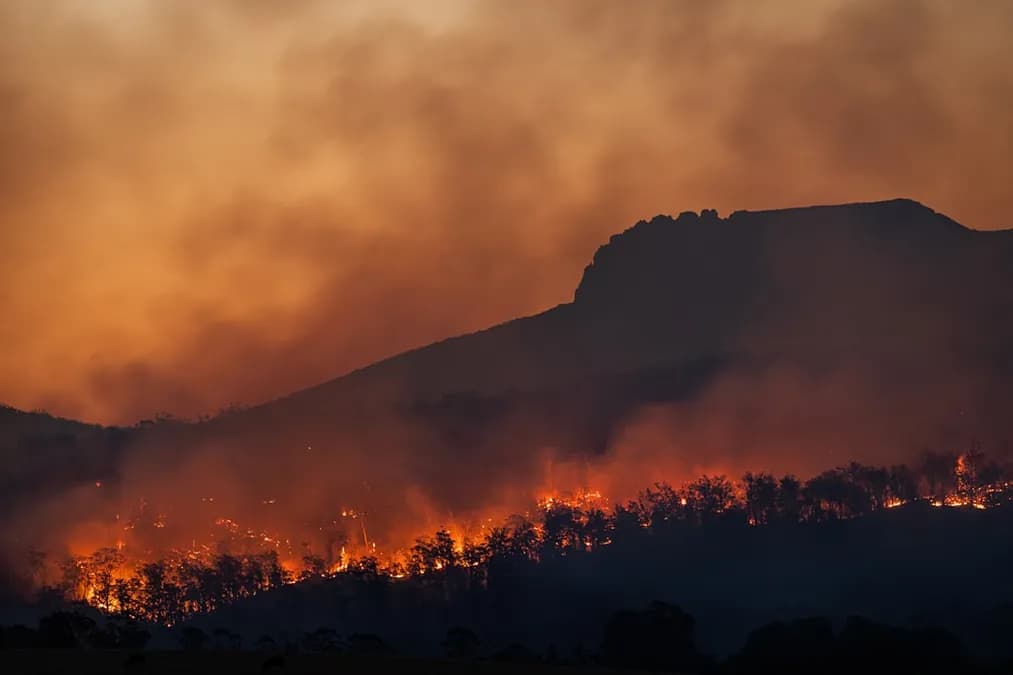
There are also emerging complications. The 2022 Hunga Tonga-Hunga Ha’apai volcanic eruption injected large amounts of water vapor into the stratosphere, and scientists continue to study its effects on ozone chemistry. Major wildfires, including the 2019-2020 Australian fires, have also raised questions about smoke-driven stratospheric chemistry. Proposed geoengineering methods such as stratospheric aerosol injection could affect ozone recovery as well; the WMO/UNEP assessment warns that strong aerosol injection scenarios could reduce Antarctic ozone.
The current state is therefore mixed but encouraging. The chemical drivers are declining. The treaty is working. Annual holes still appear. Full recovery remains decades away.
Health and Environmental Impacts of Ozone Depletion
A 10% decline in ozone could produce hundreds of thousands of additional skin cancer cases, according to WHO estimates. That single statistic captures the human stakes of stratospheric chemistry.
Ultraviolet radiation damages DNA. When the body repairs that damage correctly, the cell survives. When repair fails, mutations can accumulate. Over time, UV exposure increases the risk of basal cell carcinoma, squamous cell carcinoma, and malignant melanoma. Non-melanoma skin cancers are more common; melanoma is less common but more likely to be fatal.
WHO reports that one in every three cancers diagnosed worldwide is a skin cancer. It also states that in 2020, more than 1.5 million skin cancers were diagnosed globally and more than 120,000 people died from skin cancer. Ozone thinning raises risk by allowing more UV-B radiation to reach the surface.
The burden is not evenly distributed. WHO notes that malignant melanoma rates in white populations generally rise with decreasing latitude, where UV exposure is stronger. Australia is a stark example: historically high ambient UV levels, outdoor lifestyles, and a large fair-skinned population have produced some of the world’s highest melanoma rates. WHO has reported that melanoma rates in Australia are more than 10 times the rates in Europe for women and more than 20 times for men.
Eyes are vulnerable too. WHO estimates that 15 million people worldwide are blind due to cataracts, and about 10% of those cases may be due to ultraviolet radiation exposure. Increased UV also contributes to photokeratitis, pterygium, and other eye conditions.
Ecosystems absorb the damage quietly. UV-B can impair photosynthesis in some plants, reduce crop quality, and affect seedlings. Crops such as soybeans, wheat, and rice vary in sensitivity, but higher UV stress can reduce productivity under certain conditions. In the ocean, phytoplankton are especially important. They form the base of marine food webs and contribute substantially to global carbon cycling. Increased UV-B can harm phytoplankton growth and reproduction near the surface, with ripple effects through fisheries and marine ecosystems.
Materials suffer as well. UV radiation degrades plastics, rubber, wood coatings, fabrics, and paints. More UV means faster weathering, higher maintenance costs, and shorter product lifetimes, especially in infrastructure exposed to strong sunlight.
The Montreal Protocol prevented those risks from escalating. UNEP has stated that without the treaty, ozone depletion would have increased tenfold by 2050 compared with current levels, leading to millions of additional cases of melanoma, other cancers, and cataracts. That avoided future is one of the treaty’s most important public health achievements.
What Individuals and Governments Can Do to Protect the Ozone Layer
A household air conditioner can still matter to the ozone layer if it contains old HCFC refrigerant and is serviced poorly. The biggest gains now come from preventing leaks, recovering refrigerants, destroying obsolete chemicals, and enforcing trade rules.
Individuals can start with cooling equipment. Old refrigerators, freezers, heat pumps, vehicle air conditioners, and building chillers may contain ozone-depleting refrigerants or high-warming replacements. Proper servicing matters. Technicians should recover refrigerant rather than vent it. Equipment should be recycled through certified programs. Leaks should be repaired, not repeatedly topped off.
Consumers can also choose products and services that avoid ozone-depleting substances. In many countries, CFCs are no longer legal in consumer aerosols, but older imported equipment, foams, or specialty products may still carry risk. Fire suppression systems using halons should be maintained carefully and replaced with safer alternatives where feasible.
Sun protection remains necessary even as the ozone layer recovers. The UV Index, developed by WHO, UNEP, WMO, and the International Commission on Non-Ionizing Radiation Protection, gives a daily measure of ultraviolet risk. Practical steps are simple: seek shade during peak sun, wear protective clothing and sunglasses, use broad-spectrum sunscreen, and avoid tanning beds. Ozone recovery will lower one category of risk over time; it will not make UV exposure harmless.
Governments have larger responsibilities. They can strengthen customs enforcement against illegal refrigerant trade, require refrigerant recovery and destruction, train technicians, update building and appliance standards, and support the transition to low-global-warming cooling technologies. Cooling demand is rising fast as heat waves intensify, so refrigerant policy now sits at the intersection of ozone protection, climate mitigation, and public health adaptation.
The Kigali Amendment is central. By phasing down HFCs, countries can reduce climate forcing while preserving ozone gains. But alternatives need care. Some low-warming refrigerants are mildly flammable, toxic at high concentrations, or require different equipment standards. Good policy pairs climate ambition with safety training and clear technical codes.
Atmospheric monitoring also needs sustained funding. The CFC-11 episode showed that treaties require measurement. Satellites, ground stations, aircraft, and flask sampling networks give scientists the evidence needed to catch unexpected emissions and verify recovery. Cutting those systems would weaken one of the main reasons the Montreal Protocol has worked.
Protection is no longer about banning a few aerosol sprays. It is about managing the long tail of old chemicals, preventing illegal production, choosing climate-safe substitutes, and keeping the scientific watch intact.
Future Outlook: When Will the Ozone Layer Fully Recover?
The 2022 WMO/UNEP Scientific Assessment projects full recovery to 1980 ozone levels around 2066 over Antarctica. The near-global ozone layer is projected to recover earlier, around 2040, while the Arctic is projected around 2045.
Those dates are not guarantees. They assume continued compliance with the Montreal Protocol, successful control of remaining ozone-depleting substances, and no major new disruption from unregulated emissions or risky atmospheric interventions. Still, they represent one of the strongest signs of environmental repair on a planetary scale.
The world has already passed several milestones. Ozone-depleting substance concentrations peaked and began declining. The most damaging CFCs have been phased out for new production. Satellite data show the Antarctic ozone hole is no longer worsening as it did in the late 20th century. NASA and NOAA’s recent rankings of smaller ozone holes in 2024 and 2025 fit the expected long-term recovery pattern, even with year-to-year variability.
The remaining work is slow because the atmosphere remembers. Chemicals released decades ago are still circulating. Some banks of old refrigerants and foams remain in buildings and equipment. HCFC phaseouts are still being completed in some contexts. HFC phasedowns must accelerate to capture climate benefits without backsliding on cooling access.
The future also holds new risks. More rocket launches, very short-lived halogenated chemicals, wildfire smoke reaching the stratosphere, volcanic injections, and geoengineering proposals all require careful study. None overturns the recovery story, but each could complicate it.
The larger meaning of the ozone layer story is not that environmental problems solve themselves. They do not. The recovery now underway was built through measurement, public warning, industry change, diplomacy, finance, enforcement, and persistence across four decades.
The ozone layer is healing because people stopped adding so much of the chemicals that were destroying it. That is the central fact. The same atmosphere that recorded the damage is now recording the repair.
Related coverage