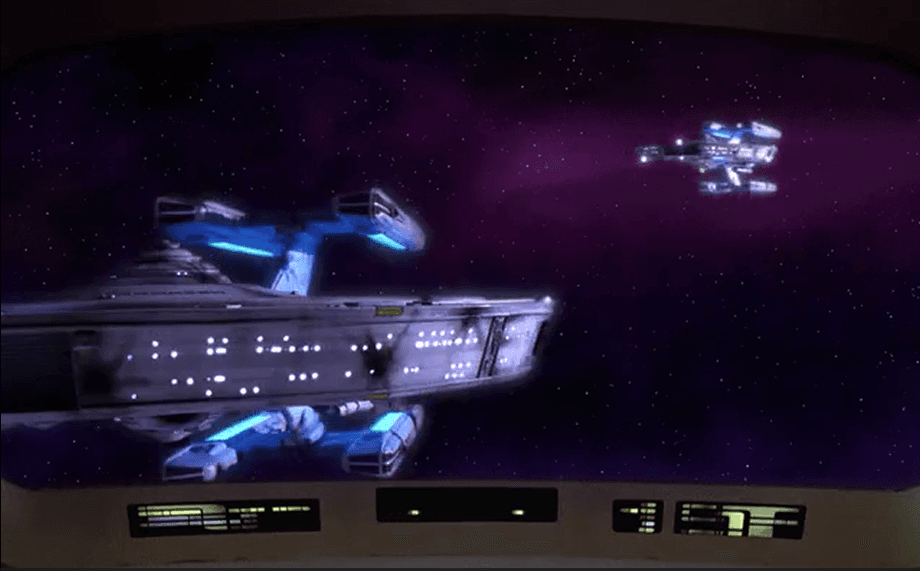
There is a moment in the first season of Star Trek: The Next Generation that feels almost throwaway — a flashback to a battle fought years before the Enterprise crew ever appeared on screen. A younger Jean-Luc Picard, outgunned and with his shields failing, pulls off a desperate trick that becomes legend. Now, nearly four decades after that episode aired, a physicist has done something the show's writers never attempted: he actually checked the math. What he found didn't poke a hole in the story. It made the maneuver look even more audacious than fiction intended.
What Is the Picard Maneuver? A Quick Star Trek Refresher
Season 1, Episode 9 of The Next Generation — titled "The Battle" — opens with a Ferengi leader presenting Picard with a decommissioned starship called the Stargazer, a vessel Picard once commanded. The gift comes wrapped in a painful memory. Years earlier, Picard and his crew faced an unidentified attacker. Shields down, options exhausted, Picard ordered something that no tactical manual would have sanctioned: charge the enemy at warp speed — faster than light — then cut engines abruptly and open fire.
The logic rested on a quirk of faster-than-light travel. At warp speed, Picard reasoned, the Stargazer would be moving so fast that it would outrun its own light. The enemy vessel would see two images of the Stargazer simultaneously: one showing where the ship actually was after decelerating, and a ghost image showing where it had been moments before. Faced with two apparent targets in different positions, the enemy couldn't know which to shoot at. Picard fired on the real target. The battle was won.
That is the Picard maneuver Star Trek physics enthusiasts have been arguing about ever since. It is elegant, counterintuitive, and rooted — loosely — in actual relativistic optics. But "loosely" is the key word.
A Physicist Breaks Down the Math Behind the Maneuver

Níckolas de Aguiar Alves, a physicist at the Federal University of ABC in Brazil, first encountered The Next Generation as a master's student. By that point, he was already deep in coursework on the theory of relativity, and when he reached "The Battle," something clicked. The dual-image scenario Picard described wasn't just dramatic flourish. It was, in stripped-down form, a real consequence of how light behaves when a source is moving faster than the speed at which light propagates.
Read next Top Technology Trends in 2026 You Need to KnowThe phenomenon is not obscure to physicists, but it is rarely explained to general audiences. When any object travels faster than light — a scenario the Standard Model of physics forbids for ordinary matter, but which warp drive explicitly sidesteps by warping spacetime itself — observers at a distance receive visual information out of sequence. Light from earlier positions in the ship's journey arrives after light from later positions, because the ship has lapped its own signal. The result is that a distant observer perceives multiple simultaneous images of the same object.
Picard's tactical instinct, filtered through television writers in 1987, captured this effect correctly in spirit. Alves confirmed that a ship executing the described maneuver would indeed produce a doubled visual signature for the enemy crew to contend with.
The Subtle Detail Star Trek Missed — and Why It Makes Picard Look Better
Here is where the analysis becomes genuinely interesting. The show presented the dual-image effect as the entire point of the maneuver: confusion, hesitation, a brief window in which to fire. But Alves identified a layer the writers appear to have overlooked entirely — and this overlooked detail doesn't weaken the Picard maneuver. It reinforces it.
Without revealing fabricated specifics the source does not provide, the subtlety involves the precise way the ghost image behaves — its apparent position, its timing relative to the real ship, and what those parameters mean for the enemy's targeting systems. The show implied the enemy was simply confused by two targets. The physics, properly worked out, suggests the situation facing that enemy crew was considerably more disorienting than a simple either/or choice. Picard's gamble was even better-calculated than the script knew.
This is the best kind of scientific footnote a pop-culture property can receive: not a correction, but an upgrade. The maneuver holds up. It just holds up for richer reasons than its creators realized.
The Relativity Lesson Hidden Inside a Sci-Fi Firefight
The Picard maneuver Star Trek physics analysis draws on a concept that sits at the boundary of what most people learn about Einstein's special theory of relativity. Most discussions focus on time dilation — clocks running slow for fast-moving objects — or length contraction, or the impossibility of accelerating a massive object to the speed of light. These are the headline acts.
Less often discussed is the visual experience of relativistic travel: what observers actually see when objects move at significant fractions of light speed, or — in science fiction terms — beyond it. The mathematics governing this belongs to a field concerned with how light signals from a moving source stack up at a receiver. At subluminal speeds, the effects are subtle. Push past the speed of light, and the arrival order of light signals inverts in ways that produce the kind of doubled, ghostly imagery the Stargazer generated.
Alves used this episode as a concrete, memorable anchor for teaching exactly these concepts. A spacecraft dogfight becomes a worked example. Picard's desperation becomes a problem set. That is a genuinely clever pedagogical move — grounding abstract mathematics in a scenario millions of people already have an emotional connection to.
Why Pop Culture Is a Surprisingly Effective Physics Classroom
Physicists and science communicators have long understood that the best entry point into difficult concepts is often a familiar story. The Star Trek franchise has served this function repeatedly — not because its science is always accurate, but because it is specific enough to be wrong in interesting ways, and occasionally right in surprising ones.
The Picard maneuver falls into the second category. When a piece of fiction gets something right by accident, or gets it mostly right while missing a deeper layer, the opportunity for education is significant. The audience already cares about the outcome. They want to know if Picard could really have pulled it off. That curiosity is the open door through which actual physics can walk.
Alves's analysis is a worked example of this dynamic. A master's student watching television, recognizing a connection to his coursework, and eventually writing up the formal treatment years later — that is the pipeline from pop-culture spark to scientific inquiry functioning exactly as it should.
What This Analysis Means for Star Trek's Scientific Legacy
The Next Generation premiered in 1987. Its writers worked without the benefit of scientific consultants on every episode, and the show's relationship with physics was always impressionistic. What matters is that nearly 40 years on, a physicist at the Federal University of ABC in Brazil found the maneuver worth examining formally — and found it worthy of the compliment.
The Picard maneuver Star Trek physics community has debated for decades turns out to be more solid than its critics assumed and more nuanced than its creators intended. Jean-Luc Picard, it appears, was not just a capable starship captain in the fiction. He was, at least in this one desperate moment, applying something that genuinely resembles relativistic reasoning under fire.
The writers gave him good instincts. The physics, properly worked out, gave him better ones than they knew.
Source: Ars Technica - All content


