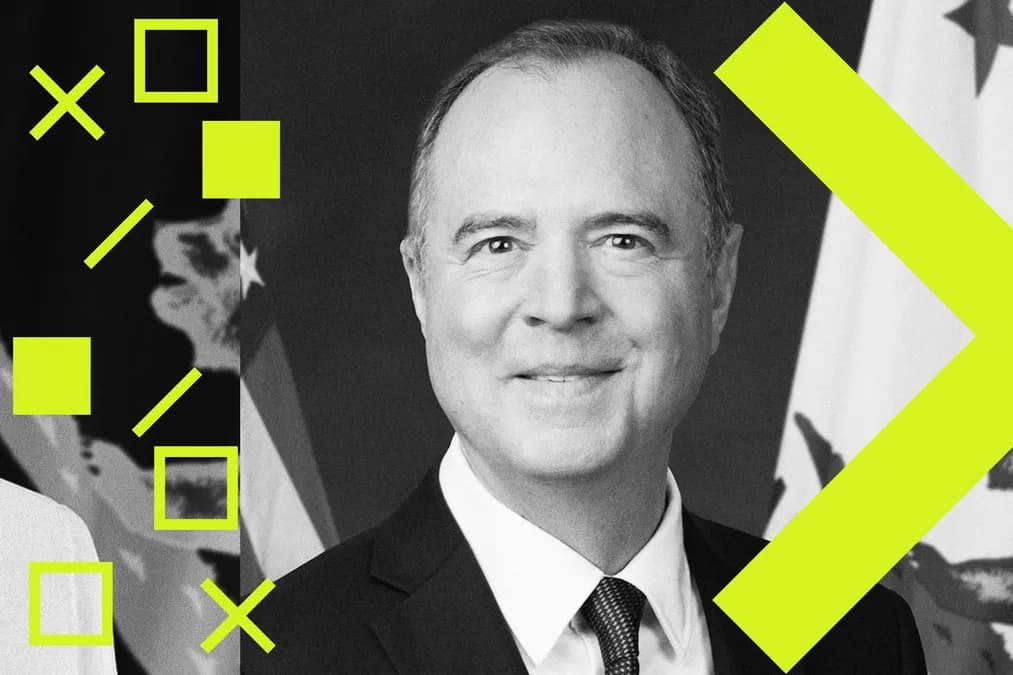
California Senator Adam Schiff is not a new face in rooms where power and accountability collide. He built a national profile prosecuting constitutional crises on the House floor. Now, seated on Senate committees covering intellectual property, antitrust, and privacy and technology, he is applying that same prosecutorial instinct to artificial intelligence — a domain that may define the next decade of American governance as decisively as impeachment defined the last one. In a recent conversation with The Verge, Schiff addressed head-on the question of how Congress might regulate the technology sector at a moment when the political will to do so has rarely been thinner and the stakes have rarely been higher.
Sen. Adam Schiff's Role in Shaping AI and Tech Policy
Few senators sit at the convergence of so many tech-relevant oversight lanes simultaneously. Schiff's committee portfolio spans intellectual property, antitrust, and privacy and technology — a combination that, according to the Congressional Research Service's analysis of Senate Judiciary Committee jurisdictions, gives him formal standing over questions ranging from AI-generated copyright infringement to platform monopoly power to the collection and use of personal data by algorithmic systems.
That breadth matters. Stanford HAI's 2025 AI Index found that Congress introduced more than 180 AI-related bills in a single legislative session, yet the chamber passed almost none of them into law. The gap between legislative activity and legislative output is not accidental; it reflects a fragmentation of jurisdiction across at least a dozen committees, with no single body holding comprehensive authority. Schiff's overlapping committee memberships position him as one of the few senators capable of threading across those silos. The question is whether the political environment allows him to do so.
The Challenge of Regulating AI in a Polarized Congress
Regulating artificial intelligence in the current Congress requires navigating a contradiction: the technology moves faster than any legislative calendar, and the legislature itself is too divided to move at all. A 2024 Brookings Institution analysis found that bipartisan support for AI legislation was highest on narrow issues — deepfake criminalization, child safety, national security applications — and collapsed almost entirely when proposals touched platform liability or content moderation. That pattern has held.
Read next Laika's Wildwood: Stop-Motion Fantasy at TIFF 2026Schiff's challenge, as a Democrat in a Republican-controlled Senate, is not simply drafting good policy. It is finding the coalition that lets good policy move. The tech industry, once a reliable Democratic donor base, has fractured along ideological lines since 2022. Major platform executives have cultivated relationships with conservative leadership, complicating the old assumption that Silicon Valley would tolerate regulation if it came from allies. Schiff represents California, where the industry is headquartered. That gives him standing. It also gives him baggage, depending on who is counting.
The structural problem is that AI oversight requires sustained attention to technical detail — the kind of deliberative work that partisan gridlock makes nearly impossible. Schiff's presence on these committees at least keeps a technically literate voice in the room.
Free Speech, AI-Generated Content, and Legislative Guardrails

The intersection of AI and the First Amendment may be the most legally treacherous terrain in the current policy debate. Courts have not resolved whether AI-generated content carries the same constitutional protections as human speech, and Congress has largely avoided pressing the question.
The Electronic Frontier Foundation has argued consistently that legislation targeting AI-generated speech risks overbreadth — that rules written to stop synthetic disinformation could sweep in protected political satire, artistic expression, and journalism. First Amendment scholar Eugene Volokh has raised parallel concerns, noting that mandating labels on AI-generated content or restricting its distribution could constitute compelled speech or prior restraint under existing doctrine.
For a senator on the privacy and technology subcommittee, these tensions are not abstract. Deepfake pornography, AI-generated election disinformation, synthetic news anchors reading false stories — each scenario involves a different legal theory and a different set of constitutional guardrails. Schiff's committee role puts him in a position to shape how Congress draws these lines. The risk is drawing them poorly: too permissive, and AI-generated manipulation metastasizes; too restrictive, and the legislature hands challengers a First Amendment kill switch. The legislative record on this question is thin because the political cost of getting it wrong is high.
Antitrust and Big Tech: Schiff's Approach to Platform Power
The antitrust dimensions of AI governance may be the most structurally consequential and the least publicly legible. The current AI infrastructure market is dominated by a handful of companies controlling the compute, the foundation models, and the distribution channels simultaneously. A 2024 Federal Trade Commission report noted that the top cloud providers — which are also among the top AI developers — have positioned themselves as essential infrastructure for competitors who must simultaneously pay them for services and compete against their products.
Schiff's seat on the antitrust subcommittee gives him jurisdiction over exactly these questions. Whether the Senate acts on them is a different matter. The GAO has noted in multiple reports that congressional oversight of technology markets is hampered by a lack of technical staff and by committee structures that predate the platform economy. Schiff is not the first senator to sit on relevant committees while watching meaningful antitrust action stall.
Still, the committee perch matters for setting agenda, holding hearings that create public record, and coordinating with the Department of Justice and FTC when those agencies move independently. Antitrust enforcement in AI is more likely to originate from executive agencies than from Congress — but congressional oversight can amplify or constrain what those agencies do.
Schiff on Impeaching Trump and the Intersection of Politics and Tech Accountability
The question of whether Schiff would support impeaching Donald Trump again — the topic surfaced directly in his Verge conversation — reveals something important about how he maps political accountability onto institutional process. Schiff was the lead House manager in Trump's first Senate impeachment trial in 2020. He argued the case with the methodical precision of a prosecutor, and the Senate acquitted along party lines. The exercise did not end Trump's political career. It arguably extended it.
That history informs how Schiff thinks about accountability mechanisms more broadly. The impeachment process, like tech regulation, depends on institutional norms holding under political pressure. When the majority party treats those norms as optional, the formal mechanisms of accountability become theater. Schiff has lived that experience at close range.
The relevance to tech policy is not incidental. Much of what makes platform accountability difficult — the reluctance of majority coalitions to constrain powerful allies, the vulnerability of oversight processes to political manipulation — mirrors what makes congressional accountability difficult. Schiff's dual experience, as an impeachment manager and as a tech oversight legislator, gives him an unusually clear view of how institutions fail when the political incentives run against them.
What Meaningful AI Regulation Could Look Like From the Senate
If Adam Schiff AI regulation efforts are to amount to more than committee hearings and press releases, the legislation will need to be narrower than the ambitions and more durable than the political moment. Brookings scholars have consistently argued that the most achievable federal AI framework would focus on high-risk applications — hiring algorithms, credit decisions, criminal justice tools, healthcare diagnostics — rather than attempting to govern AI as a single unified category.
That approach would let Congress move without resolving every First Amendment, antitrust, and IP question simultaneously. It would also let Schiff's three committee jurisdictions reinforce each other: privacy rules governing training data, IP rules governing model outputs, antitrust scrutiny of market concentration — each working on a different corner of the same problem.
Whether that architecture gets built depends less on Schiff's policy sophistication than on whether enough of his colleagues see the political cost of inaction as higher than the political cost of legislating. That calculus has not yet shifted. Schiff is on the committees, making the arguments, and waiting for the window.
Source: The Verge