What Is Siri AI and When Did It Launch?
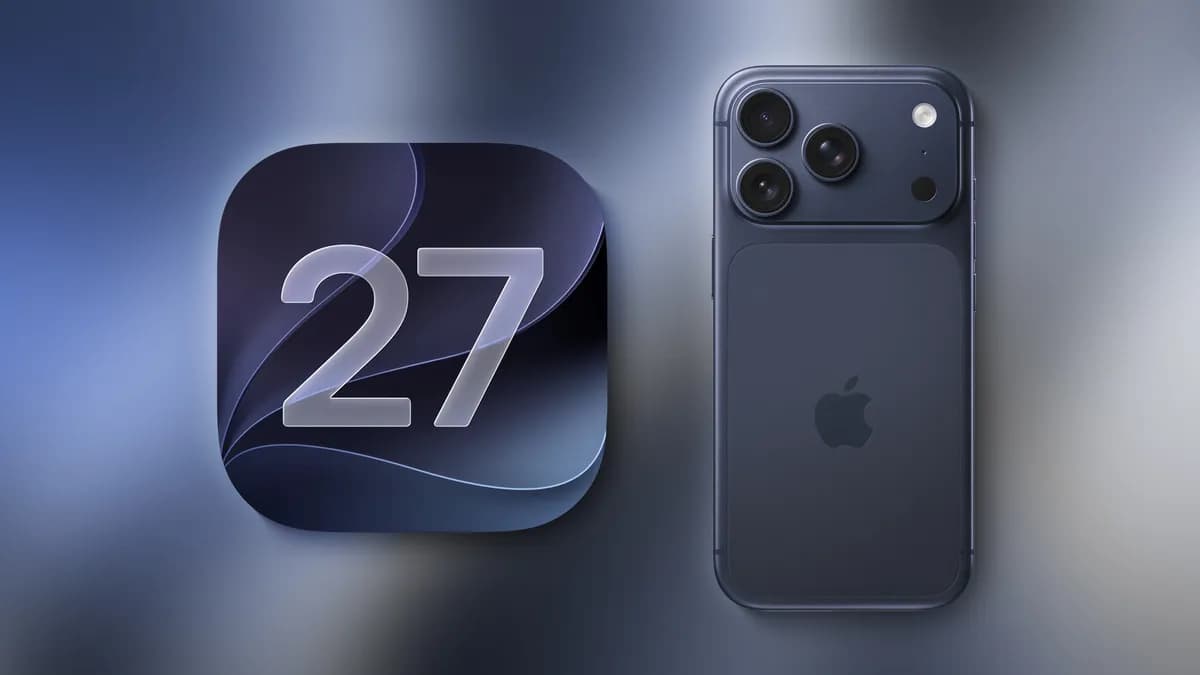
iOS 27 arrived this month and brought with it the most substantial revision to Siri since Apple's voice assistant debuted in 2011. The feature carries a new identity — Siri AI — and with it a set of capabilities that genuinely expand what an iPhone can do on your behalf. But Apple's own rollout strategy tells you something important about where this product actually stands.
Siri AI is not available to everyone who installs iOS 27. Apple is distributing access through a waitlist, and the feature ships with an explicit "beta" label — a designation the company rarely applies to consumer-facing software at launch. That combination of limited distribution and public beta status is not a minor footnote. It signals that Apple knows the product is unfinished, and that the company is essentially asking early adopters to stress-test something it is not yet prepared to stand fully behind.
Historically, major iOS releases attract rapid adoption curves. Analysts at firms like CIRP and Consumer Intelligence Research Partners have documented upgrade rates exceeding 60 percent within the first few weeks of flagship iOS launches. If that pattern holds for iOS 27, tens of millions of iPhone users will encounter the waitlist before they encounter Siri AI itself. That gap between expectation and access is the first source of frustration — and it sets the tone for everything that follows.
What the New Siri AI Can Actually Do
Strip away the promotional framing and Siri AI iOS 27 delivers three capabilities that represent a genuine step beyond the previous assistant.
Read next iPhone Duo's Hidden Fake Bezel Setting ExplainedFirst: knowledge depth. The new Siri can answer questions with significantly richer context, drawing on what appears to be a large-language-model foundation that handles nuanced queries rather than defaulting to a web search redirect. Ask something that previously produced a Bing link and you now get an actual answer.
Second: personal context awareness. Siri AI can search through a user's messages and notes to answer questions requiring personal data — a category previous Siri versions could not approach without specific integrations. Voice assistant researchers at institutions including Stanford's Human-Computer Interaction Group have long argued that personal context is the missing ingredient separating genuinely useful AI assistants from elaborate search shortcuts. The ability to ask "what restaurant did my friend recommend last month?" and receive a correct answer drawn from your own iMessage history is the kind of practical utility that changes daily behavior.
Third: onscreen awareness. Siri AI observes what is on the device's screen and takes action accordingly. Land on an address in a text thread and ask Siri to add it to your calendar. Point it at a phone number in an email and ask it to call. This closes the loop between passive reading and active doing in a way earlier versions never managed.
Together, these three features represent a coherent vision for what an AI assistant can be. The frustration does not come from the vision — it comes from the distance between that vision and the current execution.
Why Siri AI Is Frustrating Early Users
Beta software carries a social contract: users accept rough edges in exchange for early access. Siri AI iOS 27 is testing that patience.
The waitlist mechanism breeds frustration before a single feature is experienced. Users who upgrade expecting a transformed Siri often find a sign-up screen instead. For a capability Apple positioned as a flagship feature of its new operating system, that friction carries real weight. It creates a two-tier iOS 27 experience — those who have Siri AI and those who are waiting — with the division based on nothing more than queue position.
Once users do gain access, the "beta" label proves honest in ways that are sometimes charming and sometimes maddening. Voice assistant behavior is inherently difficult to predict; AI systems trained on broad data sets can produce confident-sounding wrong answers. UX researchers who study conversational AI — including teams at Carnegie Mellon's Language Technologies Institute — have documented a fragility in user trust around voice assistants: a single wrong answer can erode confidence in a way that ten correct answers struggle to repair. Apple is operating precisely in that danger zone.
The personal context features, while genuinely powerful, also surface privacy anxiety. Granting an AI assistant access to your messages and notes is a meaningful permission decision. Apple's rollout has not done enough to build trust before asking for it — onboarding screens that explain the privacy architecture clearly, or that demonstrate on-device processing in terms non-engineers can grasp, are noticeably absent.
There is also a reliability consistency problem. Early adopters report that Siri AI's behavior varies in ways that feel arbitrary: a query that works perfectly on Tuesday fails inexplicably on Wednesday. That unpredictability, more than any single wrong answer, is what turns curious adopters into frustrated critics.
Apple Watch and the Siri AI Experience
The Apple Watch is where the limitations of Siri AI iOS 27 are felt most sharply — and where the gap between the new Siri's potential and its current reality becomes most visible.
On a wrist-worn device, voice interaction is not a convenience feature. It is frequently the only practical interface available. Users who raise their wrist while driving, cooking, or exercising depend on Siri responding quickly and correctly. The new Siri AI, still finding its footing in beta, introduces variability that the Watch's form factor does not forgive.
The character of frustration differs from the iPhone experience. On the phone, a wrong answer is annoying. On the Watch, it can mean a missed navigation turn, a failed timer during a workout, or a message sent to the wrong contact in a hands-free moment. The higher stakes of wrist-based voice interaction amplify every shortcoming.
There is also an asymmetry problem. Siri AI's most impressive capabilities — personal context search, onscreen awareness — are primarily phone-native features. The Watch experience remains a more limited subset of what the iPhone version can do. That gap leaves Apple Watch users feeling like secondary participants in Apple's own AI rollout, which is particularly jarring given how consistently Apple has marketed the Watch as a standalone device deserving of its own experience.
How Siri AI Compares to Competing AI Assistants
Siri AI iOS 27 enters a market that has moved aggressively. Google's AI-enhanced assistant products, Amazon's continued investment in Alexa's intelligence layer, and the wave of third-party AI apps built on models from companies including Anthropic and OpenAI have collectively raised what users expect from a voice assistant. The baseline is higher than it was even eighteen months ago.
The honest assessment is that Siri AI closes distance that had become conspicuous. The knowledge depth and personal context features address gaps that competitors have exploited for years. Android users with Google's assistant had personal context capabilities earlier; Amazon built smart-home and shopping integrations that Siri never matched. Apple is catching up, not leading.
What Siri AI offers that competitors cannot easily replicate is deep, native OS integration. Onscreen awareness is not something a third-party app can match with the same reliability as a feature baked into the operating system itself. Apple's privacy architecture — processing as much as possible on-device rather than routing data through external servers — remains a genuine differentiator for users who care about data sovereignty.
The trade-off is that Apple's privacy-first approach sometimes constrains capability. Competitors willing to route more data through cloud infrastructure can move faster and produce richer responses. That tension between privacy and performance runs through Siri AI's current beta state, and it will not be resolved cheaply.
What Apple Needs to Fix Before Siri AI Leaves Beta
The waitlist should be the first thing Apple retires. Shipping a flagship feature of a major operating system release behind a sign-up queue is fundamentally at odds with how Apple has historically delivered on its promises. If the feature is not ready for everyone, calling it a feature of iOS 27 is misleading.
The beta label needs to earn its removal through demonstrated reliability, not just elapsed time. Apple has a history of iterating on core software across successive point releases — iOS 27.1 and 27.2 will be the proving grounds. The accuracy issues early adopters are surfacing require structured improvement. Users need a way to report errors that feels actionable, not like sending a complaint into a void.
The Apple Watch experience deserves a dedicated roadmap. Siri AI's most transformative capabilities should not feel like phone features awkwardly projected to the wrist. A version of personal context and onscreen awareness adapted for Watch-specific interaction patterns — brief, physical, often hands-occupied — should be a priority for upcoming watchOS updates.
Above all, Apple needs to communicate more honestly about what Siri AI can and cannot do. The gap between capability demonstrated in keynotes and capability experienced in daily life is not new to Siri, but the AI era has made it more visible and more costly. Clear expectation-setting in setup flows, in marketing copy, and in explicit criteria for when the beta label will be removed would do more for long-term user trust than any single feature improvement.
Siri AI iOS 27 is a meaningful step forward. It is also, clearly, an unfinished one. The question is whether Apple moves fast enough to close the gap before users conclude the competition already has.
Source: 9to5Mac