SpaceX Achieves Historic Starship Orbital Milestone
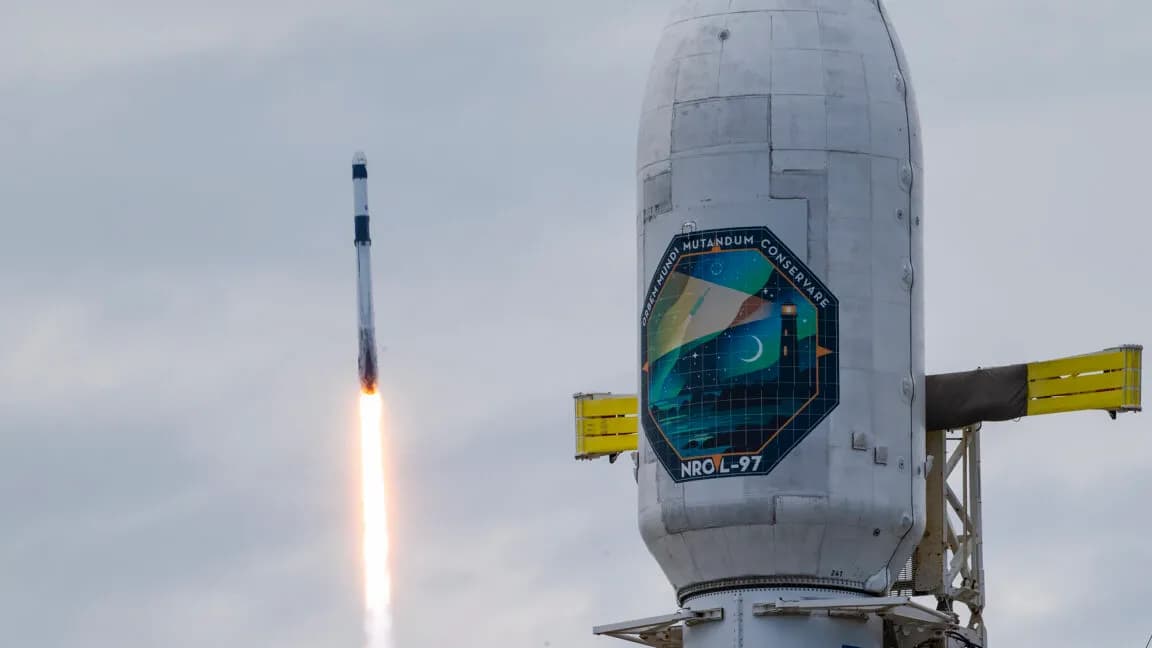
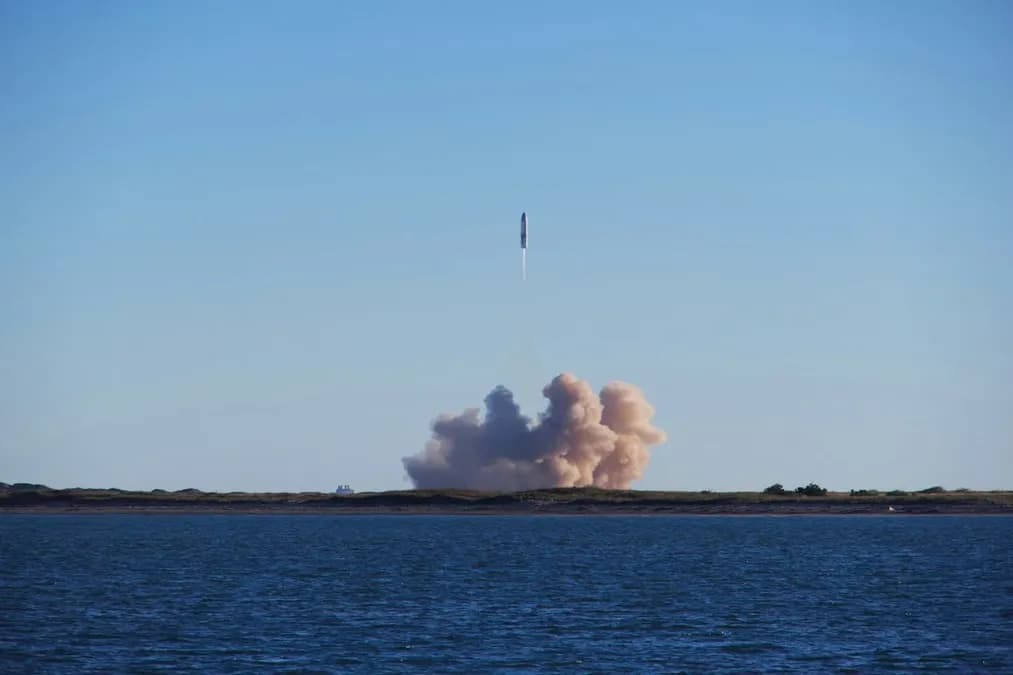
Fourteen flights. That is how many times SpaceX launched Starship before the vehicle finally inserted itself into low-Earth orbit, a threshold the program crossed on a Monday morning flight that had been years and billions of dollars in the making. For anyone tracking the rocket's development arc since its earliest stacked prototypes, the number itself is the story: the most powerful launch vehicle ever built took fourteen attempts to reach a destination that smaller rockets routinely hit on their first try.
The reason was not a failure of propulsion or structural engineering. Starship had, by SpaceX's own accounting, traveled 99 percent of the way to orbit on prior flights. What held the vehicle back was a deliberate choice tied to an operational risk unique to a rocket this large: the possibility of stranding the upper stage in space. A spent Starship stage that cannot be safely deorbited becomes uncontrolled debris of unprecedented mass, and that prospect drove flight controllers to keep earlier trajectories just short of full orbital insertion. The Monday flight retired that constraint.
For observers of heavy-lift engineering, the stranding concern is not a minor footnote. A fully fueled Starship upper stage carries a mass profile that puts it in a category of its own among active launch vehicles, and any derelict object of that size in low-Earth orbit would represent a long-lived conjunction risk for crewed and uncrewed assets alike. Analysis outlets such as NASASpaceflight and Everyday Astronaut have repeatedly framed this as the central operational puzzle of the Starship test campaign — not whether the vehicle can fly, but whether it can be flown in a way that leaves no oversized hazard behind. The orbital insertion on Monday indicates SpaceX has answered that question to its own satisfaction.
Starlink V3 Satellites: What the Orbital Breakthrough Unlocks

The more consequential number from the Monday flight may be 26. That is how many next-generation Starlink V3 satellites Starship deployed once it reached orbit, and the deployment is what converts a technical milestone into a business one. Prior Starlink generations launched on Falcon 9 in batches sized to that rocket's payload envelope. Starship's much larger fairing and greater lift capacity allow a single flight to place a substantially bigger payload into the constellation, which is precisely what the V3 design was built to exploit.
Read next Laika's Wildwood: Stop-Motion Fantasy at TIFF 2026SpaceX has publicly described the V3 satellites as a generational leap in per-satellite throughput relative to the V2 hardware now populating much of the constellation, with capacity improvements that compound across a full launch load rather than arriving one satellite at a time. Those claims have also surfaced in regulatory contexts, where bandwidth and orbital-debris disclosures filed with the Federal Communications Commission give outside analysts a paper trail to compare generations. The upshot is straightforward: a Starship flight carrying V3 satellites delivers far more usable network capacity per launch than the Falcon 9 missions that built the constellation to its current scale.
That matters because Starlink's economics depend heavily on launch cost per unit of capacity. Ground terminals, spectrum rights, and ground-station infrastructure are largely fixed; the variable that moves the needle is how much throughput each rocket ride buys. A vehicle that reaches orbit reliably and deploys V3 satellites in volume changes that calculation in SpaceX's favor, and it does so while freeing Falcon 9 for the commercial and government customers that have made it the workhorse of the industry.
SpaceX's Launch Triple-Header: A Week of Records

Three launches in quick succession — a triple-header — is the kind of cadence that would have been a quarterly achievement for most operators a decade ago. For SpaceX in 2026, it reflects an operational tempo built on reuse, standardized processing, and a launch cadence that has become the company's baseline rather than its ceiling. The Starship orbital flight was the headliner, but the fact that it slotted into a week already carrying other missions says as much about SpaceX's production and range operations as the orbital milestone itself.
Cadence is the metric that separates a demonstration program from an operational one. A rocket that flies once every eighteen months is a research project. A rocket family that supports multiple launches in a single week, across different pads and different vehicle configurations, is infrastructure. SpaceX has spent the past several years converting Falcon 9 into exactly that kind of infrastructure. The arrival of Starship into the orbital rotation, even in an early phase, begins the same transition for the super-heavy class.
Rocket Lab Lands a Major New Contract
Rocket Lab's week went in a different direction, and the contrast is instructive. Where SpaceX is pushing the upper bound of lift capacity, Rocket Lab has built its franchise on the smaller end of the market — dedicated launches for customers who do not need a rideshare berth or a nine-ton payload. The new contract the company secured this week extends that franchise and gives it multi-year revenue visibility, the kind of backlog that investors and customers both read as a sign of institutional staying power.
The strategic logic behind Rocket Lab's niche is that small satellites often need to go exactly where their operators want them, when they want them. Rideshare launches force compromise: a secondary payload accepts someone else's orbit and someone else's schedule. A dedicated small launch buys control over both. That value proposition has kept Rocket Lab relevant even as the broader small-launch sector consolidated, and a major contract award is the market's way of confirming the model still clears.
For industry observers, the pairing of these two stories in a single news cycle captures the shape of the commercial launch market: consolidation at the small end around a few proven operators, and a widening capability gap at the heavy end as Starship moves from test article to orbital vehicle.
Broader Implications for the Commercial Space Industry
The two developments point in the same direction from opposite ends of the mass spectrum. On the heavy side, Starship's arrival in orbit raises the ceiling on what a single launch can deliver, which has downstream effects on constellation economics, national-security launch planning, and the cost assumptions that underpin everything from broadband coverage to orbital research. On the small side, Rocket Lab's contract win affirms that dedicated, responsive launch remains a durable business even when rideshare seats are cheaper per kilogram.
There is also a debris-management angle that the industry cannot ignore. Starship's fourteen-flight path to orbit was shaped in part by the imperative to avoid leaving a spent upper stage adrift. That same imperative is now a governing constraint across the commercial sector, with operators building deorbit capability and controlled-disposal protocols into vehicle design from the outset. The fact that the largest rocket flying treated stranding risk as a gating condition — not an afterthought — sets a precedent the rest of the industry will be measured against.
What's Next for SpaceX and Rocket Lab
For SpaceX, the immediate question is how quickly Starship moves from a single orbital success to a repeatable cadence. Fourteen flights to reach orbit is a data point; the number of flights between that milestone and routine satellite deployment is the one that will define the program's commercial timeline. Starlink V3 deployment at scale is the near-term objective, and each subsequent flight will test whether the orbital insertion achieved Monday becomes the default rather than the exception.
For Rocket Lab, the task is execution against a larger backlog. A major contract raises expectations for cadence and reliability, and delivering on both is what converts a single award into a durable position at the small-launch end of the market. The company's trajectory now depends less on winning the next headline contract than on flying the one it has.
Between them, the week's news offers a compact snapshot of where commercial spaceflight stands: one operator rewriting the upper limits of what a rocket can carry, another proving that precision and dedication still have a market, and an industry increasingly accountable for what it leaves behind in orbit.
Source: Ars Technica - All content