Apple quietly released TestFlight 4.4.0 on September 24, 2026, and the update carries a signal seasoned Apple observers know well: a developer tool refresh loaded with hardware-specific features, dropped weeks before a major product launch.
What's New in TestFlight 4.4.0
TestFlight 4.4.0 landed simultaneously across iOS, iPadOS, macOS, and visionOS — a coordinated rollout that underscores the update's ecosystem-wide significance. The headline addition is landscape orientation support in the TestFlight landscape mode iPhone experience, now available across all iPhone models running iOS 27. That last point matters: Apple did not restrict landscape to a single device class, suggesting the feature is infrastructure work ahead of a phone that demands it by design.
The second notable change is resize support for TestFlight when running inside iPhone Mirroring on a Mac. Users with macOS 27 and an iPhone on iOS 27 can now adjust the TestFlight window size while mirroring — a practical quality-of-life improvement for developers who test builds on a Mac without constantly reaching for their phone. Apple rounds out the release notes with the customary "stability improvements and bug fixes," language that typically masks dozens of small fixes not worth enumerating individually.
The update is free and available now through the App Store.
Why Landscape Mode Points to the iPhone Duo's October Arrival
Here is where context turns a routine app update into a genuine news event. Apple has a well-documented pattern of refreshing TestFlight two to four weeks before a major iPhone hardware announcement. Ahead of the iPhone 15 launch in September 2023, TestFlight received a notable update that pre-staged Dynamic Island support for developers. The same sequence played out before the iPhone 16 launch in September 2024, when TestFlight added features tied to the Camera Control button before any device reached consumers.
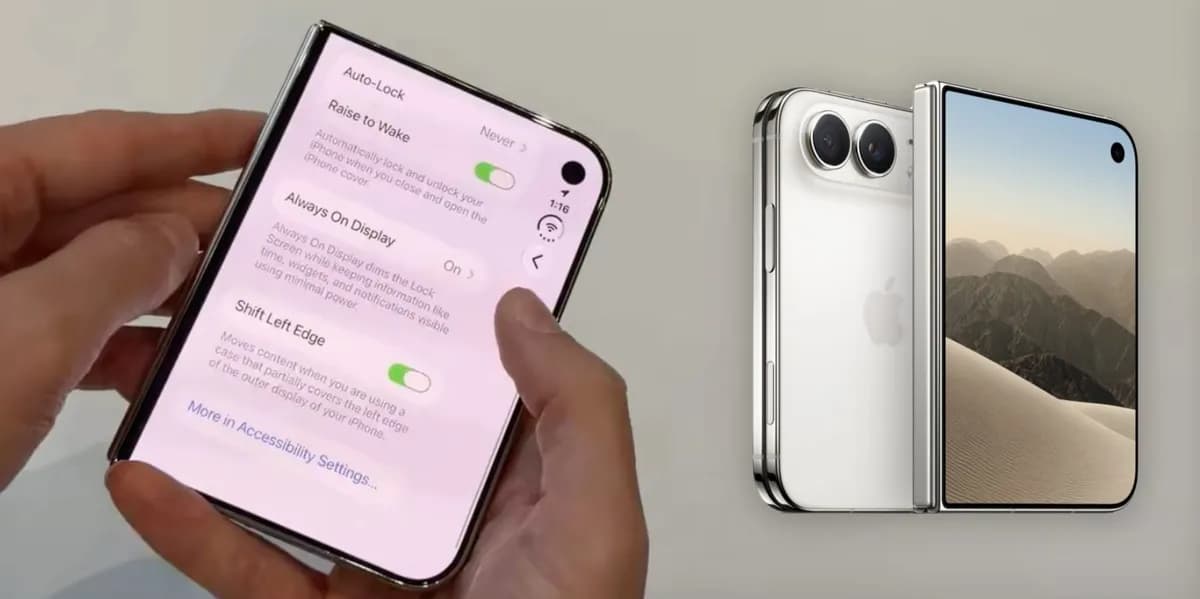
Read next iPhone Duo's Hidden Fake Bezel Setting ExplainedThe TestFlight landscape mode iPhone addition follows that exact playbook. The iPhone Duo — Apple's anticipated multi-screen device — is expected to treat landscape orientation as a primary use mode rather than a rotated afterthought. By shipping landscape support in TestFlight now, Apple gives developers anywhere from two to four weeks to test their apps in landscape before the iPhone Duo ships to customers.
Supply chain analysis reinforces the October window. Ming-Chi Kuo, whose component-level sourcing has correctly predicted Apple launch timing across multiple cycles, has pointed to an October production ramp for the iPhone Duo. Analyst Jeff Pu at Haitong International Securities similarly flagged October as the expected launch quarter, citing assembly partner schedules. TF International Securities has consistently noted that novel form-factor devices require an extended pre-launch build period — a timeline that aligns with production signals now visible in the supply chain.
When developer tool updates, software feature flags, and independent analyst sourcing all converge on the same month, the inference is more than speculation. It is pattern recognition built on a multi-year track record.
iPhone Duo: What We Know About the Upcoming Device
The iPhone Duo is Apple's most structurally ambitious iPhone in the device's nearly two-decade history. The name implies a dual-screen or foldable configuration — a form factor that makes landscape mode not optional, but essential. Users interacting with a wide unfolded display will likely spend the majority of their session time in landscape, making the TestFlight landscape mode iPhone update a direct prerequisite for developers optimizing their apps before launch day.
Beyond the physical form, the Duo is expected to ship alongside iOS 27, which has introduced layout APIs that adapt dynamically to non-standard screen geometries. Developers building for the Duo need to test both orientations, multiple aspect ratios, and fold-state transitions. TestFlight 4.4.0 is the staging ground for all of that work.
Supply chain watchers at TF International Securities have noted that foldable device supply chains typically require six to eight weeks of sustained production before retail availability. If assembly lines are running now, an October retail date is the natural consequence.
iOS 27 and the Expanding Apple Software Ecosystem
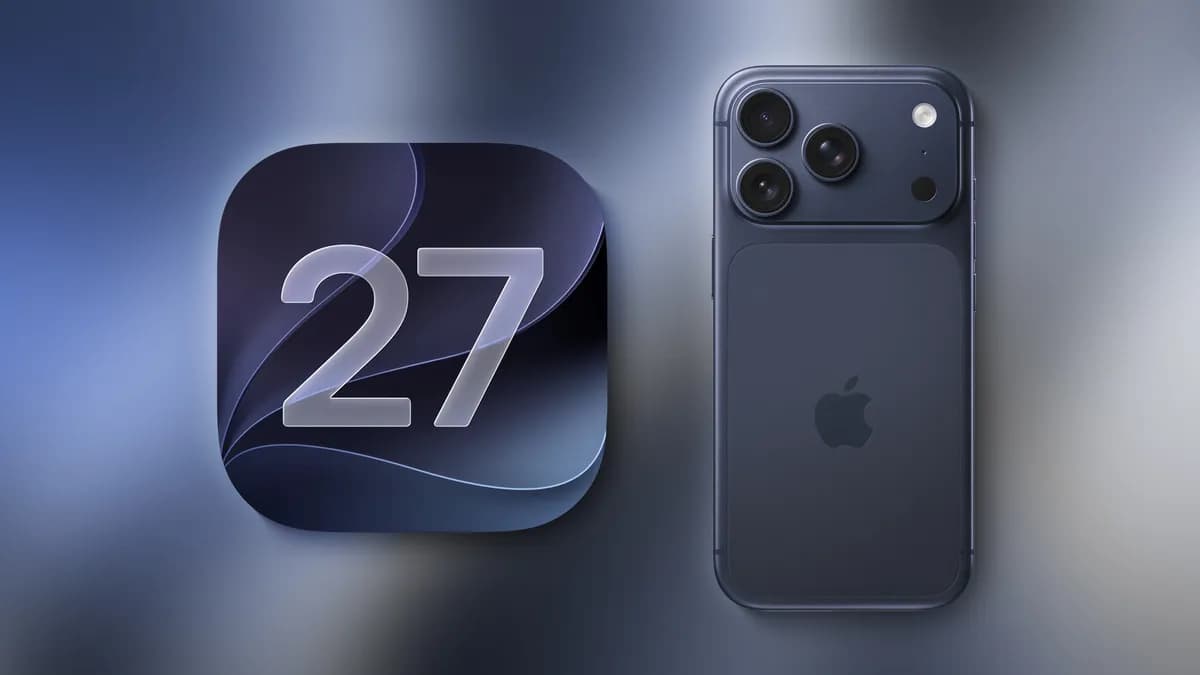
iOS 27 is not simply the operating system that powers the iPhone Duo. It is the platform that ties together Apple's current hardware generation across phone, tablet, Mac, and spatial computing. TestFlight 4.4.0 ships with explicit iOS 27 support, and the iPhone Mirroring resize feature only functions when both the Mac and iPhone are running their respective 27-series operating systems.
That pairing reveals something about Apple's strategy. iPhone Mirroring, introduced with macOS Sequoia in 2024, has gained capability with each software cycle. The ability to resize a TestFlight window during mirroring is a small feature with large implications: it normalizes running and testing phone apps directly from a Mac workflow. For enterprise developers managing large beta programs, reducing physical device-switching overhead is a meaningful productivity gain.
iPadOS 27 and visionOS are also in scope for this TestFlight release, reinforcing that Apple is managing its entire software ecosystem as a unified surface rather than a collection of separate platforms.
What This Update Means for Developers and Beta Testers
Apple has disclosed that TestFlight supports tens of millions of active users and that more than one million apps are tested through the platform annually. Those figures make TestFlight one of the most widely used software distribution networks in the mobile industry, rivaling some production app storefronts in raw scale.
A TestFlight landscape mode iPhone change, therefore, is not a niche tweak for a few thousand developers. It touches every developer with an active iPhone beta — roughly the entire active iOS development community. When Apple prepares developers for a new hardware form factor at this scale, the downstream effect on app readiness at launch day is substantial.
For beta testers who are not developers, landscape support means running TestFlight sideways — a convenience that implicitly confirms Apple expects users to hold certain devices horizontally as a default posture. The resize capability for iPhone Mirroring extends TestFlight into Mac-centric workflows, letting developers on large external displays allocate precise screen real estate to a mirrored iPhone session rather than accepting a fixed window.
What to Watch for at Apple's October Event
Three signals will confirm or complicate the October hypothesis in the coming weeks. First, watch for Apple to send invitations to press and developers — historically those arrive seven to ten days before the event date. Second, monitor iOS 27 release candidate builds for any late-breaking entitlements or capability flags tied to new hardware identifiers. Third, supply chain trackers will note when iPhone Duo components begin appearing in customs and logistics data at volumes consistent with a consumer launch.
The TestFlight landscape mode iPhone update is a small piece in a larger mosaic. On its own, a version bump would be routine. Placed alongside supply chain timelines from Kuo and Pu, the iOS 27 software foundation, and Apple's own consistent two-to-four-week pre-launch developer tool cadence, it reads as precise, deliberate preparation. Apple rarely does anything accidentally at this stage of a product cycle. October is the target, and the clock is running.