The Device Google Never Meant to Sell
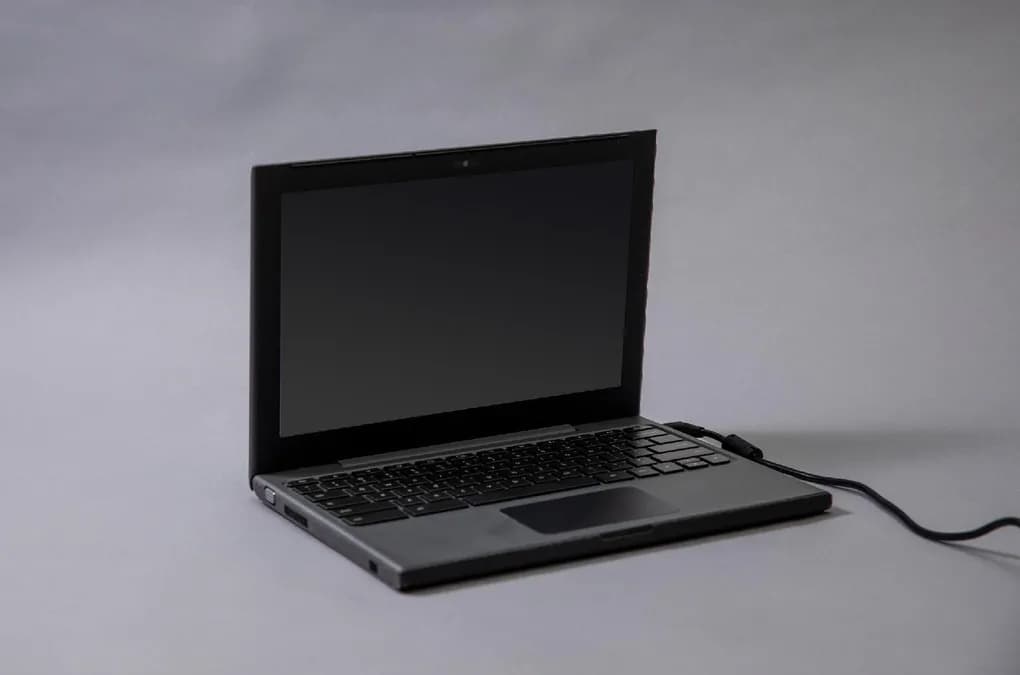
Google never called it a Chromebook. There was no logo on the lid, no retail box, no price tag, and no store that would ever stock it. The Cr-48 Chromebook arrived in late 2010 as something closer to a thought experiment made physical — a matte black slab handed to thousands of volunteer testers with the implicit message: tell us if this idea makes any sense at all.
That idea would eventually reshape how Americans buy laptops, how school districts provision student devices, and how enterprise IT teams think about fleet management. But at the moment the Cr-48 Chromebook landed on doorsteps across the United States, none of that was guaranteed. Google was making a bet, not a product.
It is a story worth revisiting. On a recent episode of Version History, The Verge's flagship podcast chronicling the decisions that defined modern technology, host Nilay Patel explored exactly how the Cr-48 fits into the longer arc of computing history. The conversation is a reminder that the devices we take for granted usually began as somebody's strange, half-formed gamble.
What Made the Cr-48 Different From Every Other Laptop
Pick up any laptop from 2010 and you would find a manufacturer's name stamped prominently somewhere — on the lid, above the keyboard, on the power adapter. Branding was table stakes. Companies spent real money ensuring their logo was the last thing you saw before you opened the lid and the first thing a colleague noticed across a conference table.
Read next Laika's Wildwood: Stop-Motion Fantasy at TIFF 2026The Cr-48 Chromebook had none of that. The machine was deliberately anonymous: flat black chassis, no stickers, no bright chrome accents, no badge of origin. It wasn't an oversight. The absence of branding was a feature, or at least a very deliberate choice. Google wasn't launching a hardware brand. It was auditing a concept.
The physical design matched the philosophical stripped-down approach. The Cr-48 wasn't trying to win design awards. Its value proposition had nothing to do with aesthetics and everything to do with what happened after you lifted the lid. The hardware was a delivery mechanism for Chrome OS — and Chrome OS, in 2010, was an idea so unfamiliar to mainstream users that Google couldn't just put it on a shelf and hope people would understand it.
The Big Idea Behind the Hardware

The big idea was deceptively simple and genuinely radical: a computer that lives entirely in the browser. No local applications in the traditional sense. No installing software, no managing file systems in the way Windows and macOS users understood the concept, no worrying about antivirus software or disk defragmentation. The web was the platform.
For power users in 2010, this sounded like an amputation. For the enormous population of people who used computers primarily to check email, watch videos, write documents, and browse the internet, it was actually a reasonable description of how they already worked. Google was making a calculated argument that the browser had already become the operating system for most people — Chrome OS just made that argument explicit.
Context matters here. Google has a long history of releasing hardware that functions more as a proof of concept than a commercial product. Project Ara explored whether smartphones could be modular, consumer-swappable objects. The Google Glass Explorer Edition dropped experimental AR headsets into the hands of developers and early adopters before the product was remotely ready for mainstream adoption. The Cr-48 belongs to that same tradition: hardware as hypothesis, shipped to the world with an implicit request for feedback.
The Cr-48 pilot program distributed somewhere in the range of 60,000 units to applicants who signed up through Google's website. Recipients weren't paying customers. They were, in effect, paid research subjects — except Google was doing the paying, in laptops.
How the Cr-48 Pilot Program Shaped Chrome OS
Handing tens of thousands of prototype machines to real users under real conditions produces feedback that no internal testing environment can replicate. People used the Cr-48 Chromebook in coffee shops with spotty Wi-Fi. They tried to print documents and discovered the workflow was complicated. They pushed Chrome OS into edge cases that Google's engineers hadn't anticipated because engineers don't live the same digital lives as teachers, students, and small business owners.
That process of friction — of watching real humans bump into the limitations of a browser-first OS — informed how Chrome OS matured in the years that followed. Offline functionality improved. The system's handling of local files grew more sophisticated. Google eventually introduced Android app support, acknowledging that a pure browser environment had real gaps for certain workflows.
None of those evolutions happen without the Cr-48 pilot creating a direct channel between the product and its actual users. In that sense, the device that was never meant to be a product ended up doing something more valuable than any product launch could achieve: it stress-tested a vision in the wild before that vision had a brand attached to it.
The Cr-48's Legacy in the Modern Chromebook Era
The contrast between that anonymous black prototype and what Chromebooks became is stark. By the early 2020s, Chromebooks had captured roughly 60 percent of the United States K-12 education device market, according to research tracked by IDC. School districts from rural Montana to urban Chicago built their one-to-one device programs around Chrome OS hardware. The simplicity that made the Cr-48 feel limited to enthusiasts turned out to be precisely what IT administrators needed when managing thousands of student devices: low maintenance, centralized management, fast boot times, automatic updates.
Enterprise adoption followed a similar arc. Organizations discovered that for workers whose entire workflow ran through a browser — internal dashboards, CRM tools, email, video conferencing — a Chromebook was not a compromise machine. It was a better fit than a full Windows laptop because there was simply less to go wrong.
IDC data through the mid-2020s shows global Chromebook shipments fluctuating with the broader PC market, but the platform's hold on education and certain enterprise segments remained durable. The pilot program that began with a no-name black laptop had seeded an ecosystem with real market weight.
Why the Forgotten Chromebook Still Matters Today
The Cr-48 Chromebook matters not because of what it was, but because of what it asked. It asked whether the assumptions baked into personal computing — local software, complex file systems, brand-name hardware — were necessary features or just inherited habits. The answer, it turned out, was somewhere in the middle. Chrome OS couldn't do everything, but it could do enough for enough people that the question itself was worth asking.
Nilay Patel and the Version History team are right to pull this device back into focus. Product history has a tendency to remember the successes and forget the experiments that made success possible. The first iPhone, the first iPad, the first MacBook Air — these are canonical objects, the kind of hardware that anchors a narrative. The Cr-48 doesn't fit that mold. It was deliberately designed not to.
But that anonymity is exactly the point. Google built a machine with no identity so that an idea could have one. The device was expendable. The concept was not. And when the concept survived contact with tens of thousands of real users — when it turned out that a surprising number of people could live their digital lives inside a browser — the stage was set for everything that followed.
Every Chromebook on a classroom cart today, every IT manager who chose Chrome OS over a Windows fleet, every student who has never touched a traditional operating system — all of it traces back to a forgettable black laptop that Google never actually named. That is a strange kind of legacy. It is also, in its own way, exactly the legacy Google was aiming for.
Source: The Verge