Apple Enters the Foldable Era with the iPhone Duo
On September 9, 2026, Apple announced the iPhone Duo foldable — the company's first smartphone with a folding screen. The announcement ended years of speculation, rumor cycles, and analyst forecasts that had periodically concluded Apple was either months away from a foldable or fundamentally opposed to the category. Neither turned out to be true. Apple simply arrived on its own schedule, as it tends to do.
The iPhone Duo foldable is a genuine first for Apple. A folding display inside an Apple product has never existed before this moment, and that distinction matters. But the story of firsts ends there. Apple did not invent the foldable smartphone. Apple did not pioneer the name. And Apple's entry into the category does not erase the years of engineering, iteration, and market-building that competitors spent while Cupertino watched from the sidelines.
What Apple did do is join a market that, by most industry measures, has spent years searching for its mainstream moment.
A Name Already Taken: The Long History of 'Duo' Devices
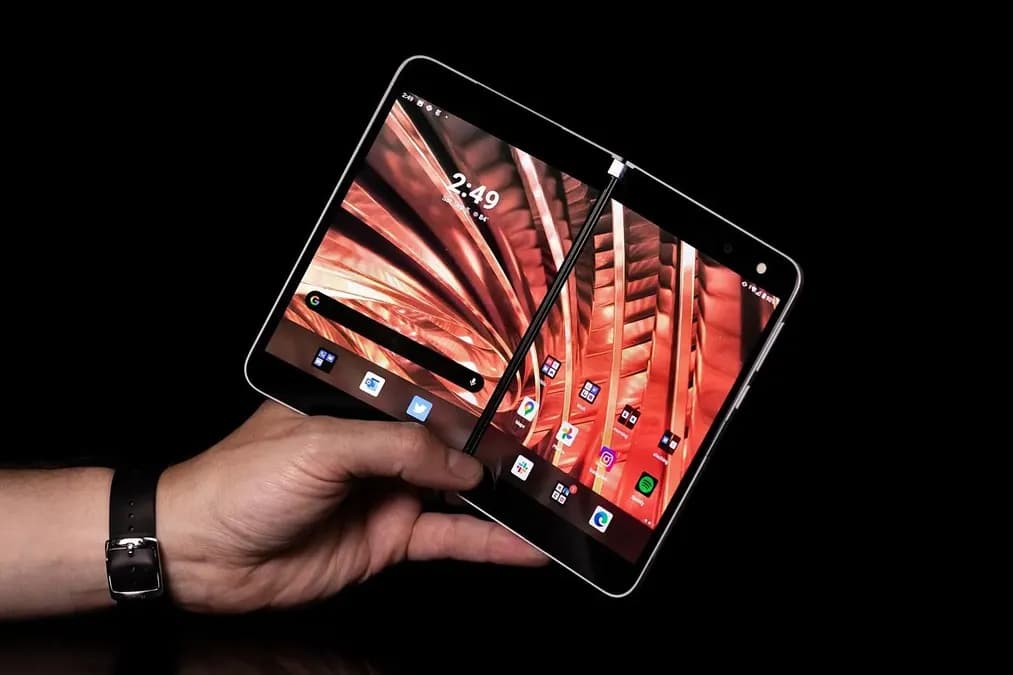
The word "Duo" carries more hardware history than many Apple observers might expect. Microsoft launched the Surface Duo in September 2020 — a dual-screen Android device that folded around a physical hinge, connecting two discrete displays rather than using a single foldable panel. It was a deliberate design philosophy: Microsoft argued that two sharp, flat screens delivered a better working experience than one large flexible one. The product shipped with significant software rough edges, and reviews were mixed, but the Surface Duo name was established and the concept was real.
Read next Laika's Wildwood: Stop-Motion Fantasy at TIFF 2026A year later, in October 2021, Microsoft followed with the Surface Duo 2, which improved the cameras dramatically and refined the software experience. The Duo 2 still carried the dual-screen approach, still ran Android, and still targeted productivity-focused users who wanted something closer to a portable dual-monitor setup than a tablet that folds. Microsoft discontinued the Surface Duo line before Apple ever shipped a competitor, but the name lived on in the product histories of tech publications and in the institutional memory of the industry.
Apple is therefore not the first company to plant a flag on the Duo name in mobile hardware. Whether that overlap is coincidence, irony, or deliberate competitive positioning is unclear. What is clear is that the iPhone Duo foldable arrives carrying a name with prior art.
Samsung and Google Paved the Foldable Road First
Apple's entry into foldables happens against a backdrop of sustained, often painful pioneering work by rivals. Samsung shipped the original Galaxy Fold in 2019 after a near-disastrous public reveal in which early review units failed before reviewers could finish their assessments. Samsung delayed, retooled, and shipped. The Galaxy Fold was expensive, fragile by reputation, and niche by sales volume — but it was real, and it existed years before the iPhone Duo foldable became a product.
Samsung spent the years that followed building what is now an entire product sub-family: the Z Fold series for book-style foldables and the Z Flip series for clamshell designs. The company iterated on hinge durability, display crease visibility, software multitasking, and price points with each generation. According to data from Counterpoint Research, Samsung commanded the majority of global foldable shipments through the early 2020s, establishing a de facto standard for what a foldable Android device looked and behaved like.
Google entered the foldable category in 2023 with the Pixel Fold, bringing the company's own software and AI integrations to a hardware form factor it had previously left to partners. The Pixel Fold and its successors demonstrated that Apple's chief operating system competitor was willing to invest engineering resources in foldables, not merely certify third-party hardware for Android compatibility.
By the time Apple announced the iPhone Duo foldable in 2026, the foldable market had years of commercial history and multiple generations of refinement behind it. IDC has tracked foldable smartphone shipments growing year over year since the category's commercial inception, even as total volumes remained a fraction of the overall smartphone market. The category was not waiting for Apple to exist. Apple was waiting for conditions — component maturity, hinge durability, display technology, pricing — that met its own internal thresholds.
Why Apple Was Late to Folding Screens
Apple's lateness to the foldable category is not unusual when examined through the company's own product history. Apple did not ship the first smartphone, the first tablet, the first smartwatch, or the first true wireless earbuds. In each of those categories, the company entered after rivals had spent years establishing proof of concept, absorbed the engineering failures, and educated consumers about what the category was supposed to do.
The foldable market presented particular challenges. Foldable displays require ultra-thin glass or polymer materials that must survive hundreds of thousands of folds without visible degradation. Hinges must balance smoothness with structural rigidity. Software must adapt dynamically to changing aspect ratios in ways that traditional application design never anticipated. Battery geometry becomes constrained. Thermal management grows complex.
Apple's supply chain and manufacturing standards are famously stringent. The company has historically declined to ship hardware it considers unready, even when competitive pressure might argue otherwise. The foldable display supply chain, dominated by Samsung Display and a handful of Chinese panel manufacturers, took years to mature to the reliability and yield rates that a product at Apple's scale would demand.
There is also the matter of software. iOS on a foldable display is not a trivial adaptation. Apple's application ecosystem, its developer guidelines, its own first-party apps — all of them required work to function coherently across a display that changes its physical dimensions when opened or closed. That software investment happens before launch, invisibly, and it takes time.
What the iPhone Duo Means for the Foldable Market
Apple's entry into foldables arrives as the category sits at an inflection point. According to analysts at Counterpoint Research, foldable smartphones have represented a growing but persistently small share of global smartphone shipments, remaining a premium niche even as prices have declined from their early stratospheric levels. The central question for the category has long been whether foldables would stay a specialty product for early adopters and device enthusiasts, or whether some catalyst would push them into broader mainstream consideration.
Apple's participation in a category has historically served as that kind of catalyst. When Apple launched the original iPhone, it validated the touchscreen smartphone category. When the Apple Watch shipped, it accelerated consumer smartwatch adoption across the industry. Whether the iPhone Duo foldable produces a similar effect in foldables is genuinely uncertain — analysts are divided.
Some industry observers argue that Apple's entry will bring hundreds of millions of iPhone users into contact with the foldable concept for the first time, creating consumer awareness and aspirational demand that Samsung and Google's marketing budgets could never replicate. Apple's retail presence, its integration with iOS services, and its brand loyalty among existing customers give it structural advantages that competitors cannot easily match.
Others are more skeptical. The foldable category has had seven years of commercial availability without breaking into mass-market adoption. Price remains a persistent barrier. Consumer habits around smartphone use, built around flat glass rectangles, are deeply entrenched. And Apple's first version of any new hardware category is rarely the version that defines it — the company typically iterates toward its most compelling execution over multiple generations.
What is not in dispute is the historical weight of the moment. The iPhone Duo foldable is late by the standards of the competitive landscape, carrying a name with prior owners and entering a market with established players. Samsung got there first. Google got there first. Microsoft named something Duo first. Apple arrived when Apple decided to arrive. The incomplete history of Duo devices just got a new chapter — though whether it becomes the defining one will take several more product cycles to determine.
Related coverage
- AI Beats Best Stratego Player in History on a Budget
- AI Executives Calling for Regulation: A Brief History
- Smart Home Graveyard: Why Devices Keep Dying
Source: The Verge