The Birth of the Portable Digital Music Era
In 1998, a small device called the Rio PMP300 arrived in electronics stores and promptly triggered a lawsuit from the Recording Industry Association of America. The RIAA lost. In doing so, it unwittingly cleared the legal runway for one of the most consequential shifts in consumer electronics history. The MP3 format had existed since the early 1990s, born from research at the Fraunhofer Institute in Germany, but it took the portable player — a pocket-sized device holding dozens of songs on flash memory — to translate a compression algorithm into a cultural movement.
The Rio held 32 megabytes of storage. Enough for roughly 30 minutes of audio at standard quality. Clunky by any later measure, yet it sold. The concept was sound: remove the physical medium, carry your music in your pocket, listen wherever you went. What followed was a decade of hardware iteration that would reshape the music industry, the consumer electronics market, and eventually the smartphone itself.
The iPod and the Golden Age of Portable Music Players

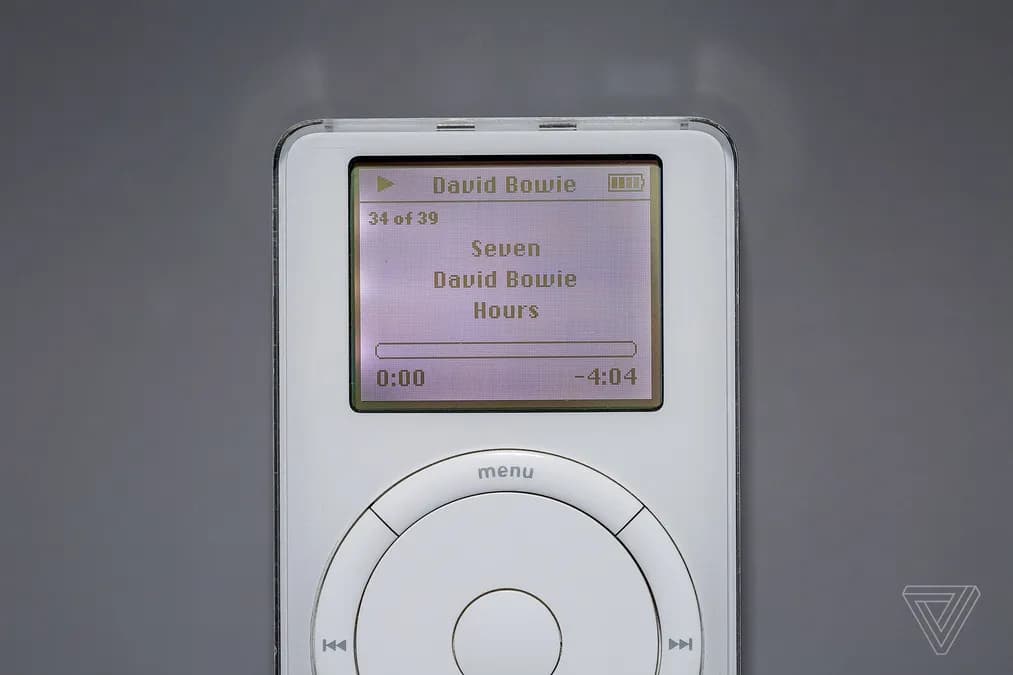
October 2001 marked a turning point. Apple introduced the original iPod with a 5-gigabyte hard drive and a scroll wheel that made navigating a music library faster than any competitor had managed. Steve Jobs described it as "1,000 songs in your pocket." That was not marketing exaggeration — it was an accurate summary of why the product mattered.
Read next Laika's Wildwood: Stop-Motion Fantasy at TIFF 2026The iPod's growth curve was extraordinary. Apple sold roughly 600,000 units in the device's first year, a modest start. The introduction of the iTunes Music Store in 2003, combined with Windows compatibility and successive hardware improvements, drove explosive adoption. By Apple's fiscal year 2008, iPod unit sales reached approximately 54 million for the year — the rough apex of the dedicated music player market. Cumulative sales had crossed 100 million units by 2007, one of the fastest consumer electronics adoption curves on record at the time.
Other manufacturers competed seriously during this period. Creative, iRiver, and Sony all produced capable devices. The market was large enough to sustain genuine competition, with IDC and NPD data from the mid-2000s consistently placing global portable media player sales in the tens of millions of units annually across all brands. The format seemed durable. It was not.
The Fall: How Smartphones Killed the Dedicated Music Player

The iPhone launched in June 2007. Apple's own marketing billed it as three devices in one: an iPod, a phone, and an internet communicator. In retrospect, that framing was a quiet announcement that the dedicated music player's commercial peak had passed before most people recognized it.
The decline was not immediate, but it was relentless. iPod unit sales peaked around 2008 and began a steady contraction as consumers concluded that a smartphone capable of holding thousands of songs eliminated any practical reason to carry a second device. By 2014, iPod unit sales had fallen below 15 million annually — less than a third of peak — and the iPod Classic was quietly discontinued that same year. Apple simply removed it from the online store without a press release. The symbolism was not subtle. By 2022, Apple ended the iPod Touch, the last device in the line, closing a 21-year chapter.
The broader market tracked the same trajectory. Dedicated MP3 player shipments fell sharply through the early 2010s, accelerated by smartphone ubiquity in both developed and emerging markets. Affordable Android handsets put capable music playback hardware into billions of pockets at zero incremental cost. The economic case for a separate device collapsed under that pressure.
The Unexpected Resurgence of Portable Media Players
The obituary turned out to be premature. Writing in The Verge's Stepback newsletter, technology journalist Terrence O'Brien has chronicled both the category's collapse and its subsequent revival — a revival that runs counter to the consolidation logic that seemed so decisive a decade ago.
The resurgence centers on a category called DAPs, or Digital Audio Players, oriented toward listeners who find smartphone audio output — mediated by power-saving chipsets and compromised analog circuitry — inadequate for serious listening. Companies including Sony, Astell&Kern, and FiiO have built real businesses selling devices that range from a few hundred to several thousand dollars. The target customer wants high-resolution audio playback at 24-bit/96kHz or higher, balanced headphone amplification, and dedicated digital-to-analog converter hardware that no smartphone currently provides. These are not niche aspirations within the audiophile community — they are engineering requirements that separate-device design can simply meet more effectively.
A second driver is less technical and more behavioral. A subset of listeners has grown frustrated with the smartphone as a music delivery mechanism — not because of sound quality, but because of attention fragmentation. A device that plays music while also delivering social media notifications, email alerts, and browser access competes with itself constantly. A dedicated player removes that competition entirely. This screen-free listening movement has attracted listeners who are not audiophiles in any technical sense but who want music without the associated cognitive overhead of a connected device.
Streaming vs. Owning: Why Some Listeners Are Going Back to Basics
Streaming has not eliminated the music ownership model as thoroughly as industry forecasts once suggested. Lossless digital file purchases remain commercially meaningful, and vinyl record sales have maintained a market presence that analysts consistently underestimated through the 2010s — the Recording Industry Association of America has reported year-over-year vinyl revenue growth for more than a decade running.
The DAP market intersects with this ownership-versus-streaming divide in an instructive way. Many high-end portable players are designed around local file playback, not streaming. Devices like Sony's flagship Walkman line or Astell&Kern's mid-range models are built on the assumption that the listener owns their music and stores it onboard. That is a deliberate contrast to the Spotify-first design philosophy governing smartphone audio.
The contrast reflects a genuine bifurcation in listener behavior. Streaming has captured the casual listener market decisively. But the person willing to spend $400 or more on a portable audio device is also, typically, the person who owns their files in lossless formats. These preferences correlate strongly, and manufacturers have built hardware accordingly. The result is a smaller but commercially coherent market — one that neither streaming services nor smartphone makers have any particular incentive to serve.
What the Story of the MP3 Player Tells Us About Technology Cycles
The portable MP3 player history is a useful case study in how consumer technology categories actually evolve — not in straight lines, but in cycles shaped by consolidation, commoditization, and niche persistence.
The category's peak was built on a real insight: people wanted their music portable, and existing formats were inconvenient. The decline was built on an equally real insight: carrying two devices is inefficient when one handles both functions adequately. Neither insight was wrong. What the conventional analysis missed was the third stage — the recognition that "adequate" rarely satisfies every segment of a market, and that the listeners left behind by consolidation are sometimes willing to pay a premium to be served.
The audiophile DAP market is small compared to the iPod's peak. It will never ship tens of millions of units annually. But the companies serving it are profitable, their products represent genuine engineering progress, and the listeners buying them are not acting out of nostalgia. They are making rational choices that the mass market's consolidation cannot accommodate.
O'Brien's ongoing coverage of this space at The Verge points toward something worth watching more broadly: technology cycles do not always terminate at obsolescence. Sometimes they settle into niche maturity — a smaller, more defined market that persists because it meets real needs that mass-market products structurally cannot. The portable MP3 player followed exactly that path, from mass adoption to near-extinction to durable niche. Other categories currently mid-consolidation may be on the same arc.
Source: The Verge