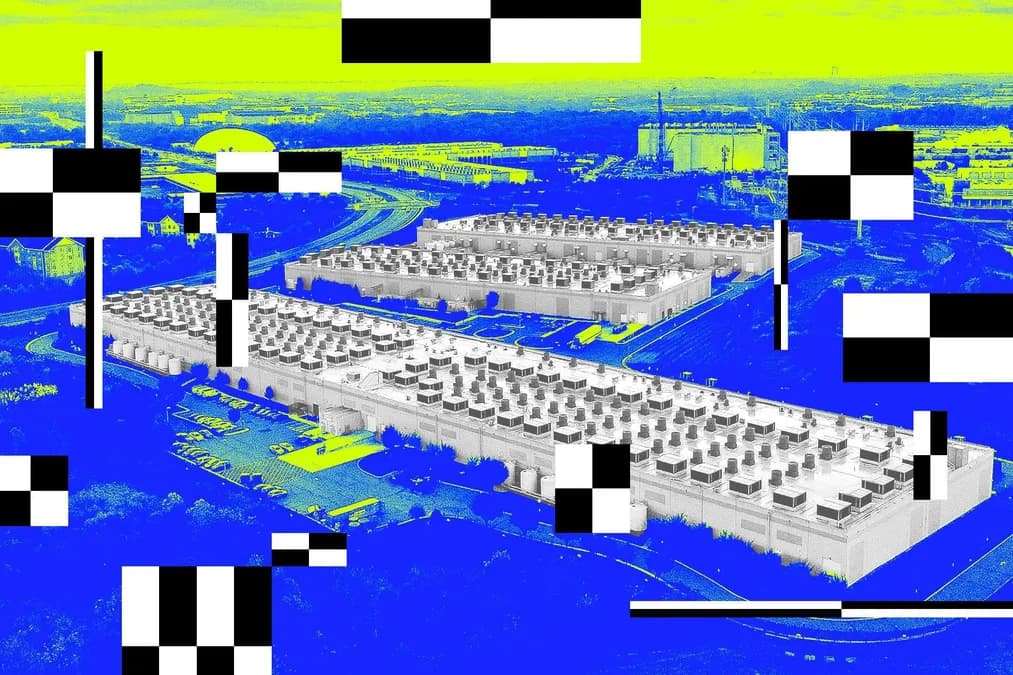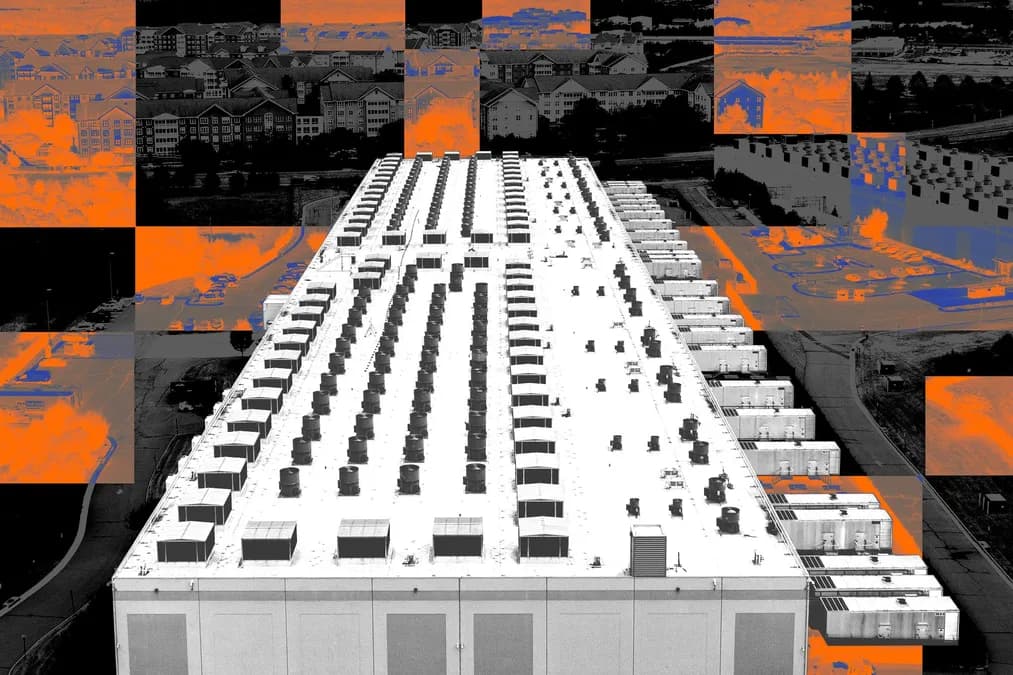
The race to build artificial intelligence infrastructure is reshaping American energy and environmental policy in real time. The Trump administration has moved to weaken environmental regulations that govern the construction and operation of AI data centers, a decision that a group of former Environmental Protection Agency officials warns carries serious, underappreciated consequences for American communities. Their concern is not theoretical — it is grounded in decades of public health research on industrial air pollution and its documented toll on human health.
Trump Administration Loosens Environmental Rules for AI Data Centers
Trump data center pollution policy has become one of the defining environmental flashpoints of the administration's second term. Framing AI infrastructure as a matter of national economic competitiveness, the administration has moved to streamline permitting and ease emissions requirements that would otherwise apply to large industrial facilities, including the massive server farms that power large language models and other AI applications.
The stated rationale is straightforward: the United States must build faster to stay ahead of China and other rivals in the global AI race. Data centers require enormous amounts of electricity, backup diesel generators, and cooling systems — all of which produce air emissions. Tightening those rules, the administration argues, would slow construction timelines and cede technological ground to competitors.
The scale of the underlying infrastructure demand makes the policy stakes clear. According to the International Energy Agency, data centers globally consumed roughly 415 terawatt-hours of electricity in 2024, with the United States accounting for the largest share of that consumption. Research from Lawrence Berkeley National Laboratory has tracked the dramatic rise in US data center energy use over the past decade, and analysts broadly expect that figure to double by 2030 as generative AI workloads scale up. More power demand means more generation capacity — and, absent aggressive clean energy investment, more emissions.
Former EPA Officials Sound the Alarm
The pushback came this week in the form of a coordinated briefing and a formal report released by a group of former EPA officials — career professionals and political appointees with direct experience overseeing federal air quality and environmental health programs. Their institutional credibility is not incidental; these are people who spent careers implementing the Clean Air Act and related statutes, and who understand precisely which regulatory levers the current administration is pulling back.
Read next Laika's Wildwood: Stop-Motion Fantasy at TIFF 2026The officials' core argument is that the environmental review processes being bypassed are not bureaucratic red tape — they are the mechanisms through which communities get a voice in decisions that affect the air they breathe. When a new data center is permitted without full environmental assessment, nearby residents lose the opportunity to surface concerns before construction begins, and regulators lose the opportunity to impose mitigation measures.
The report stops short of opposing AI development outright. The officials appear to accept that data centers will be built — many of them, quickly. Their objection is to the specific policy trade-off the Trump administration has made: prioritizing construction speed over the health protections that federal environmental law was designed to guarantee.
Health Risks Facing Communities Near Data Centers

The health dimension of Trump data center pollution policy is where the stakes become most concrete. Data centers are not clean facilities. Backup diesel generators — standard equipment for maintaining uptime during grid outages — are significant sources of nitrogen oxides and particulate matter. Cooling systems can release volatile compounds. And the sheer electricity demand of large campuses puts pressure on regional grids, often drawing power from fossil fuel plants that emit their own pollutants.
EPA research and a substantial body of peer-reviewed public health literature have established that chronic exposure to fine particulate matter (PM2.5) is associated with elevated rates of cardiovascular disease, respiratory illness, and premature death. Communities situated near industrial facilities with high emission profiles — including power plants, logistics hubs, and large-scale manufacturing — consistently show worse health outcomes than demographically comparable communities in cleaner air zones.
The populations most likely to live adjacent to new data center campuses are not randomly distributed. Facility siting decisions historically favor areas with cheaper land, lower-income tax bases, and communities with less political capital to challenge permitting decisions. That pattern, if it holds as AI infrastructure expands, means the health costs of relaxed oversight will fall disproportionately on people who were already bearing a disproportionate share of industrial pollution exposure.
The Case for a Data Center Health Protection Framework
The former EPA officials are not simply criticizing the administration's approach — they are proposing an alternative. Their briefing calls on the president to adopt what they describe as a "Data Center Health Protection" framework, a structured policy approach designed to accommodate rapid AI infrastructure growth while preserving baseline public health safeguards.
The framework concept reflects a familiar tension in environmental policy: how to enable economic development without externalizing its costs onto communities that receive none of its benefits. A health protection framework would, in principle, establish clear standards for emissions from data center backup generation, require siting assessments that account for cumulative pollution burdens in affected communities, and build in monitoring and reporting requirements that give regulators and residents ongoing visibility into facility operations.
Whether the current administration is receptive to such a proposal is an open question. The officials described their effort as perhaps "futile" — a candid acknowledgment that the political winds are not blowing in their direction. But they appear to be building a public record, signaling to Congress, state regulators, and the public that a credible alternative to the current approach exists, and that experts with firsthand federal experience believe it is workable.
Balancing AI Ambitions with Environmental Responsibility
The challenge at the center of the Trump data center pollution debate is genuine, even if the administration's resolution of it is contested. The United States does face real competitive pressure in AI, and data center construction timelines are a meaningful variable in that competition. Permitting delays cost money and time. These are not phantom concerns invented to justify deregulation.
But the cost-benefit framing the administration is using treats environmental compliance as pure friction — a drag on progress with no countervailing value. That framing ignores the reason those regulations exist. The Clean Air Act's permitting requirements were not written to obstruct industry; they were written because, without them, industrial facilities consistently imposed health costs on surrounding communities that those communities never consented to bear.
There is a version of rapid AI infrastructure buildout that takes health seriously — one that insists on clean backup power, rigorous siting review, and real-time emissions monitoring as conditions of accelerated permitting. It would cost more and move somewhat more slowly. Whether that trade-off is acceptable is a policy question. What is not a policy question is whether the health risks are real. The former EPA officials, drawing on the same scientific literature that undergirds federal environmental law, say clearly that they are. Communities near the next generation of AI server farms deserve to have that answer on the record before construction begins, not after.
Related coverage
- California Forces Data Centers to Reveal Resource Use
- California Forces AI Data Centers to Pay Their Own Energy Bills
- Voters Oppose AI & Data Centers—No Party Has an Edge
Source: The Verge