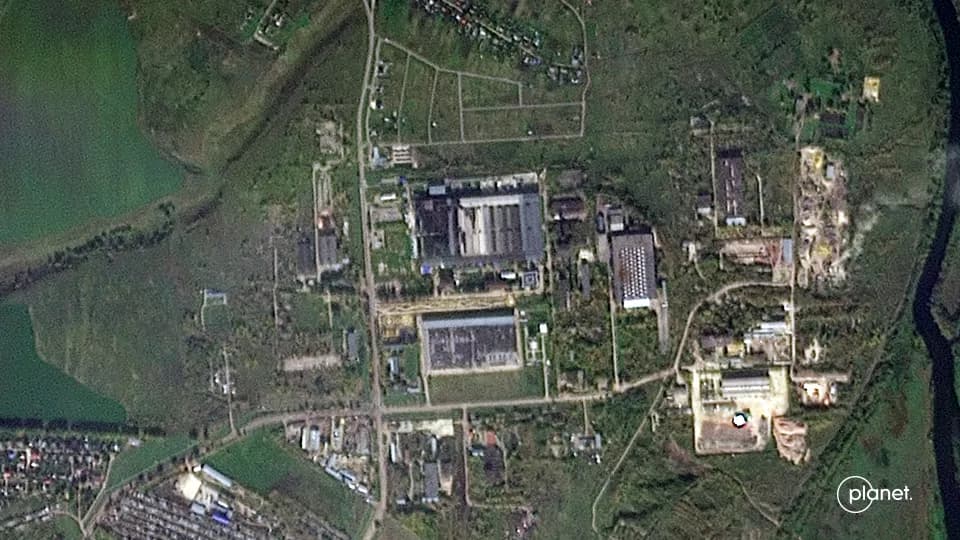
Ukraine Strikes Two of Yandex's Five Data Centers
Ukrainian forces struck two of Yandex's five data centers on October 8 and October 9, targeting facilities in the Sasovo and Kaluga regions of Russia, according to Reuters. The Ukraine drone strike Yandex data center operation disabled a significant share of the tech giant's infrastructure, forcing the company to scramble to maintain its AI chatbot and other core online services.
Two of five facilities knocked offline represents roughly a 40 percent reduction in the targeted data center capacity. For a company whose search engine handles an estimated 60 to 65 percent of all Russian web searches — serving more than 100 million monthly users — the strikes exposed how sharply civilian tech resilience depends on physical infrastructure that can be destroyed.
The damage was not contained to hardware. Services requiring continuous compute availability, including Yandex's generative AI assistant, faced outages with downstream effects across Russia's civilian digital ecosystem. Data centers are not passive buildings; they are the physical substrate of navigation applications, cloud storage, e-commerce platforms, and real-time language models. When they go dark, the disruption cascades fast and wide.
What Is Yandex and Why Does It Matter
Yandex occupies a position in Russian digital life comparable to the combined footprint of Google, Amazon Web Services, and OpenAI in Western markets. Founded in 1997, the company commands over 60 percent domestic search market share and operates major consumer platforms spanning e-commerce, ride-hailing, food delivery, and cloud infrastructure services.
Read next Laika's Wildwood: Stop-Motion Fantasy at TIFF 2026The company's AI chatbot — widely called "Russia's ChatGPT rival" — has become the default large language model product for tens of millions of Russians. Western sanctions and platform restrictions following 2022 effectively closed off access to OpenAI, Google DeepMind, and other frontier AI providers, making Yandex's model the practical monopoly for generative AI inside Russia. Disrupting it is not simply a corporate setback; it represents a disruption to civilian AI access at national scale.
Yandex's five-data-center infrastructure reflects both its size and strategic importance. A Ukraine drone strike Yandex data center scenario that disables two of those five nodes simultaneously is roughly equivalent to knocking a major cloud provider's regional availability zones offline at once. Redundancy systems absorb some of the load shift. They do not make outages painless or invisible to end users.
Ukraine's Stated Rationale: A Symmetrical Response
Ukrainian President Volodymyr Zelenskyy delivered the clearest available public explanation shortly after the strikes. "We continue to respond to Russia's attacks on Ukraine, and we're doing so with high precision," he posted on X. "Another data center was hit as well — our symmetrical response."
The word "symmetrical" is carefully chosen. It frames Ukraine's targeting of Yandex's infrastructure not as opportunistic aggression but as a calculated mirror of Russian doctrine. Because Russia struck Ukrainian data centers first, Ukraine responded with comparable precision against Russian data centers. The logic is reactive and proportional, and Zelenskyy's public statement constitutes the formal rationale on record.
What he did not say is as instructive as what he did. No claims about intercepting intelligence feeds, no assertions about degrading military command networks, and no framing of the strikes as an escalatory pivot. The message was deliberate restraint. That calibration matters for how allied governments and international observers categorize the action — as counter-infrastructure warfare within an established pattern, rather than an unprovoked expansion of the conflict domain.
Russia's Prior Drone Campaign Against Ukrainian Data Centers
The October 8–9 Ukraine drone strike Yandex data center operations did not emerge from a vacuum. Russia initiated a sustained drone campaign against Ukrainian data center infrastructure beginning in late September — approximately ten days before Ukraine's response. Those strikes disrupted mobile phone services and internet connectivity for thousands of Ukrainian civilians in the affected regions.
The timeline is the essential context. Russia established the operational logic first: civilian data centers are valid targets, digital infrastructure disruption is an accepted instrument of conflict, and the pain inflicted on civilian connectivity is an acceptable outcome. Ukrainian drones hitting the Sasovo and Kaluga facilities applied identical logic in reverse.
Defense and digital warfare researchers describe this escalating pattern as "fifth-domain warfare" — the extension of armed conflict into the physical foundations of the civilian internet. A critical distinction separates this from cyberattacks: a drone strike on a data center cannot be patched with a software update. Buildings must be rebuilt. Hardware must be replaced. Recovery timelines are measured in weeks or months, not hours. The asymmetry between the ease of destruction and the difficulty of reconstruction heavily favors the attacker, a dynamic that makes physical data center targeting increasingly attractive as a conflict instrument.
Escalating Tech Infrastructure Warfare: Broader Implications
Cybersecurity analysts and digital conflict researchers have long argued that the physical layer of the internet was an underappreciated warfare target. The Ukraine drone strike Yandex data center events represent one of the first confirmed instances in which a major national technology company's AI infrastructure was directly struck as part of active military operations.
The precedent-setting dimension deserves close attention. Data centers belonging to Amazon Web Services, Microsoft Azure, or Google Cloud are physical objects. They appear in satellite imagery. They have postal addresses. The assumption that commercial digital infrastructure enjoyed de facto insulation from conventional military targeting was always theoretical. These strikes dismantle that assumption empirically.
For the global technology industry, the risk calculus has shifted. Infrastructure redundancy planning, long treated as a business continuity discipline, now requires integration with physical security threat modeling. Companies operating major data center nodes near geopolitical fault lines face a materially different environment than existed five years ago. The European Union Agency for Cybersecurity (ENISA) has warned in multiple annual threat landscape reports that hybrid warfare doctrine specifically designates civilian digital systems as priority targets. What unfolded across both sides of the Russia-Ukraine conflict in late September and early October is that doctrine made fully operational.
What Comes Next for Yandex and Russian Tech Resilience
With two of five data centers offline, Yandex confronts both an engineering crisis and a procurement problem with no quick resolution. The company had not, as of the time of reporting, issued detailed public statements about service restoration timelines or the full scope of affected products.
Rebuilding is complicated by Western export controls. Since 2022, sanctions have sharply curtailed the legal supply of advanced semiconductors and server components to Russia. Replacing damaged infrastructure after a Ukraine drone strike Yandex data center attack requires precisely the high-performance computing hardware that is now hardest to source through legal channels. Recovery timelines may stretch from weeks into months.
This hardware scarcity magnifies the strike's long-term impact. Physical destruction eliminates present capacity; sanctions-driven procurement delays extend the restoration timeline. Yandex's infrastructure is clustered entirely within Russian territory, with no realistic path to distributing workloads across neutral or allied cloud regions. That geographic concentration — once a structural asset for a domestically focused tech giant — is now a strategic liability in a conflict where physical infrastructure is a legitimate target for both sides.
For the tens of millions of Russian civilians who depend on Yandex for search, maps, e-commerce, and AI assistance, the disruption carries genuine costs. Whether Russia modifies its campaign against Ukrainian data centers in response to losing two of its own remains an open question. Zelenskyy's framing of "symmetrical response" suggests Ukraine intends to maintain the equivalence until the targeting stops. The physical internet, it turns out, has a front line.
Source: Ars Technica - All content